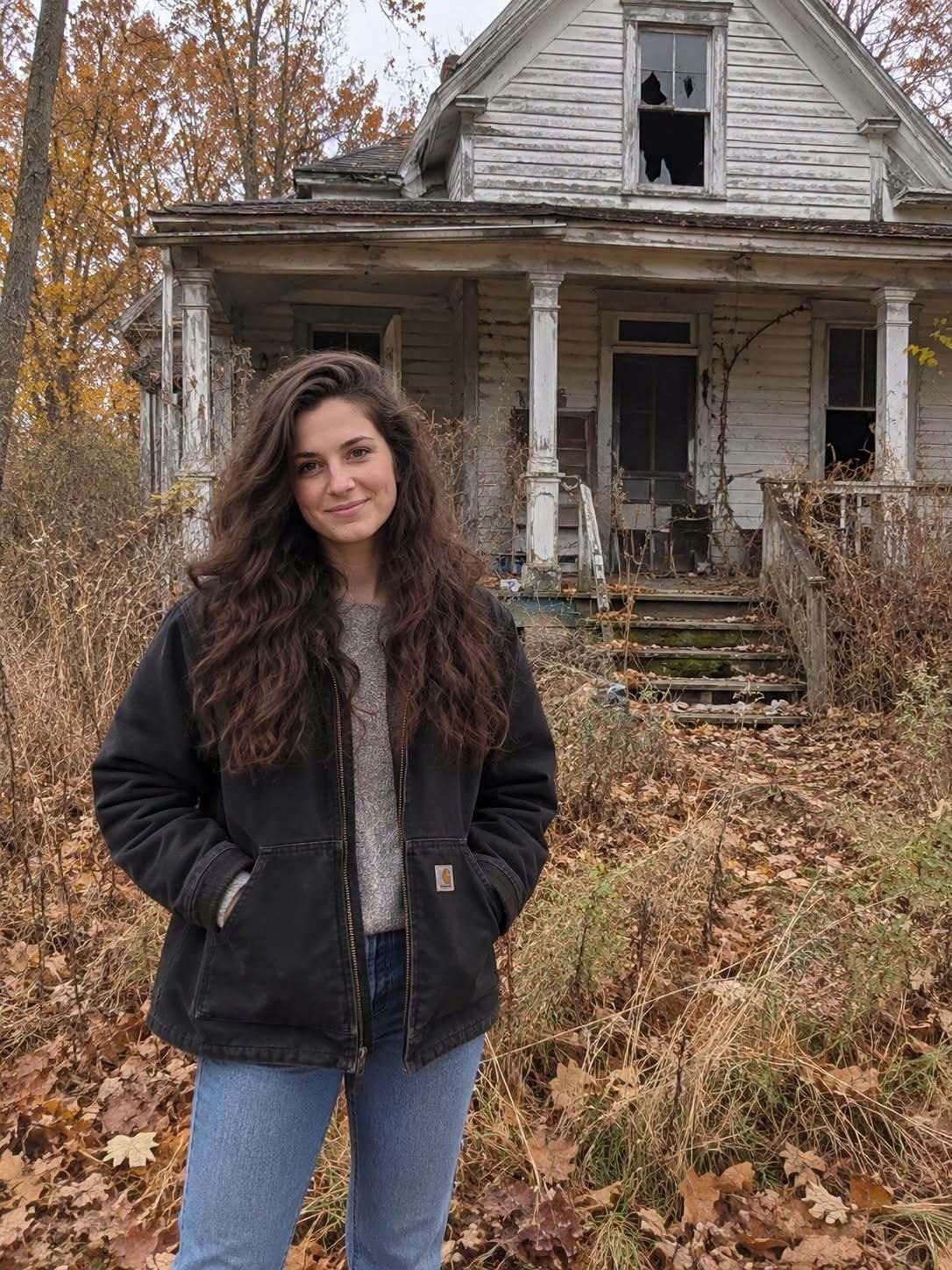
I Spent My Inheritance on an Old House, and My Husband Called Me Crazy — But What He Found There Changed Everything
When I used my inheritance to buy an abandoned old house, my husband told me I had lost my mind. He said I had wasted our future on a pile of rotten wood, broken windows, and crumbling walls. But three weeks later, while tearing apart a damaged floorboard, he discovered something that made him stop talking—and eventually brought our entire family to tears.
I never imagined that inheriting a little money would nearly destroy my marriage.
When my grandmother Margaret passed away, she left me $87,000 and a handwritten letter. It wasn’t a fortune, but it was enough to change our lives if I spent it wisely.
My husband, David, had already made plans for the money.
He wanted a new car, a larger television, and a down payment on a modern house in a neighborhood closer to his office. He had even printed brochures and circled the properties he liked.
But I wanted something different.
I wanted the old house on Willow Creek Road.
It had belonged to a family that had left town decades earlier. The paint was peeling, ivy covered the front porch, and several roof tiles had collapsed. The garden was so overgrown that you could barely see the stone pathway leading to the front door.
The real estate agent warned me that the house needed extensive repairs.
David laughed when I told him I wanted to buy it.
“You’re going to spend your entire inheritance on a wreck?” he asked.
“It’s not a wreck,” I replied. “It just needs someone to care about it.”
He shook his head.
“You’re throwing away your future for a pile of old wood.”
I signed the papers anyway.
What I didn’t tell David was that I had dreamed about this house since I was a little girl.
And my grandmother had always told me there was a reason I felt connected to it.
The Secret My Grandmother Never Explained
When I was young, my grandmother often took me for walks through the oldest part of town.
She would point out buildings with beautiful stonework, tell me stories about the families who had lived there, and explain how every house carried memories that could outlast the people who built it.
One afternoon, when I was about ten, she stopped outside the abandoned house on Willow Creek Road.
“Do you like this place, sweetheart?” she asked.
I nodded.
“It looks like a castle.”
She smiled.
“One day, someone will open that house again. And when they do, they may discover that the most valuable things are not always the ones people can see.”
I asked her what she meant.
But she only squeezed my hand and continued walking.
Over the years, I forgot about that conversation.
Then, shortly before she died, she gave me a small brass key attached to a faded blue ribbon.
“Keep this somewhere safe,” she whispered.
“What does it open, Grandma?”
She looked at me with an expression I couldn’t understand.
“You’ll know when the time comes.”
After her funeral, I found the key in the pocket of my coat. I had almost forgotten about it until the day I saw the advertisement for the house.
The moment I recognized the front porch, I remembered my grandmother’s words.
I bought the property two weeks later.
David thought I was acting on sentiment rather than reason.
I thought I was finally following a promise I didn’t fully understand.
Neither of us knew how much that decision would change our lives.
The First Three Weeks
The house was worse inside than it looked from the street.
Dust covered every surface. The wallpaper peeled away in long strips, exposing cracked plaster beneath. A staircase creaked dangerously underfoot, and the kitchen sink leaked whenever we turned on the water.
David spent the first weekend complaining.
By the second, he refused to help.
“You wanted this place,” he told me. “You can fix it yourself.”
I hired a local carpenter named Samuel to inspect the structure and began cleaning the rooms one by one.
Despite the mess, the house had a strange warmth about it.
The living room had a beautiful fireplace carved from pale stone. The upstairs bedrooms overlooked the garden, and the attic contained old trunks filled with yellowed photographs.
One photograph showed my grandmother as a young woman, standing beside a man I didn’t recognize.
On the back, someone had written a date from 1958.
I called my grandmother’s sister, Helen, hoping she might recognize the man.
When I described the photograph, she went silent.
“Where did you find that?” she finally asked.
“In the attic of the house on Willow Creek Road.”
Another long pause followed.
Then Helen said something that made my hands go cold.
“Your grandmother never told you the whole story, did she?”
Before I could ask what she meant, she told me she would visit the following weekend.
She refused to explain anything over the phone.
That night, I showed David the photograph.
He glanced at it and shrugged.
“Probably someone who lived there before.”
I wanted to agree with him.
But the man in the photograph was wearing a ring I had seen my grandmother keep in a small jewelry box for as long as I could remember.
Something connected them.
And I was beginning to suspect that the house held the answer.
The Floorboard That Changed Everything
Three weeks after buying the property, David finally agreed to help Samuel repair the living room floor.
He had been irritated all morning because the carpenter had discovered extensive water damage beneath the boards.
“We’re going to spend more fixing this place than it’s worth,” David muttered.
Samuel removed several planks near the fireplace.
Beneath them lay a narrow wooden compartment that didn’t appear on the original building plans.
At first, David assumed it contained old pipes.
Then he noticed a small metal box tucked between two beams.
“What’s that?” he asked.
Samuel carefully lifted it out.
The box was covered in dust, but its brass clasp was still intact.
I came downstairs when I heard them calling my name.
The moment I saw the box, I felt an inexplicable rush of recognition.
The brass key.
I ran upstairs, retrieved the key from my bedside drawer, and returned to the living room.
My hands trembled as I inserted it into the lock.
It turned.
Inside the box were several sealed envelopes, a bundle of legal documents, a small velvet pouch, and a photograph of my grandmother standing in front of the house.
Beneath the photograph was a handwritten note.
The writing was unmistakably hers.
If you are reading this, it means someone finally cared enough to restore this house. I hoped it would be you.
I could barely breathe.
David took the note from my hands and read it twice.
Then he looked at me.
For the first time since I bought the property, he said nothing about my decision being foolish.
He simply asked, “What does all this mean?”
I opened the first envelope.
And everything we believed about my grandmother’s past began to unravel.
The Truth About the House
The documents revealed that my grandmother had grown up in the house on Willow Creek Road.
Her parents had owned the property for generations, and she had spent much of her childhood there.
But in the late 1950s, a financial crisis forced the family to sell it.
The man in the photograph was named Thomas Bennett.
He was my grandmother’s older brother.
According to the letters, Thomas had discovered that their family’s property had been transferred under circumstances he believed were unfair. He spent years trying to challenge the transaction, but the legal dispute drained the family’s resources.
Eventually, he left town.
My grandmother remained behind, carrying the memory of the house and the belief that one day it might return to the family.
The documents in the box included copies of old deeds, correspondence, and a handwritten record of a private agreement relating to the property.
They did not automatically prove that the house belonged to my grandmother’s descendants. Some of the papers were decades old, and their legal significance would need to be examined.
But they revealed something that had been hidden for generations.
My grandmother had never forgotten the house.
She had spent years researching its history, collecting records, and trying to understand what had happened to her family.
The final envelope contained a letter addressed to me.
I unfolded it carefully.
My dear girl,
If you have found this letter, then you have done something I could never quite manage. You have returned to a place that meant more to our family than anyone outside it could understand.
I could not promise that the house would ever belong to us again. But I hoped that someone in our family would one day have the courage to restore it.
Please don’t measure its worth by the money it might bring. Measure it by the memories it holds and the love that survived long after we left.
There is one more thing I want you to know.
The house was never the greatest thing our family lost.
It was the time we spent believing that we could never come home.
I began to cry.
David stood beside me, holding the letter as though it were something fragile.
He had expected to find worthless junk beneath the floor.
Instead, he had uncovered the story of a family that had carried an old wound for nearly seventy years.
But the biggest surprise was still waiting in the velvet pouch.
The Ring and the Name Nobody Recognized
Inside the pouch was a gold ring engraved with the initials T.B.
Beneath it lay a folded document bearing the name of a law firm that had closed decades earlier.
The accompanying letter suggested that Thomas had left something of value in trust for his sister, but the records were incomplete. The exact nature of the arrangement was unclear, and nobody could tell whether the agreement had ever been finalized.
I contacted a local solicitor who specialized in historical property records.
After reviewing the papers, she advised us that the documents might help clarify the family’s history, but further research would be needed before anyone could make claims about ownership or inheritance.
For the next several months, we worked with her to trace the property’s records.
We discovered that Thomas had owned a small investment account before leaving town. Some of the records suggested that a portion of it might have been transferred into a family trust, although the surviving paperwork did not establish what had happened to the funds.
The solicitor helped us contact the relevant institutions and search the available archives.
Eventually, we confirmed that the account had been closed many years earlier and that there were no funds waiting to be claimed.
There was no hidden fortune.
No chest of gold.
No miraculous inheritance that would make us rich overnight.
For a moment, I felt disappointed.
Then I looked at my grandmother’s letter again.
She had never promised me money.
She had promised me a story.
And the house had finally allowed us to understand it.
The Apology I Never Expected
One evening, several months after we discovered the box, David found me sitting on the front porch.
The house was slowly being restored. The roof had been repaired, the windows replaced, and the garden cleared of years of tangled weeds.
He sat beside me.
“I owe you an apology,” he said.
I looked at him in surprise.
“For what?”
“For calling you crazy. For acting like the money was mine to decide how to spend. And for assuming that if something didn’t make financial sense to me, it couldn’t possibly matter.”
I remained quiet.
He continued.
“I was so worried about making the wrong decision that I never stopped to ask why this house mattered so much to you.”
I thought about all the arguments we had shared over the previous months.
“I was afraid you’d never understand,” I admitted.
“Maybe I didn’t at first.”
He took my hand.
“But I understand now.”
It wasn’t a perfect apology. It didn’t erase every hurtful comment or make the financial decisions we had faced disappear.
But it was honest.
And sometimes, honesty is the beginning of repairing something that has been damaged.
The House Becomes a Home Again
A year after I bought the property, we invited my grandmother’s sister, Helen, to visit.
She arrived slowly, leaning on a wooden cane, and stopped at the gate when she saw the restored porch.
“Oh, Margaret,” she whispered, addressing my grandmother as though she were standing beside her.
Then she began to cry.
We walked her through the rooms.
She recognized the fireplace, the staircase, and the window where my grandmother used to sit and read.
In the kitchen, Helen pointed to a small mark in the doorframe.
“Your grandmother measured her height here every birthday,” she said.
I ran my fingers over the faded pencil marks.
For decades, they had remained hidden beneath layers of paint.
Now, they were visible again.
Helen sat at the kitchen table and told us stories about her childhood, her brother Thomas, and the day the family had been forced to leave the house.
For the first time, I understood that restoring the building was only part of what my grandmother had hoped for.
She wanted the stories to survive.
She wanted the family to remember where they had come from.
And she wanted someone to open the doors again.
That evening, we cooked dinner in the old kitchen.
The windows were open, the garden smelled of fresh earth, and the house was filled with voices that had not echoed through its rooms in decades.
David stood beside me at the sink.
“Still think it was worth it?” he asked.
I looked around the room.
My grandmother’s letter rested in a frame near the fireplace. The photograph of her and Thomas stood on the mantelpiece.
“Every penny,” I said.
What My Grandmother Really Left Me
Today, the house is no longer abandoned.
It isn’t the most expensive property in town, and restoring it cost far more than I originally expected.
But it has become the place where our family gathers for holidays, birthdays, and ordinary Sunday dinners.
We have started documenting its history, preserving the letters and photographs, and sharing the story with younger members of the family.
David still occasionally reminds me how much work the house required.
But now he says it with a smile.
And whenever someone asks whether I regret spending my inheritance on an old building, I tell them the truth.
I didn’t buy a fortune.
I bought a responsibility.
I bought a chance to uncover a story that might otherwise have disappeared.
And I bought the opportunity to give a forgotten home another life.
The most valuable discovery beneath the floorboards was not gold, money, or a secret deed.
It was the evidence of a family that had loved a place so deeply that even decades of separation could not erase its importance.
My grandmother had left me money, but she had also left me something much more meaningful: the chance to understand her.
My husband once called me crazy for buying an old house. But when he opened that hidden box, he finally understood why I had felt drawn to it all along.
Sometimes, the greatest treasures are not the things we inherit.
They are the stories we uncover, the relationships we repair, and the pieces of our past we finally learn how to bring home.
And if my grandmother could see the house today, I believe she would smile.
Because the doors are open again.
And this time, nobody is leaving.