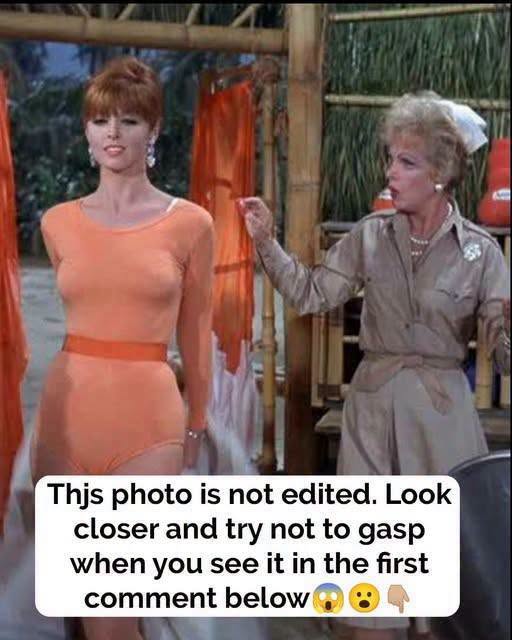
For millions of television fans, Gilligan’s Island remains one of the most beloved sitcoms of all time. With its unforgettable characters, ridiculous situations, and endless attempts to escape a deserted island, the series became a classic that continues to entertain audiences decades after it first aired.
The show followed seven castaways whose three-hour sightseeing tour turned into a seemingly endless adventure after their boat, the S.S. Minnow, was caught in a storm. Stranded on an uncharted island, the group had to find ways to survive while constantly dealing with Gilligan’s clumsy mistakes, the Skipper’s short temper, and the Professor’s seemingly endless collection of inventions.
What made the series so memorable was its simple, charming humor. Every episode introduced a new problem, a new scheme, or another ingenious plan that somehow went wrong at the last possible moment.
But even though the show was carefully produced, it wasn’t perfect.
Like many television programs from the 1960s, Gilligan’s Island contains continuity errors, questionable props, inconsistent details, and amusing production mistakes that eagle-eyed viewers can spot when watching the episodes again.
Some of these mistakes are so subtle that you might miss them entirely the first time around. Others are almost impossible to ignore once someone points them out.
And the funniest part? A few of these little details make the island’s already ridiculous adventures even more entertaining.
1. The Castaways’ Clothes Somehow Survived Everything
One of the most noticeable oddities in Gilligan’s Island is the remarkably consistent appearance of its seven castaways.
Despite being stranded on a tropical island, facing storms, searching for food, and spending countless days exploring the jungle, the characters generally look surprisingly well dressed.
Ginger Grant, played by Tina Louise, often appears glamorous, while Mary Ann Summers, portrayed by Dawn Wells, maintains her familiar farm-girl look. Thurston Howell III and Lovey Howell frequently look as though they have stepped out of a luxury vacation rather than survived a shipwreck.
Of course, the costumes were part of the show’s visual identity. Viewers could immediately recognize each character, even in a crowded scene.
Still, the clothing raises some amusing questions.
How did everyone’s outfits remain so consistent after so many adventures? Where did they find replacements when necessary? And how did Ginger manage to look ready for a Hollywood premiere while living on an island with no department stores?
The series rarely offered practical explanations.
Instead, the costumes remained familiar from episode to episode, allowing the audience to focus on the comedy rather than the realities of surviving in the wilderness.
Once you start noticing how neatly dressed the castaways remain, it becomes difficult not to smile.
2. Gilligan’s Famous Hat Rarely Seems to Have a Bad Day
Gilligan’s red shirt and white sailor hat are among the most recognizable elements of the entire series.
Played by Bob Denver, Gilligan was the lovable first mate whose good intentions were frequently undermined by his own clumsiness. His hat became such an important part of his appearance that it was practically another character.
Yet the show occasionally presents amusing inconsistencies involving clothing and accessories.
During fast-paced scenes, small costume details can change between shots. An item may sit differently, a sleeve may appear slightly altered, or an accessory may seem to have shifted position after an edit.
These are the kinds of continuity details that can happen when a scene is filmed multiple times and then assembled in the editing room.
In a comedy built around quick reactions and physical humor, such changes were unlikely to interrupt the story. Most viewers were paying attention to Gilligan’s latest disaster, not examining the exact position of his hat.
But modern viewers often watch familiar episodes repeatedly, sometimes pausing or rewinding scenes to look for details they missed.
That makes even minor costume inconsistencies a source of amusement.
Gilligan may have struggled to follow the simplest instructions, but his iconic outfit helped ensure that nobody ever mistook him for another castaway.
3. The Island’s Geography Seems to Change
One of the most entertaining continuity questions concerns the island itself.
Throughout the series, the castaways explore beaches, jungle paths, rocky areas, and makeshift living spaces. Different locations serve as the setting for inventions, arguments, rescue attempts, and encounters with unexpected visitors.
The island feels like a surprisingly large place when a story requires an extended search. In other episodes, however, important locations seem conveniently close together.
This kind of inconsistency is common in television production.
Scenes are often filmed on sets or in different areas chosen for lighting, camera placement, and practical convenience. The finished episode then combines those scenes to create the impression of a single, continuous location.
As a result, the fictional island does not always behave like a carefully mapped geographical space.
A character may appear to travel a considerable distance in one scene and reach another familiar location almost immediately in the next.
For viewers who know the show well, these shifts can create the impression that the island changes size depending on the needs of the story.
Perhaps the castaways weren’t the only ones having trouble finding their way around.
4. The Professor Can Build Almost Anything—Except a Reliable Rescue Plan
Professor Roy Hinkley, played by Russell Johnson, was the group’s resident scientific genius.
Whenever the castaways needed a new tool, a communication device, or an ingenious solution to a seemingly impossible problem, the Professor was usually ready with an invention.
Using bamboo, coconuts, vines, and other materials available on the island, he could transform ordinary objects into remarkably sophisticated contraptions.
His abilities became one of the show’s most recognizable running jokes.
The Professor could create devices that appeared far beyond the capabilities of a stranded group with limited resources. Yet the castaways remained on the island for the entire series.
The contradiction was part of the comedy.
If the Professor could construct radios, elaborate machines, and other impressive inventions, viewers naturally wondered why the group couldn’t produce a consistently successful rescue signal.
The show occasionally addressed the practical difficulties involved, but its basic premise required the castaways to remain stranded.
As a result, the Professor’s extraordinary ingenuity often led to another adventure rather than a permanent solution.
It wasn’t necessarily a filming mistake, but it was one of the series’ funniest logical inconsistencies.
The man could seemingly invent anything, provided it didn’t end the show.
5. The Food Supply Was Almost as Mysterious as the Island
Survival on a deserted island should involve considerable effort.
The castaways would need to locate clean water, gather food, protect themselves from the elements, and maintain their shelter. Depending on their circumstances, even simple tasks could become daily challenges.
Yet Gilligan’s Island frequently treated food as a convenient part of the background.
The characters regularly prepared meals, gathered around tables, and found enough supplies to support a surprisingly comfortable routine.
Coconuts were a recurring resource, and the castaways often found ways to turn the island’s natural materials into something useful.
But viewers could reasonably wonder how the group maintained such a varied lifestyle for so long.
Where did all the cooking equipment come from? How were supplies replenished? And how did the castaways manage to prepare meals that seemed far more elaborate than their circumstances should have allowed?
The show’s writers weren’t attempting to create a documentary about survival.
Food was primarily a storytelling device, giving the characters another reason to gather, argue, cooperate, or accidentally ruin one of the Professor’s plans.
The result was a tropical paradise that seemed to provide just enough food whenever the plot needed it.
For a show about being stranded, the island’s kitchen arrangements were remarkably convenient.
6. The Skipper’s Famous Temper Sometimes Appears Before the Joke
Alan Hale Jr.’s portrayal of the Skipper became one of the defining performances of the series.
His character was responsible for keeping the group organized, but his patience was repeatedly tested by Gilligan’s accidents and misunderstandings.
The relationship between the Skipper and his first mate supplied much of the show’s physical comedy. A familiar gag involved the Skipper reacting to Gilligan’s latest mistake with exaggerated frustration.
Because sitcoms rely on timing, actors often need to repeat movements, facial expressions, and lines to achieve the desired effect.
Occasionally, a viewer may notice a reaction that appears to begin slightly before another character has finished speaking, or a facial expression that seems inconsistent with the precise timing of the dialogue.
Such moments can result from editing or from the way a scene was assembled from multiple takes.
The Skipper’s expressive reactions were part of what made the comedy work. His exasperation gave Gilligan’s innocence an entertaining contrast, turning even a simple misunderstanding into a memorable scene.
And if the timing occasionally feels a little unusual, it can make the exchange even funnier.
After all, the Skipper had spent years trying to keep one accident-prone sailor under control. Who could blame him for occasionally looking as though his patience had reached its limit?
7. Background Details Sometimes Give Away the Production
Television viewers often focus on the actors in the foreground, especially when a scene contains an important joke or dramatic moment.
But the background can reveal details that weren’t intended to attract attention.
In older television productions, sets were reused, props were moved between scenes, and practical filming requirements sometimes created small inconsistencies.
A background object might appear in a slightly different position between shots. A piece of scenery might look less convincing from a particular camera angle. Lighting or shadows might also change when a scene cuts from one view to another.
In a fictional environment like Gilligan’s Island, such details can become particularly noticeable because the same locations appear repeatedly.
The castaways’ huts, shared spaces, and surrounding scenery were familiar to regular viewers. Repeated exposure made it easier to notice when something appeared different.
These minor details are a reminder that the island was a carefully constructed television environment rather than an untouched wilderness.
The illusion worked because viewers accepted the setting and concentrated on the characters.
But once you start paying attention to the background, you may find yourself watching the scenery almost as closely as the story.
8. The Rescue Attempts Always Seemed to Go Wrong at the Perfect Moment
Perhaps the most amusing inconsistency in the series is the remarkable number of opportunities the castaways had to escape their predicament.
Over the course of the show, the group encountered numerous visitors, developed complicated plans, and experimented with a wide range of rescue methods.
The Professor’s inventions often played a central role, while Gilligan’s mistakes frequently helped bring the plans to an end.
The recurring pattern became part of the series’ identity.
A promising idea would emerge. The castaways would become excited. The group would work together to carry out the plan.
Then something would go wrong.
Sometimes the failure resulted from an accident. Sometimes the plan depended on an unlikely assumption. And sometimes the situation simply required one more comic twist before the closing credits.
In real life, a group of resourceful people might eventually find a reliable way to communicate with the outside world or attract passing ships.
But Gilligan’s Island needed its characters to remain where they were.
The repeated failures were therefore less a production mistake than a deliberate feature of the show’s formula.
Even so, the sheer number of failed rescue attempts can make modern viewers laugh at the extraordinary bad luck of the seven castaways.
The island wasn’t necessarily impossible to escape.
It simply seemed to have a talent for turning every hopeful moment into another episode.
9. The Characters Sometimes Know More Than They Should
Continuity errors can also involve information rather than physical objects.
In a long-running sitcom, characters sometimes appear to forget details they previously learned or behave as though an earlier event never happened.
This can happen when writers create a new story around a familiar character without carefully accounting for every detail established in previous episodes.
For a series like Gilligan’s Island, which generally focused on self-contained adventures, maintaining perfect continuity was not always essential.
An invention could be central to one episode and disappear from the next. A lesson learned during one adventure might have little effect on how a character behaved in another.
The show’s priority was usually to create a funny, accessible story that viewers could enjoy without needing to remember every previous installment.
That approach made the series easy to watch, even for people who tuned in occasionally rather than following every episode in order.
However, it also created opportunities for attentive fans to spot inconsistencies.
The characters might remember enough about the island to continue their daily routines, but the series didn’t always behave as though every previous adventure had permanently changed their circumstances.
In a comedy, that flexibility helped keep the stories fresh.
It also gave longtime viewers another reason to revisit the episodes and compare what happened.
10. The Biggest Blooper May Be How Comfortable Everyone Looks
Being stranded on an island is usually associated with uncertainty, exhaustion, and the constant need to solve practical problems.
Yet the castaways of Gilligan’s Island often managed to maintain surprisingly comfortable routines.
They had familiar living arrangements, social gatherings, entertainment, and plenty of opportunities for romantic misunderstandings and comic arguments.
The island could be dangerous or inconvenient when the plot required it, but it was also a remarkably convenient setting for a sitcom.
The characters were surrounded by natural beauty, and their daily lives frequently looked more like an unusual vacation than an extended survival emergency.
Of course, that was part of the appeal.
The show transformed the frightening premise of being stranded into a colorful world of friendship, slapstick comedy, and imaginative problem-solving.
The castaways experienced setbacks, but the audience knew that another episode would bring another adventure.
The contrast between the seriousness of their predicament and the lighthearted way they handled it was one of the show’s greatest strengths.
It also created a funny question for modern audiences: after so many failed attempts to leave, had the island gradually become home?
Perhaps the castaways weren’t always unlucky.
Perhaps they had simply grown comfortable enough that escaping no longer seemed quite as urgent as it once did.
Why Gilligan’s Island Still Makes Us Laugh
Decades after its original run, Gilligan’s Island remains a reminder that television comedy doesn’t need elaborate special effects or complicated storylines to become memorable.
Its charm came from a distinctive group of characters, recognizable running jokes, exaggerated situations, and the chemistry among its cast.
The mistakes and inconsistencies only add to that appeal when viewers notice them.
A costume that looks slightly different, a background detail that changes, or an invention that somehow never solves the central problem can provide a new layer of entertainment for people revisiting familiar episodes.
However, it’s worth distinguishing between documented production bloopers and humorous questions about the show’s fictional logic. Not every apparent inconsistency is a confirmed mistake, and some of the series’ strangest details were deliberate choices made to support its comedy.
That distinction doesn’t make the show any less enjoyable.
In fact, discovering the little quirks of an old favorite can make watching it again even more rewarding.
The next time you see Gilligan stumble into another disaster, the Skipper lose his patience, or the Professor unveil an astonishing invention, look a little more closely at what’s happening around them.
You may spot something you never noticed before.
And even if you don’t find a genuine blooper, there’s a good chance you’ll find yourself laughing at the wonderfully absurd world of Gilligan’s Island all over again.
After all, seven castaways, one deserted island, and an endless supply of failed escape plans were already a recipe for comedy. The little mistakes just make the adventure even more entertaining.