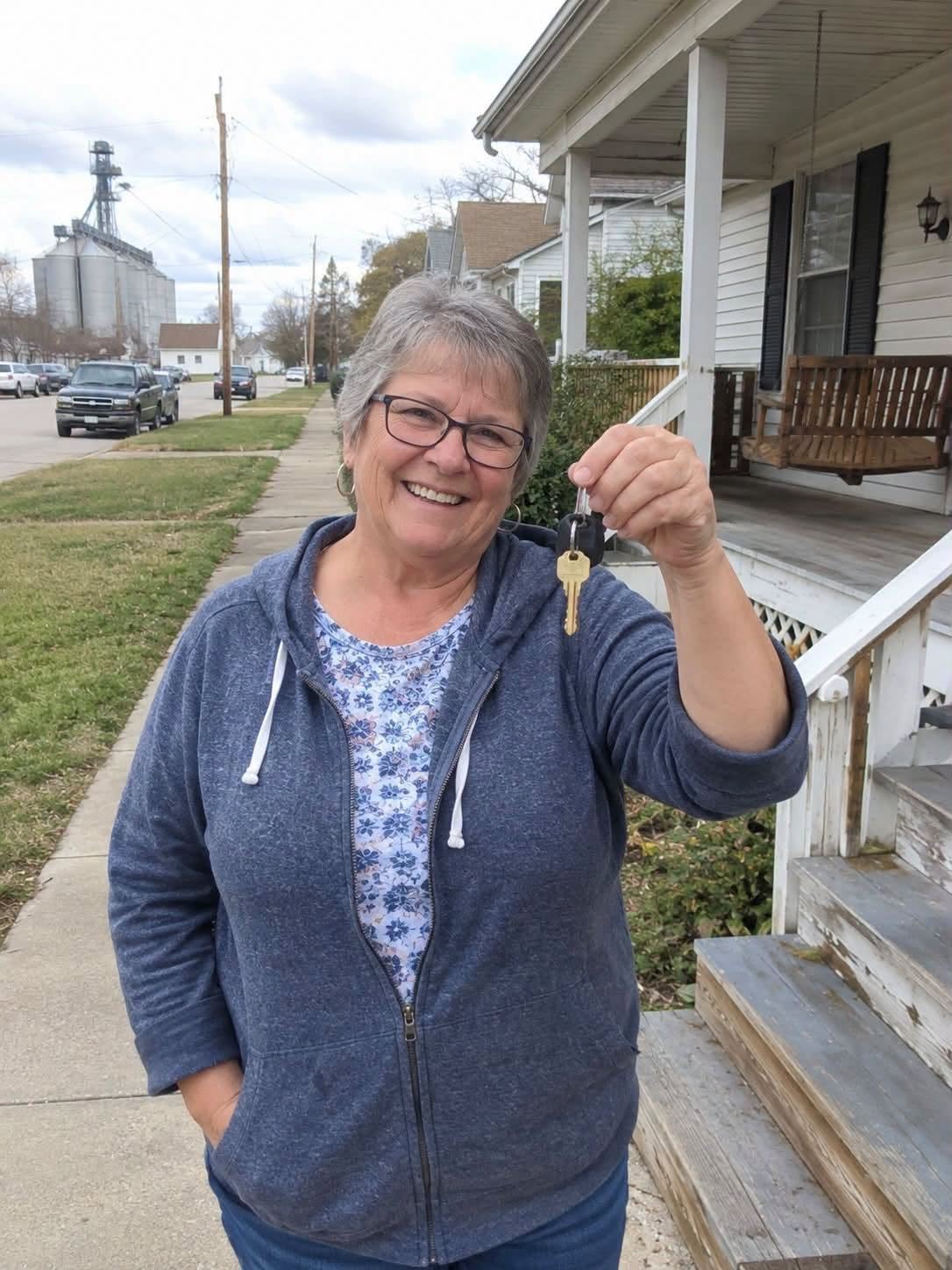
My Daughter Wanted $800 a Month and Four Days of Babysitting in Exchange for Her Basement—So I Rented My Own Little House for $550
When my daughter first told me how much she expected me to pay to live in her basement, I thought I had misunderstood her.
“Eight hundred dollars a month,” Jessica said, scrolling through her phone without looking up. “And you’ll need to watch the kids four days a week. That seems fair, Mom, considering what apartments cost these days.”
I stood in her kitchen, holding a mug of coffee I had barely touched.
Eight hundred dollars.
Four days of babysitting.
And a basement room with one small window.
I was sixty-seven years old, recently retired, and living on a fixed income. I had spent most of my adult life raising Jessica, helping her through difficult years, and doing everything I could to make sure she never went without.
Now, apparently, my retirement plan involved paying my own daughter to live in her basement while becoming her unpaid childcare provider.
I looked at her and asked quietly, “And what happens if I have plans of my own?”
Jessica finally lifted her eyes.
“Mom, you’re retired. What plans could you possibly have?”
Those words hurt more than the price.
Not because she wanted rent. I understood that maintaining a home was expensive, and I never expected to live somewhere for free simply because I was family.
It was the assumption that my time no longer belonged to me.
That because I was older, my days were somehow available for anyone who needed them.
That my retirement was not a new chapter of my life, but an open invitation to solve everyone else’s problems.
I took a slow breath.
“I’ll think about it,” I told her.
She smiled and returned to her phone, apparently convinced the matter was settled.
She had no idea what I was about to do.
The Years I Had Spent Putting Everyone Else First
After my husband, Robert, died, the house we had shared for thirty-eight years became painfully quiet.
Every room reminded me of him. His favorite chair remained beside the living room window, and I still found myself turning toward it whenever something funny happened during the evening news.
For a while, I stayed because I couldn’t imagine leaving.
Eventually, though, the house became too expensive to maintain alone. The roof needed repairs, the heating bills were climbing, and the garden had become more work than I could comfortably manage.
Jessica suggested that I move in with her family.
At first, I was touched.
She told me the children would love having their grandmother nearby. She said we could share meals, watch movies together, and finally spend the kind of time together that busy schedules had prevented for years.
I imagined Sunday breakfasts, school stories, and grandchildren running into my arms when I walked through the door.
I thought I was moving closer to my family.
I didn’t realize I was about to become their most convenient solution.
Within weeks, I was preparing dinner three nights a week. I was collecting the children from school, folding laundry, and staying home whenever Jessica and her husband had appointments.
I didn’t mind helping occasionally. I loved my grandchildren more than anything.
But gradually, occasional favors became expectations.
If I wanted to go shopping, Jessica asked who would watch the children.
If I mentioned meeting an old friend for lunch, she reminded me that she had work to finish.
And when I finally asked whether we could discuss my living arrangements, she gave me the $800 proposal.
I went to bed that night with a heavy heart.
For the first time, I wondered whether my daughter saw me as her mother—or simply as someone who could pay rent and provide childcare.
The Little House I Found by Accident
Two days later, I went for a walk through a quiet neighborhood about fifteen minutes from Jessica’s home.
I wasn’t searching for anything in particular. I simply needed some fresh air and a little distance from the tension in her house.
That’s when I noticed a small cottage with a handwritten sign in the front window.
ONE-BEDROOM HOUSE FOR RENT — $550 A MONTH.
I stopped.
The house was modest, with white shutters, a tiny front porch, and a narrow garden bordered by lavender bushes. It wasn’t luxurious, but the windows looked bright, and the front door opened directly into a little living room.
I called the number on the sign.
The landlord, an older gentleman named Mr. Harris, showed me the property that afternoon.
The kitchen was small, the bathroom had old-fashioned tiles, and the bedroom could barely accommodate a queen-size bed.
But it was clean, quiet, and entirely mine.
I asked about the rent, utilities, and lease conditions. We discussed everything carefully, and I made sure the arrangement fit within my retirement budget.
When he handed me the application, I felt something I hadn’t experienced in months.
Excitement.
Not because I wanted to escape my family, but because I had discovered that I still had choices.
I signed the lease the following week.
The Conversation My Daughter Never Expected
I waited until Saturday morning to tell Jessica.
She was making pancakes while the children argued over whose turn it was to choose a cartoon.
“Jessica, I need to tell you something,” I said.
“Can it wait, Mom? I’m busy.”
“It won’t take long.”
She sighed and put down the spatula.
“What is it?”
“I’ve found a little house. I’ll be moving out at the end of the month.”
For several seconds, she simply stared at me.
“What house?”
“A small one-bedroom cottage. It’s $550 a month.”
Her eyebrows rose.
“You’re moving out? Why would you do that?”
I almost laughed at the question.
“You told me the basement would cost $800 a month, plus four days of babysitting every week.”
“That was a suggestion!” she protested. “I was trying to be practical.”
“And I was trying to find a practical solution, too.”
She folded her arms.
“So you’re choosing to live alone instead of being with your family?”
There it was again: the suggestion that independence was somehow a rejection of her.
“No,” I replied gently. “I’m choosing to have a home where I can make my own decisions. I’ll still visit you. I’ll still love the children. But I won’t be paying rent in exchange for a room while providing childcare on a schedule I never agreed to.”
Jessica’s face turned red.
“I can’t believe you’re doing this to me.”
I looked at her carefully.
“Sweetheart, I’m not doing anything to you. I’m making a decision about my own life.”
For once, I didn’t apologize.
The Move That Changed Everything
Moving day arrived three weeks later.
I didn’t have much to take. A few boxes of clothes, my books, Robert’s favorite photograph, and the blue armchair that had sat beside my bedroom window for years.
My grandson helped carry a box to the car.
“Grandma, are you going to live all by yourself?” he asked.
I knelt beside him and smiled.
“Yes, sweetheart. But I’ll still be nearby.”
“Can we come over?”
“Of course you can.”
He hugged me tightly, and for a moment I nearly cried.
I wasn’t leaving because I loved my family less.
I was leaving because I wanted our time together to be about love rather than obligation.
That first evening in the cottage, I made myself a simple dinner, opened the windows, and sat on the little porch with a cup of tea.
Nobody asked me to pick up the children.
Nobody reminded me about a household chore.
Nobody treated my afternoon as a resource that belonged to them.
For the first time in a long while, I could decide exactly what I wanted to do the next day.
I could sleep late.
I could visit a friend.
I could read a book from beginning to end without interruption.
And I could help my daughter when I genuinely wanted to, rather than because she assumed I was available.
The peace was worth more than I could explain.
Then My Daughter Called
About ten days after I moved, Jessica called.
Her voice sounded different.
“Mom, how are you settling in?”
“Very well,” I said.
There was a pause.
“The house must be lonely.”
“Sometimes it’s quiet,” I admitted. “But quiet isn’t always the same as lonely.”
She didn’t respond immediately.
Then she said, “The kids keep asking when you’re coming over.”
“I’ll come for dinner on Sunday if that works for everyone.”
“It does.”
Another pause followed.
“Mom, I may have been unfair about the basement arrangement.”
I sat down at the kitchen table.
It wasn’t a dramatic apology. She didn’t suddenly understand every hurtful thing she had said. But it was the first time she had acknowledged that my feelings mattered.
“Thank you for saying that,” I replied.
We talked for another twenty minutes. We discussed the children, her work, and the little garden I planned to plant in the spring.
Before hanging up, she asked whether I would be willing to watch the children on Thursday afternoon.
I checked my calendar.
“I can do this Thursday,” I said. “But I can’t promise every week. We’ll need to arrange it in advance.”
“Okay, Mom.”
And that was it.
No argument. No guilt. No demand that I explain myself.
It was a small change, but an important one.
What I Learned at Sixty-Seven
I am still close to my daughter and grandchildren. I visit them, share meals with them, and help when I can.
But I no longer confuse being a good mother with making myself endlessly available.
My daughter may not have intended to hurt me when she proposed the basement arrangement. Perhaps she was overwhelmed by work, childcare, and the rising cost of living. Perhaps she genuinely believed the arrangement was reasonable.
I can understand her circumstances without surrendering my own needs.
That little cottage has taught me something I wish I had learned years earlier: love and boundaries can exist in the same relationship.
I don’t have to choose between loving my family and respecting myself.
And I don’t have to prove my worth by being useful every hour of the day.
Every morning, I open the curtains, make my coffee, and look out at the lavender bushes beside my porch.
Sometimes my grandchildren visit and leave toys scattered across the living room. Sometimes I spend an entire afternoon reading. Occasionally, Jessica comes over, and we sit together in the kitchen without discussing money or childcare.
Our relationship isn’t perfect, but it feels healthier because I finally have room to be a person in my own right.
I pay $550 a month for this little house.
But what I gained cannot be measured in dollars.
I gained peace, independence, and the freedom to decide how I spend the years ahead.
And if there’s one thing I’ve learned, it’s this: you can love your family with your whole heart without handing them the keys to your entire life.