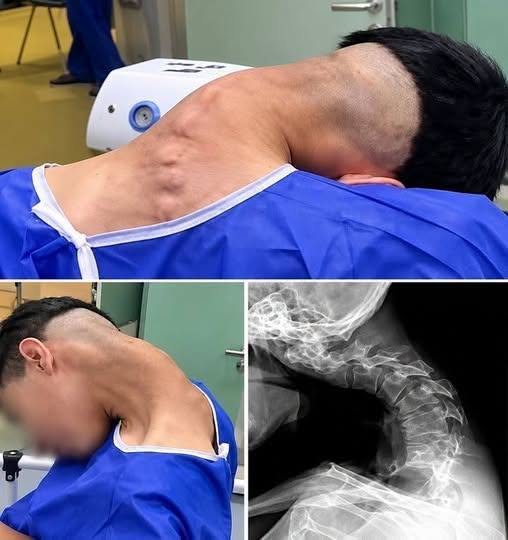
The workplace incident in India, documented in the Journal of Orthopaedic Case Reports, involved a metallic object falling from a height and striking the young worker directly. The impact caused a severe cervical spine injury. Emergency care and stabilization began immediately, but he died within two days. His death underscores the potentially fatal consequences of falling objects at work and the importance of preventing such hazards before an accident occurs.
For spine specialists, the case also revealed a limitation in how these injuries are categorized. The fractures did not fit any existing classification system, leaving an unusual injury pattern outside established diagnostic frameworks. That finding does not establish that the classification gap caused his death; rather, it highlights the complexity clinicians can face even with recognized tools. Behind the medical significance remains the central tragedy: an eighteen-year-old lost his life, and urgent treatment could not reverse the damage.
The age of the worker makes the case especially difficult to consider. At eighteen, he was at the beginning of his working life. A single falling object changed that future within moments. The account offers no basis for assuming that the danger was apparent to him, or that he had time to move away before the impact. What it establishes is the force of the blow and the severity of the injury that followed.
A neck injury can turn a localized workplace accident into an emergency with consequences far beyond the point of impact. In this case, the object struck the front of the head, yet the damage involved the cervical spine. That relationship between the impact and the resulting fracture is central to why the case attracted medical attention. The visible location of a blow does not, by itself, describe the full injury beneath it.
The classification problem also deserves careful interpretation. A system used to organize injuries is a tool for describing patterns and supporting communication between clinicians. When an unusual pattern falls outside that system, the limitation becomes worth documenting. It does not follow that doctors failed to recognize an emergency or that a different label would necessarily have changed the outcome. The account states that treatment and stabilization began immediately.
For readers outside medicine, the most direct lesson remains the importance of controlling falling-object hazards. The report brings together two responsibilities: preventing a dangerous impact in the first place and learning as much as possible when a rare injury occurs. Neither responsibility makes the loss less painful. Both give the medical record a purpose beyond describing an unusual fracture. The case preserves the circumstances of a young worker’s death while drawing attention to a problem that established categories could not fully express.
The report therefore has significance both as a record of loss and as an observation for medical practice. Describing an injury that does not fit familiar categories can help make that limitation visible to other specialists. It is a contribution to understanding the pattern, not a promise that every similar injury can be reversed. The young worker remains the person at the center of that record.