# The Ramp Was Gone By Morning
At 9:00 p.m., my neighbor looked me straight in the eye and said, “You can’t keep using my driveway. Build your own ramp if you want access to your house.”
I didn’t argue. I didn’t threaten him. I simply nodded, thanked him for his time, and went back inside.
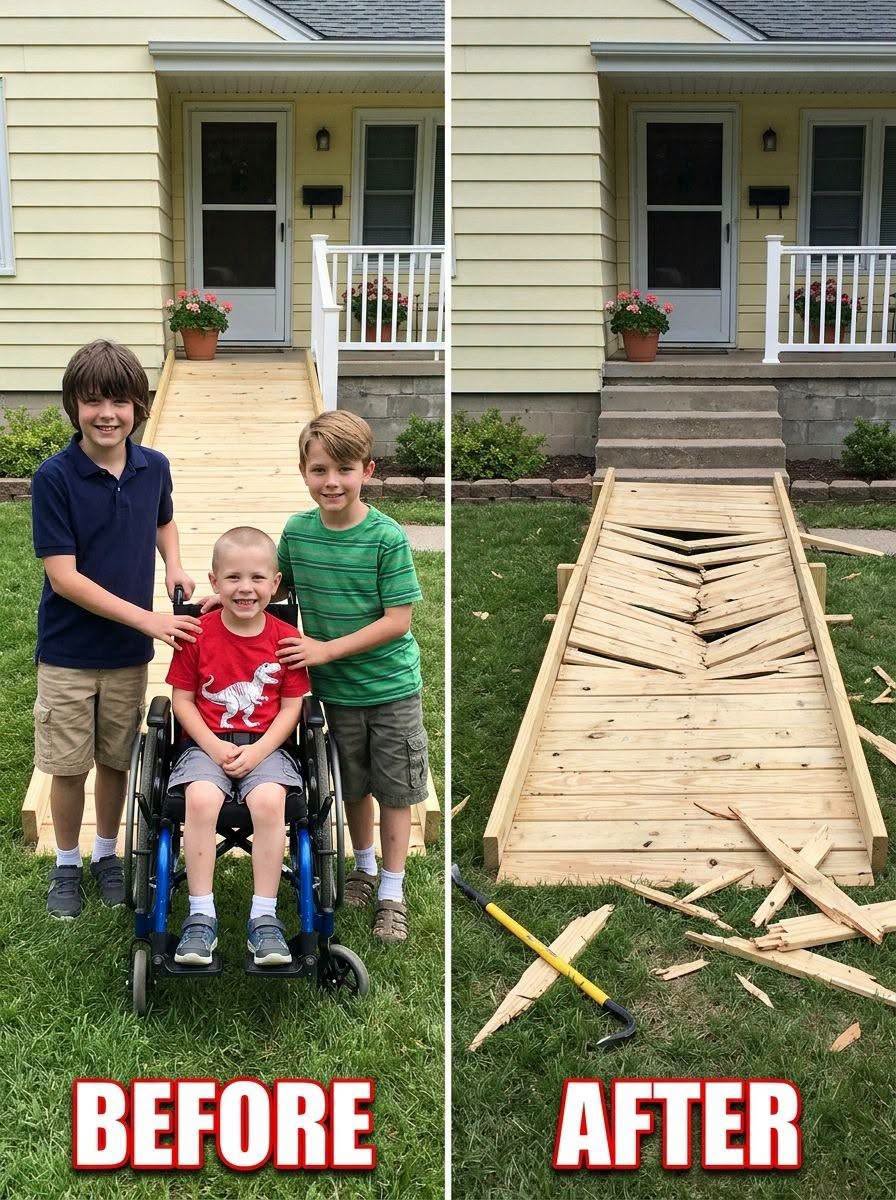
By sunrise, the ramp was gone.
But what happened next was something neither of us had expected.
My name is Daniel, and I’d lived in the same quiet neighborhood for nearly eleven years. After a car accident left me with limited mobility, the three steps leading to my front door became an obstacle I couldn’t overcome without help.
My neighbor, Martin, had always been difficult. He complained about everything from my visitors’ parking spaces to the sound of my wheelchair crossing the pavement. When I asked permission to install a small accessibility ramp that would connect my walkway to the sidewalk, he immediately objected.
“You’ll ruin the look of the neighborhood,” he said.
I explained that the ramp would be temporary until I could arrange a permanent solution. I even offered to pay for the entire installation.
He refused.
For months, I tried to find another way. Then a contractor suggested a removable ramp that could be installed without damaging the property. It was safe, practical, and affordable.
Martin still wasn’t happy.
One evening, he came to my door and demanded that I remove it. His voice was loud enough for several neighbors to hear.
“You have until tomorrow morning,” he snapped. “After that, I’m taking matters into my own hands.”
I looked at him for a long moment.
Then I said, “All right.”
He walked away smiling, convinced he’d won.
What he didn’t know was that I’d already spoken to the property manager and reviewed the relevant access rules. I’d also documented every conversation we’d had, including his threats.
That night, I made one phone call.
At 7:15 the following morning, Martin stepped outside with his coffee.
He stopped dead.
The ramp was gone.
In its place was a neat, unobstructed walkway—and a notice attached to his front gate.
He read it once.
Then again.
His face went pale.
Because the ramp hadn’t been removed out of fear. It had been relocated after the property manager confirmed the proper access arrangements, and the notice explained that the dispute was now being handled through the appropriate channels.
But there was one more surprise.
A neighbor who had witnessed Martin’s threats had finally decided to speak up. She had recorded the confrontation from her porch and offered to provide a statement.
Within hours, the neighborhood group chat was buzzing. People who had quietly watched the conflict unfold began sharing their own experiences.
Martin had expected me to lose my temper.
He had expected a shouting match, a bitter feud, and perhaps an embarrassing public argument.
Instead, he found himself facing a documented complaint, witnesses, and a dispute he could no longer dismiss as a personal disagreement.
That afternoon, he knocked on my door.
For the first time in eleven years, he didn’t look angry.
“Can we talk?” he asked quietly.
I opened the door but didn’t invite him in.
He stared at the ground.
“I didn’t realize how difficult things had become for you,” he admitted.
I took a breath.
“You didn’t need to understand my entire life, Martin. You just needed to listen when I explained what I needed.”
He said nothing for several seconds.
Then he apologized.
It wasn’t a perfect ending. Trust doesn’t return overnight, and an apology doesn’t erase months of unnecessary hardship. But the confrontation finally stopped, and we began discussing practical solutions instead of trading threats.
The ramp was gone by morning.
And in its place, something else appeared: a chance for the neighborhood to understand that accessibility isn’t a luxury, and dignity shouldn’t depend on someone else’s goodwill.
Sometimes, the strongest response isn’t revenge. It’s staying calm, documenting the truth, and letting the facts speak for themselves.