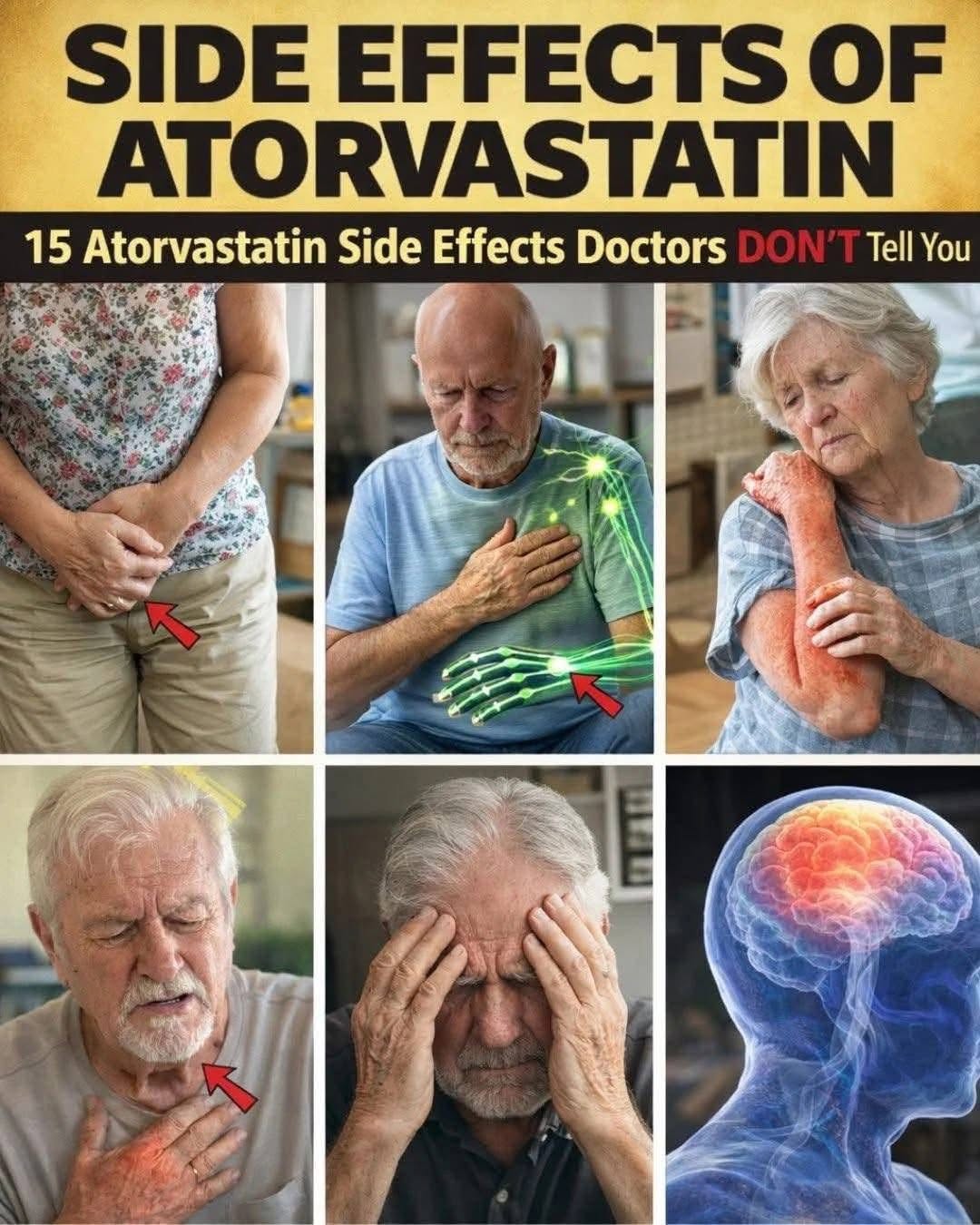
Taking Atorvastatin? Here Are 15 Side Effects to Know Before Your Next Dose
Atorvastatin is one of the most widely prescribed medications for lowering cholesterol and protecting cardiovascular health. Millions of people take it to reduce their risk of heart attacks and strokes.
But like any medication, atorvastatin can cause side effects. Some are mild and temporary, while others are rare but require immediate medical attention.
If you take atorvastatin—or someone you love does—understanding what to watch for can help you make informed decisions about your health.
The good news: Most people tolerate statins well, and the benefits can substantially outweigh the risks for people who need them. Knowing the possible side effects does not mean you should stop taking your medication.
What Is Atorvastatin?
Atorvastatin, commonly sold under the brand name Lipitor, belongs to a group of medicines called statins.
It works by reducing the amount of cholesterol the liver produces, lowering LDL (often called “bad”) cholesterol and helping reduce the risk of heart attack and stroke.
Doctors may prescribe it to people with high cholesterol, cardiovascular disease, diabetes, or an elevated risk of cardiovascular problems.
Like all medications, however, atorvastatin can cause unwanted effects. Here are 15 to know about.
15 Possible Side Effects of Atorvastatin
1. Muscle Pain
Muscle aches, soreness, or tenderness are among the best-known potential side effects of statins.
Some people notice discomfort in their legs, arms, shoulders, or back. Muscle pain can have many other causes, so it is important not to automatically assume atorvastatin is responsible.
If new or persistent muscle pain develops after starting treatment, contact your healthcare professional.
2. Muscle Weakness
Some people report weakness or unusual muscle fatigue while taking atorvastatin.
New, unexplained, or worsening weakness deserves medical attention, especially if accompanied by muscle pain, fever, or dark urine.
Rarely, statins can cause severe muscle injury.
3. Diarrhea
Diarrhea is a recognized side effect of atorvastatin.
If it occurs, drink enough fluids to prevent dehydration. Contact your healthcare professional if it is severe, persistent, or accompanied by other concerning symptoms.
4. Nausea
Some people experience nausea after taking atorvastatin.
If this becomes troublesome, ask your pharmacist or doctor whether changing your routine could help. Atorvastatin tablets can generally be taken with or without food.
5. Constipation
Although diarrhea is commonly discussed, constipation can also occur in people taking atorvastatin.
Adequate fluids, dietary fiber, and regular physical activity may help. Persistent or severe constipation should be assessed, particularly if accompanied by abdominal pain or vomiting.
6. Indigestion or Heartburn
Some people report indigestion, stomach discomfort, or heartburn while taking atorvastatin.
Other conditions and foods can produce similar symptoms. If the problem continues or becomes severe, discuss it with your healthcare professional rather than stopping the medicine on your own.
7. Gas and Bloating
Gas and abdominal bloating are possible digestive complaints.
These symptoms are usually not dangerous, but persistent discomfort can affect daily life. Keeping track of when symptoms occur may help your clinician determine whether they are related to the medication or another cause.
8. Headache
Headaches have been reported by some people taking atorvastatin.
A mild headache may have many explanations, including dehydration, stress, or lack of sleep. Seek urgent medical attention for a sudden, severe headache or one accompanied by weakness, confusion, or difficulty speaking.
9. Joint Pain
Joint pain is another reported side effect.
If joint discomfort begins after starting atorvastatin or becomes increasingly troublesome, discuss it with your doctor. Do not assume that all joint pain is caused by the medication.
10. Pain in the Arms or Legs
Some people experience pain in their extremities while taking atorvastatin.
This symptom can overlap with muscle discomfort and may have other causes, including arthritis, nerve problems, or circulation issues. New or persistent pain should be evaluated, particularly if accompanied by swelling, weakness, or changes in skin color.
11. Back Pain
Back pain has been reported during atorvastatin treatment.
It is a nonspecific symptom and does not necessarily indicate a medication reaction. Seek medical advice if it is persistent, severe, or associated with muscle weakness or dark urine.
12. Dizziness
Dizziness is a possible complaint among people taking statins, although it is not necessarily caused by atorvastatin.
If dizziness is recurrent, causes falls, or occurs alongside fainting, chest pain, or an irregular heartbeat, seek medical assessment.
13. Skin Rash or Itching
Some people may develop a rash or itching while taking atorvastatin.
A new rash should be discussed with a healthcare professional, especially if it spreads or worsens.
Seek emergency help if you experience swelling of the face, lips, tongue, or throat, or difficulty breathing or swallowing, as these can indicate a serious allergic reaction.
14. Changes in Blood Sugar
Statins can slightly increase blood sugar levels and may increase the risk of developing type 2 diabetes in some people, particularly those who already have risk factors such as prediabetes, excess weight, or metabolic syndrome.
For people at elevated cardiovascular risk, the heart-protective benefits of statin treatment often outweigh this potential risk.
Your clinician can monitor blood sugar when appropriate and advise you about diet, physical activity, and other preventive measures.
15. Liver Problems
Atorvastatin can cause changes in liver enzyme levels. Serious liver injury is rare, but it is important to recognize the warning signs.
Contact a healthcare professional promptly if you develop:
Yellowing of the skin or whites of the eyes.
Dark-colored urine.
Unusual tiredness or weakness.
Loss of appetite.
Persistent pain in the upper-right part of the abdomen.
Your doctor may recommend blood tests to assess liver function when indicated.
These symptoms can have causes unrelated to atorvastatin, but they should not be ignored.
Sources for side-effect information: MedlinePlus — Atorvastatin and FDA — Cholesterol Medicines Guide.
Which Side Effects Require Immediate Medical Attention?
Although most reported side effects are not emergencies, two rare complications deserve special attention.
<box gap={3}> <row align=start gap={3}> <box background=”surface-secondary” radius=”lg” size=”44px” align=center justify=center> <icon name=”alert-triangle” size=”xl” color=”danger”/> </box> <box flex=”1″ gap={1}> Severe muscle injury
Severe or unexplained muscle pain or weakness, especially with dark urine, fever, or marked fatigue, may indicate a rare condition called rhabdomyolysis. This can damage the kidneys and requires urgent medical evaluation. </box> </row> <divider color=”subtle”/> <row align=start gap={3}> <box background=”surface-secondary” radius=”lg” size=”44px” align=center justify=center> <icon name=”shield-alert” size=”xl” color=”danger”/> </box> <box flex=”1″ gap={1}> Serious allergic reaction
Swelling of the face or throat, difficulty breathing, or difficulty swallowing requires emergency medical assistance. </box> </row> </box>
Do not wait for a routine appointment if you experience these warning signs.
Who May Have a Higher Risk of Side Effects?
Certain factors can increase the likelihood of problems or require closer monitoring:
Taking medicines that interact with atorvastatin.
Having kidney or liver disease.
Having an underactive thyroid that is not adequately treated.
Being older, particularly when other medical conditions are present.
Taking higher doses.
Consuming substantial amounts of alcohol.
Grapefruit and grapefruit juice can also interact with atorvastatin, especially in large quantities. Ask your pharmacist or doctor whether you need to limit them.
Always tell your healthcare professional about prescription medicines, over-the-counter products, vitamins, and herbal supplements you take.
Should You Stop Taking Atorvastatin If You Notice Side Effects?
Do not stop atorvastatin on your own simply because you read about possible side effects.
Stopping treatment without medical advice may leave your cholesterol inadequately controlled and reduce the protection the medication provides against cardiovascular events.
If you develop troublesome symptoms, your clinician may investigate other possible causes, review interacting medications, adjust the dose, or consider an alternative treatment.
If you experience symptoms suggesting severe muscle injury or a serious allergic reaction, seek urgent medical care and follow the treating clinician’s instructions.
How to Take Atorvastatin More Safely
Take the medication exactly as prescribed.
Take it consistently at a time that works for your routine.
Attend recommended cholesterol and other monitoring appointments.
Report new or persistent symptoms to your healthcare professional.
Ask before starting new medications or supplements.
Maintain a heart-healthy diet, exercise regularly as appropriate, and avoid smoking.
These steps can help you receive the intended benefits while reducing avoidable risks.
Final Thoughts
Atorvastatin is an important medication that helps lower cholesterol and reduce the risk of heart attacks and strokes. Like other medicines, it can cause side effects, ranging from digestive discomfort and muscle aches to rare but serious complications.
The key is knowing which symptoms to monitor, when to seek help, and how to discuss concerns with your healthcare professional.
Remember: the goal is not to fear your medication, but to understand it. For many people, the protection atorvastatin offers against cardiovascular disease is substantial.
If you take this medication and notice a change in how you feel, speak with your doctor or pharmacist. Never change your treatment based solely on an online article.
Medical disclaimer: This article is for educational purposes only and is not a substitute for individualized medical advice. Not everyone experiences these side effects, and symptoms do not necessarily mean that atorvastatin is the cause.