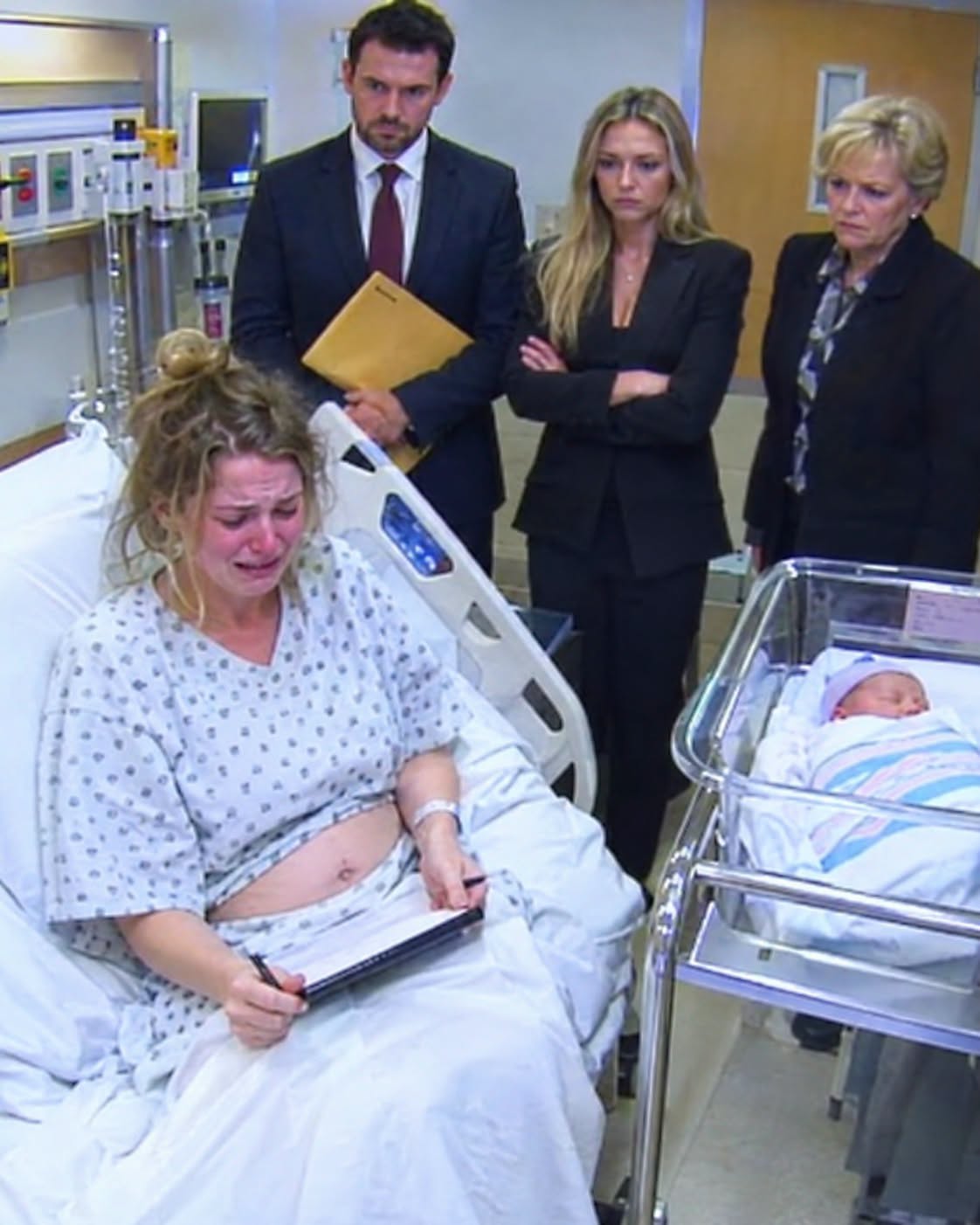
My Mother Mocked Me as a Workaholic While I Secretly Paid Her Retirement Fund—Then She Abandoned Me and My Six-Week-Old Baby After a Car Crash to Board a Caribbean Cruise. A Week Later, She Came Home Broke and Homeless.
For years, I secretly paid my mother’s bills, covered her living expenses, and made sure she never had to worry about money. She called me selfish, praised my unemployed sister for knowing how to enjoy life, and treated my sacrifices as if they meant nothing. But when I lay injured in a hospital emergency room, begging her to look after my six-week-old daughter, she told me not to ruin her mood. Then she hung up and boarded a cruise ship. Seven days later, she returned home to discover that the comfortable life she had taken for granted was gone.
My name is Claire, and for most of my adult life, I believed that if I worked hard enough and gave my family enough, eventually they would understand how much I loved them.
I was wrong.
My mother, Linda, had a favorite daughter.
It wasn’t me.
It was my younger sister, Jessica, who was thirty-one, unemployed, and seemingly allergic to responsibility.
Jessica slept until noon, spent money she didn’t have, and changed career plans every few months. Whenever she got into trouble, our mother rushed to rescue her.
When I worked late, Mom called me obsessed with money.
When Jessica spent an entire week at the beach, Mom praised her for understanding what life was really about.
And when Mom needed money for groceries, utilities, insurance, or the mortgage on her house, she always called me.
What she never knew—or perhaps never bothered to consider—was that the money she called her retirement fund was actually my salary.
Every month, I transferred a substantial portion of my earnings into her account. I had arranged the payments years earlier, after my father died, because I couldn’t bear the thought of my mother losing the home where we had grown up.
I never told her.
I thought helping her without expecting recognition was what a good daughter did.
I didn’t realize that my silence was allowing her to believe I had nothing to offer except an inconvenient work schedule.
Then I had my daughter.
And everything changed.
The Daughter Who Was Never Good Enough
When I announced that I was pregnant, Mom’s first question wasn’t whether I was healthy.
It was whether I intended to keep working.
“You know how expensive children are,” she said. “You can’t expect everyone else to help you.”
I was thirty-four, financially independent, and married to a man who loved me. We had planned carefully for our baby, and I had enough savings to take maternity leave without asking anyone for money.
Still, Mom acted as though I had made an irresponsible decision.
Jessica, meanwhile, had recently quit another job.
Mom defended her immediately.
“Your sister is still figuring herself out,” she told me. “At least she knows how to enjoy life instead of spending every waking hour chasing a paycheck.”
I looked at her across the kitchen table.
“Mom, someone has to pay the bills.”
She laughed.
“That’s exactly your problem, Claire. You think money solves everything.”
I wanted to tell her that the mortgage payment she never worried about came from my account. That the electricity she used, the groceries she bought, and the insurance that protected her home were all being paid for by the daughter she constantly criticized.
But I said nothing.
I had learned that defending myself only made her angrier.
So I went home, kissed my husband, Ethan, and checked on the tiny girl sleeping in her crib.
My daughter, Lily, was six weeks old when my life fell apart.
The Phone Call From the Emergency Room
The accident happened on a rainy Tuesday afternoon.
I was driving home after a pediatric appointment with Lily secured in her car seat in the back. Traffic slowed near an intersection, and I pressed the brakes.
The next few seconds remain fragmented in my memory.
A horn.
A violent impact.
Glass shattering.
The sound of metal twisting.
Then silence.
When I regained awareness, I was trapped in the driver’s seat. Pain radiated through my chest and legs, and I could barely move.
I heard someone shouting that help was coming.
My first thought wasn’t about myself.
It was Lily.
“MY BABY!” I screamed. “Please, someone check my baby!”
A stranger had already reached her. Emergency responders arrived quickly, and both of us were taken to the hospital.
Lily was examined by the medical team while I was rushed into the emergency department.
I was frightened, disoriented, and in terrible pain.
A nurse eventually told me that Lily was being cared for and that the doctors were assessing my injuries.
But there was a problem.
My husband was attending a work conference several hours away. He had immediately begun arranging transportation back, but he couldn’t reach the hospital in time to take care of Lily himself.
I needed someone I trusted to stay with my daughter.
There was only one person I thought I could call.
My mother.
I dialed her number with shaking fingers.
She answered after several rings.
“What is it, Claire? I’m busy.”
“Mom, please listen to me. I’ve been in a serious car accident.”
She sighed.
“What happened now?”
I closed my eyes, trying to steady my breathing.
“I’m in the emergency room. The doctors are treating me, and Lily needs someone to stay with her. She’s only six weeks old. Please, can you come to the hospital?”
There was a pause.
Then I heard voices in the background, laughter, and the unmistakable sound of people celebrating.
My mother was preparing to leave for her Caribbean cruise.
“Mom, please,” I whispered. “I don’t know what’s going to happen. I need you.”
Her response is something I will remember for the rest of my life.
“Don’t ruin my mood, Claire. Your sister never causes this kind of trouble.”
I thought the pain medication was making me misunderstand her.
“What?”
“Jessica knows how to live. She doesn’t constantly drag everyone into her problems.”
“Mom, I’m not asking you for money. I’m asking you to look after your granddaughter while the doctors treat me.”
“I have a vacation to enjoy. You should have arranged something before getting into a car accident.”
I started crying.
“Please. She’s your granddaughter.”
My mother exhaled impatiently.
“Don’t make me feel guilty because you can’t manage your own life.”
Then she hung up.
I stared at the phone.
For several seconds, I couldn’t process what had happened.
My mother had just refused to help her injured daughter and six-week-old granddaughter because she didn’t want her vacation interrupted.
And I had spent years paying for the comfortable life she was so eager to leave behind.
The Woman Who Finally Told Me the Truth
A nurse noticed that I was crying and asked whether I had someone coming to help.
I shook my head.
She didn’t press me for details. Instead, she explained that the hospital’s social worker could help coordinate safe care for Lily while my husband traveled back.
Within a short time, the staff helped us work through the immediate arrangements. My husband was contacted, and he was determined to reach us as quickly as possible.
For the first time that afternoon, I allowed myself to stop worrying about what my mother might think.
I focused on getting through the next hour.
The medical team continued evaluating my injuries, and I remained under observation.
Later, when the room was quiet, I asked the social worker whether she thought I should call my mother again.
She looked at me gently.
“You’ve asked for help. Her response is her responsibility, not yours.”
Those words broke something open inside me.
I had spent my entire life believing that if I became more successful, more patient, and more generous, my mother would eventually treat me with the same tenderness she gave Jessica.
But I couldn’t earn compassion from someone who repeatedly chose not to offer it.
That evening, while I was still in the hospital, I opened my banking application.
I looked at the automatic transfers scheduled for the coming months.
Mortgage.
Utilities.
Insurance.
Living expenses.
Every payment represented hours of my life spent working, often while sacrificing time I could have spent resting or enjoying my own family.
I had called those transfers love.
Now I wondered whether I had also been financing my own mistreatment.
I canceled the upcoming transfers.
Then I sat quietly, feeling grief and relief at the same time.
I wasn’t trying to punish my mother.
I was simply no longer willing to pretend that an arrangement built on secrecy and disrespect had to continue forever.
Seven Days Later, My Mother Came Home
My recovery was slow, and the first week was exhausting.
My husband stayed close whenever he could, and we accepted help from people who genuinely wanted to support us.
Lily was the center of our world. Every time I held her safely in my arms, I was reminded of how close we had come to a very different outcome.
I didn’t contact my mother.
She didn’t contact me either.
Instead, I later learned that she had enjoyed her cruise, posting photographs of turquoise water, elegant dinners, and tropical beaches.
Jessica appeared in several of the pictures.
They looked happy.
Neither of them seemed concerned about what had happened to me.
Then, seven days after the accident, my phone began ringing repeatedly.
It was my mother.
I didn’t answer the first call.
She called again.
And again.
Finally, I picked up.
“Claire!” she shouted. “What have you done?”
I was sitting beside Lily’s crib, still recovering from my injuries.
“What are you talking about?”
“The bank! The mortgage company! Everything is falling apart!”
I said nothing.
She continued speaking rapidly, her voice shaking with anger.
“The mortgage payment hasn’t gone through. The electricity bill is overdue. There are notices on the door. Someone from the bank says the account arrangements have changed!”
I closed my eyes.
“Yes, Mom.”
“Yes, WHAT?”
“The money was coming from my salary.”
Silence.
For the first time in my life, my mother had absolutely nothing to say.
Then she laughed nervously.
“That’s ridiculous. You can’t be serious.”
“I set up the payments years ago. I’ve been covering the expenses every month.”
“But you said you worked so much because you wanted to get ahead!”
“I did want to get ahead. I also wanted you to be safe. I never told you because I didn’t want you to feel that you owed me anything.”
Her voice rose.
“Then why would you stop? You know I depend on that money!”
I looked at my daughter.
“Mom, I called you from an emergency room. I was injured, frightened, and asking for help with your six-week-old granddaughter. You told me not to ruin your mood.”
She didn’t answer.
“You chose your vacation. I chose to stop paying for a life in which my needs never seemed to matter.”
Then I heard Jessica in the background.
“What is she saying? Tell her to fix it!”
My mother lowered her voice.
“Claire, your sister and I have nowhere to go if this continues.”
I felt a familiar tug of guilt.
For years, that feeling had been enough to make me transfer money, apologize, and swallow every insult.
But this time, I didn’t give in.
“I hope you find a solution, Mom. But I can’t be your retirement plan anymore.”
I ended the call.
My hands were trembling, but I didn’t regret what I had said.
The House Was Never Really Theirs to Lose
Over the following days, my mother sent messages accusing me of cruelty.
She told relatives that I had abandoned her. She claimed I was trying to destroy the family because she had refused to interrupt a vacation.
What she left out was the money.
She never explained that the comfortable life she had enjoyed for years depended on transfers from the daughter she called a workaholic.
Nor did she explain that she had refused to help when I was injured and desperately needed support for my baby.
The situation with her house was more complicated than she initially admitted. Missed payments had triggered notices, but that did not mean the property had automatically been taken away overnight. The family had to confront the financial obligations they had ignored and seek advice about their options.
Without my monthly contributions, however, they could no longer maintain their previous lifestyle.
Jessica eventually had to face the reality that someone needed to earn money.
My mother had spent years telling her that life was about enjoying herself.
Now they were learning that financial security required planning, responsibility, and difficult choices.
I didn’t celebrate their hardship.
I simply refused to take responsibility for fixing it.
The Message That Arrived Three Weeks Later
Three weeks after the accident, I received a message from my mother.
It was much shorter than the angry paragraphs she had sent before.
“Claire, I didn’t realize how much you were doing for us. I thought you were always trying to prove that you were better than your sister. I didn’t understand.”
I read it several times.
There was no direct apology for the phone call. No acknowledgment of the pain I had felt when she dismissed my emergency as an inconvenience.
But for the first time, she seemed to understand that I had been carrying a burden she had never even bothered to see.
I didn’t respond immediately.
I was still healing. My husband and I were adjusting to life with our newborn, and I needed to protect the peace we were building.
Eventually, I wrote back.
“I’m glad you understand now. But I need time. If we are going to have a relationship, it has to be based on respect, not on what I can pay for.”
Then I put my phone away.
I didn’t know whether my mother would change.
I didn’t know whether Jessica would ever take responsibility for herself.
But I finally understood something that had taken me thirty-four years to learn.
Being a good daughter did not mean sacrificing my own family to keep everyone else comfortable.
Helping someone did not mean accepting cruelty in return.
And love did not require me to keep paying for a place in someone’s life.
The Real Cost of Silence
Today, I still remember that phone call from the emergency room.
Not because my mother chose a cruise over helping me, although that betrayal hurt deeply.
I remember it because it forced me to see the relationship clearly.
For years, I had hidden my generosity, believing that my mother would eventually recognize my worth without needing to know what I had done.
Instead, my silence had allowed her to mistake my sacrifice for an unlimited resource.
I cannot change how she treated me.
I cannot force her to apologize.
And I cannot make Jessica become someone she doesn’t want to be.
But I can choose what happens next.
My daughter will grow up knowing that she doesn’t have to buy love with exhaustion. She won’t have to work herself into the ground to earn basic kindness from the people who claim to care about her.
I want her to understand that generosity is beautiful when it comes from the heart—but it should never be a condition for being accepted.
My mother once told me that my sister knew how to enjoy life while I wasted mine chasing money.
She never understood that the money she dismissed was the very thing keeping her world standing.
And when I finally stopped paying for everything, the truth became impossible to ignore.
I hadn’t abandoned my family. I had simply stopped abandoning myself.
Disclaimer: This is a fictional, dramatized story inspired by the supplied headline. It is not a verified account of a real family or a real event.