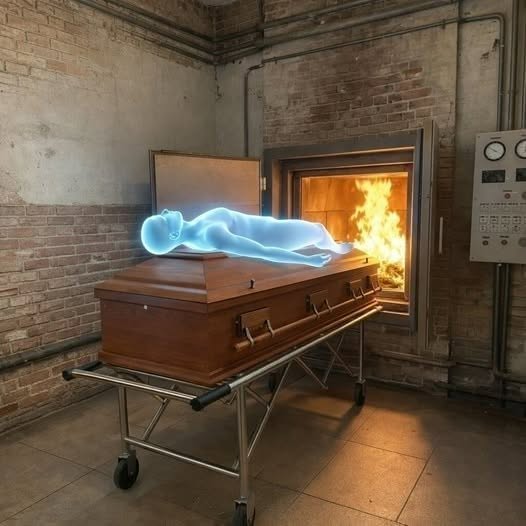
Most People Don’t Know What Happens After Cremation — Here’s What Actually Happens to the Body
Cremation is a common alternative to burial, yet many people have questions about what actually happens to the human body during the process. What happens after the procedure begins? What remains afterward? And how are the ashes returned to the family?
Although the subject can feel uncomfortable, understanding the process can help replace uncertainty with clear, factual information.
What Happens Before Cremation?
Before cremation takes place, the funeral provider completes the required identification and authorization procedures. The deceased is identified, the necessary paperwork is checked, and any medical devices that could pose a safety risk, such as certain battery-powered implants, are addressed according to applicable regulations.
The body is then prepared for cremation in accordance with the facility’s procedures and the family’s arrangements.
Cremation is carried out in a specialized chamber designed to withstand extremely high temperatures.
What Happens Inside the Cremation Chamber?
During cremation, the chamber is heated to temperatures commonly around 760–1,000°C (1,400–1,832°F), depending on the equipment and stage of the process.
The heat causes the body’s soft tissues to break down through combustion and related thermal processes. Most of the body’s organic material is converted into gases and other byproducts, which pass through the cremation facility’s emissions-control system.
The process does not leave behind a body in the same form as after burial.
Instead, the remaining material consists primarily of bone fragments, along with certain mineral residues.
The duration varies according to factors such as body size, equipment, container materials and operating conditions. A cremation commonly takes several hours.
What Happens to the Bones?
One of the most commonly misunderstood aspects of cremation is what happens to the skeleton.
Bones do not simply disappear. Their organic components are largely destroyed by the heat, while the remaining mineral structure becomes brittle and fragmented.
After the chamber has cooled sufficiently, trained personnel collect the remaining fragments. Any metal materials, such as surgical implants, may be separated at this stage in accordance with local procedures.
The bone fragments are then processed in a specialized machine called a cremulator, which reduces them to a more uniform, coarse, sand-like consistency.
These processed fragments are what people commonly call cremated ashes.
Are the Ashes Really Ashes?
Not exactly.
Despite the familiar term, cremated remains are not primarily the soft, gray ash produced by burning wood or paper.
They consist mainly of processed bone minerals, particularly calcium-containing compounds and phosphates.
Their color and texture can vary, and the final amount depends on several factors, including the person’s skeletal structure and the cremation process.
The remains are collected and placed in a suitable container or urn, which is then returned to the authorized recipient according to the funeral provider’s procedures.
What Happens to Artificial Teeth, Implants and Other Materials?
Some materials may remain after cremation.
Dental restorations, surgical implants and other metal components may survive the high temperatures, although their condition can change. These materials are generally separated from the bone fragments when practical.
How they are handled afterward depends on local regulations, facility policies and the type of material involved.
Can Cremation Ashes Identify a Person?
Cremated remains generally cannot be identified through routine DNA testing in the same way that many biological samples can. The high temperatures used during cremation destroy most of the DNA in soft tissues.
In some circumstances, specialized testing of remaining material may be possible, but it is not routinely available or guaranteed to produce a useful result.
This is one reason identification checks and accurate documentation before cremation are so important.
What Happens After the Family Receives the Ashes?
Once the cremated remains have been processed and documented, they are usually placed in an urn or another approved container.
Families may choose to keep the urn, bury the remains, place them in a memorial location, or scatter them where legally permitted. The available options depend on personal wishes, cultural traditions, religious beliefs and local laws.
For many families, this stage is an important part of saying goodbye and finding a meaningful way to remember the person who has died.
The Truth About Cremation
Cremation is a carefully controlled process, not a mysterious disappearance of the body. Heat breaks down soft tissues, leaves mineralized bone fragments, and allows those fragments to be processed into the remains returned to the family.
Although the details may be difficult to think about, understanding what happens can help families make informed decisions during an emotional time.
Ultimately, cremation changes the physical form of the body, but it does not change the memories, relationships or significance of the life that person shared with others.