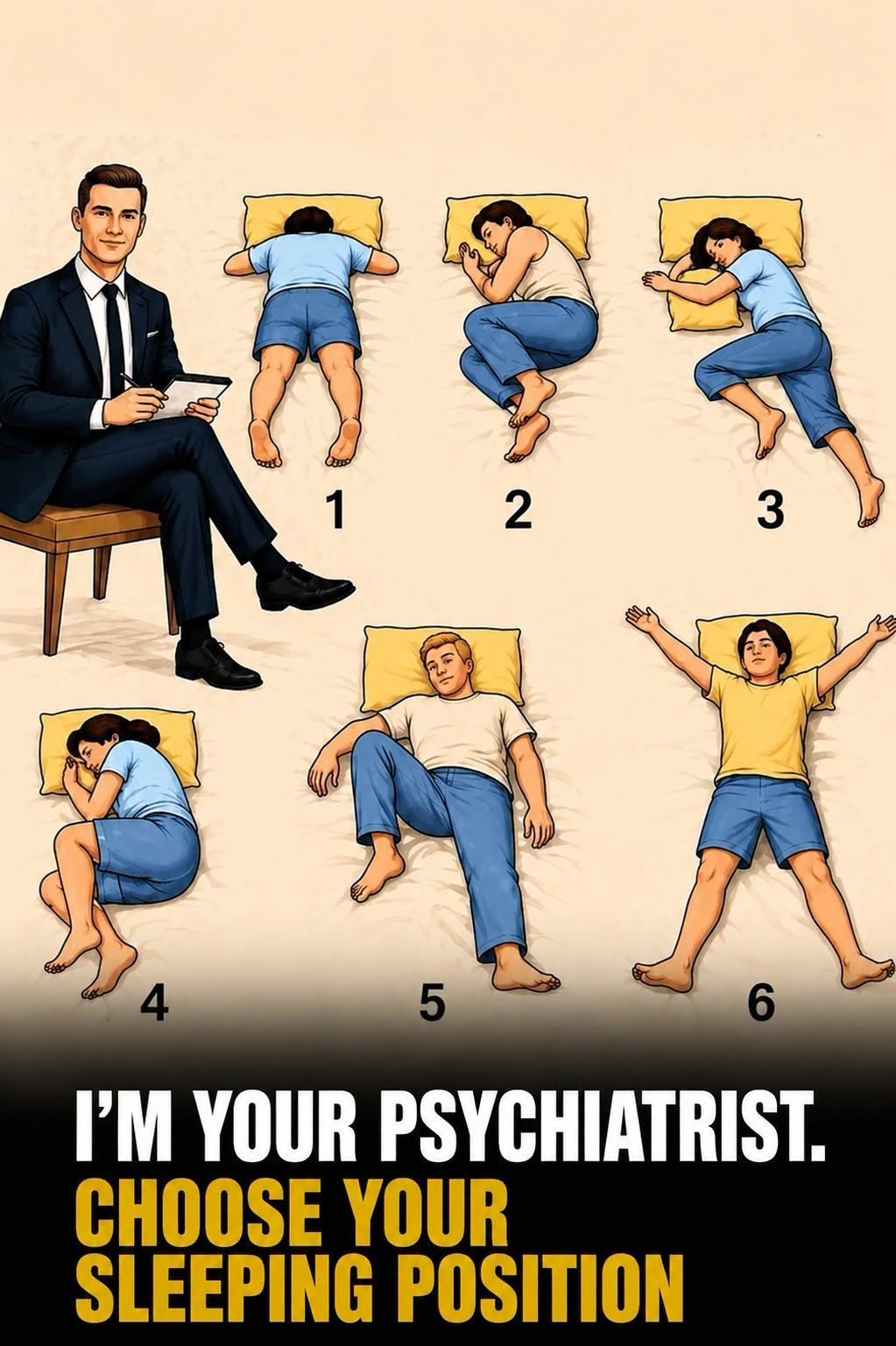
Your Personality: 6 Common Sleeping Styles Explained — What Your Favorite Sleep Position Might Say About You
Have you ever wondered whether the way you sleep reveals something about your personality? Some people curl up tightly under the blankets, others stretch out across the bed, while many prefer sleeping flat on their backs.
Sleep positions are fascinating because they are influenced by comfort, habit, physical health, and even the mattress we use. Popular articles often associate different sleeping styles with personality traits, such as confidence, sensitivity, or a desire for security.
But is there really a connection between how you sleep and who you are?
Although there is no strong scientific evidence that your sleeping position can accurately determine your personality, exploring these six common sleeping styles can be an entertaining way to reflect on your habits and preferences.
1. The Fetal Position: The Comfort Seeker
<AsyncImage query=”person sleeping curled up on side fetal position cozy bedroom natural soft lighting” aspectRatio=”16:9″ width=”100%”/>
The fetal position involves sleeping on your side with your knees bent toward your chest. It is one of the most recognizable sleeping positions.
Popular personality interpretations often associate this position with people who appreciate comfort, security, and emotional closeness. Those who sleep this way are sometimes described as sensitive or thoughtful, even if they appear confident during the day.
Why might people choose it? Curling up can feel familiar and comfortable, particularly for people who prefer sleeping on their sides.
What it might mean for you: You may simply find this position relaxing. Your sleeping posture alone cannot establish whether you are shy, sensitive, or emotionally reserved.
2. The Log Position: The Easygoing Sleeper
<AsyncImage query=”person sleeping straight on side arms resting alongside body peaceful bedroom” aspectRatio=”16:9″ width=”100%”/>
In the log position, a person sleeps on their side with their body relatively straight and their arms resting near their torso.
Popular sleep-personality descriptions often portray log sleepers as sociable, relaxed, and trusting.
This position may also be comfortable for people who naturally prefer side sleeping and want to keep their bodies in a relatively neutral posture.
What it might mean for you: You may have found a sleeping position that feels natural and allows you to rest comfortably. There is no reliable evidence that it predicts how trusting or outgoing you are.
3. The Yearner Position: The Thoughtful Planner
<AsyncImage query=”person sleeping on side arms extended forward yearner sleep position white bedding” aspectRatio=”16:9″ width=”100%”/>
The yearner position resembles the log position, except that the sleeper extends both arms forward.
Some popular interpretations associate this posture with curiosity, thoughtfulness, and a tendency to consider decisions carefully.
The extended-arm position may simply reflect the way someone distributes pressure across their shoulders and torso to find a comfortable sleeping posture.
What it might mean for you: If you sleep this way, pay attention to whether your arms or shoulders feel comfortable when you wake up. Your posture is not a dependable indicator of how you make decisions.
4. The Soldier Position: The Straightforward Sleeper
<AsyncImage query=”person sleeping on back straight body arms resting at sides soldier sleep position calm bedroom” aspectRatio=”16:9″ width=”100%”/>
The soldier position involves lying on your back with your arms resting straight alongside your body.
In popular personality descriptions, this position is associated with discipline, organization, and a preference for structure.
Some people find sleeping on their backs comfortable because it allows them to distribute their weight evenly across the mattress.
However, back sleeping can worsen snoring or obstructive sleep apnea in some individuals.
What it might mean for you: Your preference may have more to do with physical comfort than with being organized or disciplined. If you snore heavily or frequently wake up feeling unrefreshed, consider discussing it with a healthcare professional.
5. The Starfish Position: The Space Lover
<AsyncImage query=”person sleeping on back arms and legs spread comfortably across bed starfish sleeping position” aspectRatio=”16:9″ width=”100%”/>
The starfish position involves sleeping on your back with your arms and legs spread outward.
Popular interpretations sometimes describe starfish sleepers as generous, supportive, and willing to listen to others.
The position also allows the body to spread out across the mattress, which some people find comfortable.
Of course, it can become less practical when sharing a bed!
What it might mean for you: You may simply enjoy having room to stretch out. There is no established connection between this sleeping style and generosity or social behavior.
6. The Freefall Position: The Face-Down Sleeper
<AsyncImage query=”person sleeping on stomach face turned sideways freefall sleeping position soft bedding” aspectRatio=”16:9″ width=”100%”/>
The freefall position involves sleeping on your stomach, often with your head turned to one side and your arms positioned around the pillow.
Popular personality descriptions sometimes associate this posture with boldness, spontaneity, or a preference for taking control.
However, stomach sleeping can place additional strain on the neck because the head must usually remain turned to one side. For some people, it can also contribute to back discomfort.
What it might mean for you: You may have become accustomed to this position over time. If you frequently wake up with neck or back pain, experimenting with another position or pillow may help.
What Science Actually Says About Sleeping Positions
Although the idea of identifying personality through sleep is appealing, it is important to separate entertaining interpretations from scientific evidence.
Researchers have not established that these six sleeping styles reliably reveal personality traits. Your sleeping position can change throughout the night and may be influenced by several factors, including:
- Physical comfort: Your mattress, pillows, and preferred temperature can affect how you settle down.
- Health conditions: Pain, reflux, breathing difficulties, and pregnancy can influence sleep posture.
- Habit: Many people return to familiar positions because they feel comfortable.
- Sleep environment: Room temperature, bed size, and whether you share a bed can affect movement and positioning.
Your personality is much more complex than the way you position your arms and legs while asleep.
Which Sleeping Position Is Best for Your Health?
There is no single sleeping position that is ideal for everyone.
- Side sleeping may help reduce snoring and can be beneficial for some people with sleep-related breathing problems.
- Back sleeping may be comfortable for the spine, but it can worsen snoring or sleep apnea in susceptible individuals.
- Stomach sleeping may reduce snoring for some people, but it can place extra strain on the neck.
- Pregnancy: Side sleeping is generally recommended later in pregnancy, particularly after 28 weeks, following established maternity guidance.
The most important considerations are whether you sleep comfortably, wake up rested, and experience symptoms that might need medical attention.
If you regularly feel exhausted despite getting enough time in bed, or someone notices pauses in your breathing while you sleep, speak with a healthcare professional.
So, What Does Your Sleeping Style Say About You?
Your favorite sleeping position may be an interesting part of your nighttime routine, but it is not a personality test.
You might recognize yourself in descriptions of the thoughtful yearner, the relaxed log sleeper, or the space-loving starfish. Enjoy those comparisons as entertainment rather than as scientific conclusions.
Ultimately, good sleep depends less on what your sleeping posture supposedly says about your character and more on the quality, duration, and consistency of your rest.
Now it’s your turn! Which of these six sleeping positions do you usually wake up in? Are you a fetal sleeper, a starfish, or someone who prefers sleeping on your stomach?
Share your answer in the comments—and tell us whether you tend to stay in one position or move around all night!