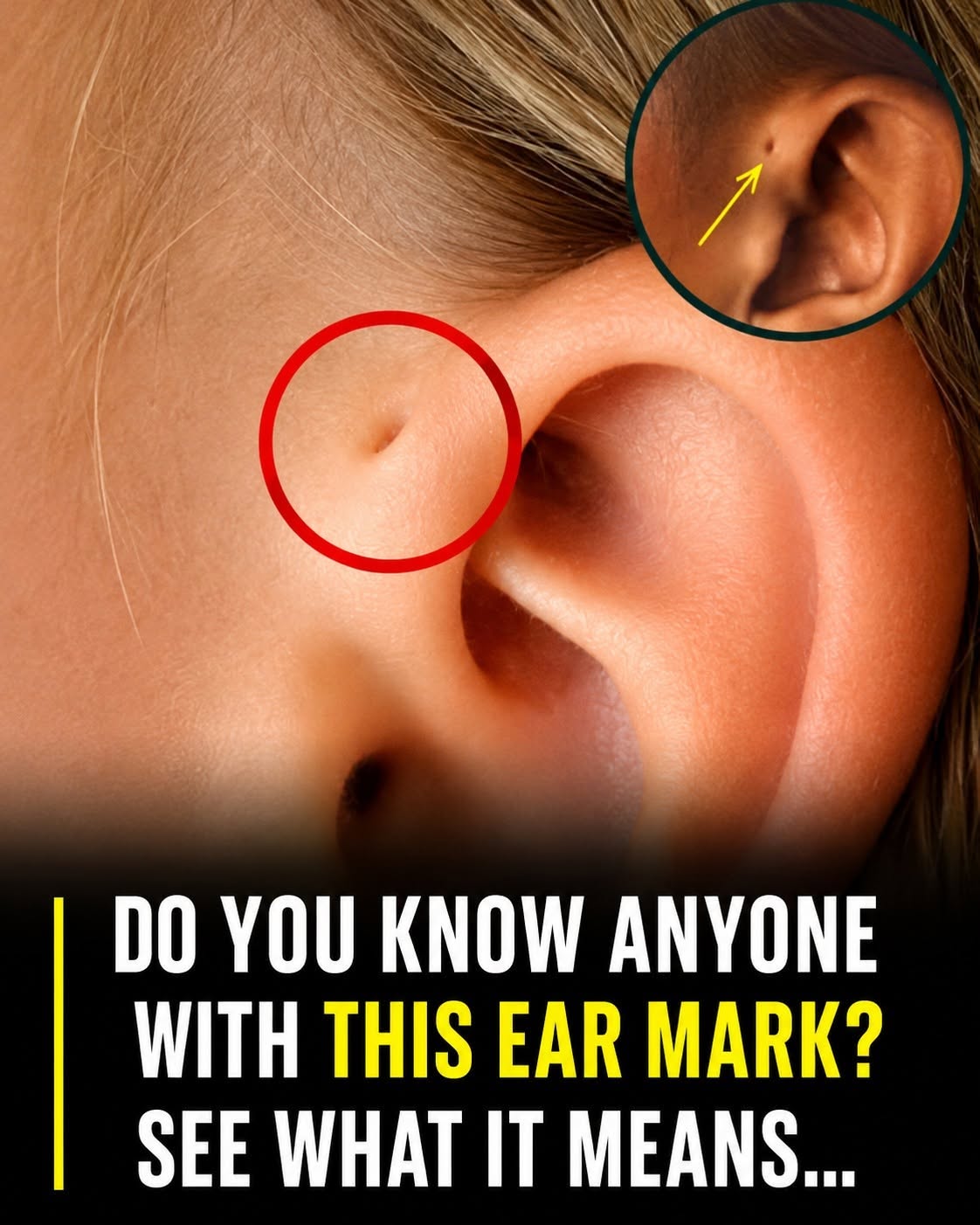
Discover the Meaning of This Tiny Mark Near the Ear: It’s More Common Than You Think
A tiny hole, dimple, or opening near the ear may look unusual, but it is often a harmless congenital feature. Known as a preauricular pit or sinus, this small mark develops before birth and affects some people without causing any symptoms.
Have you ever noticed a tiny opening just in front of your ear, near where the ear meets the face? You may have wondered whether it was a scar, a skin imperfection, or a sign of an underlying health problem.
In many cases, this small opening is a preauricular pit, a congenital feature that forms during early development in the womb. Although it may attract attention, most people who have one experience no problems and do not need treatment.
Understanding what this mark is—and when it might require medical attention—can help separate common anatomical differences from symptoms that deserve further evaluation.
What Is a Preauricular Pit?
A preauricular pit is a tiny opening or indentation in the skin, usually located just in front of the ear, where the ear attaches to the face. It is present from birth, although some people may not notice it until later in life.
The opening is associated with the development of the ear before birth. During this process, the tissues that form the outer ear come together and develop into their final shape. A preauricular pit can occur when this development leaves a small tract beneath the skin.
These openings are usually very small and may resemble a pinhole or tiny dimple.
Preauricular pits can occur on one ear or both. They may also run in families, meaning that other relatives may have the same feature.
Why Do Some People Have This Tiny Mark?
The exact appearance of a preauricular pit is related to the way the outer ear develops during pregnancy.
In most cases, it is simply a congenital variation and does not indicate that anything is wrong with the person’s overall health.
The feature is generally harmless and does not affect hearing by itself. However, a clinician may recommend additional assessment if it appears alongside other congenital differences or if there are concerns about hearing or kidney development.
Having a preauricular pit alone does not mean that a person has kidney disease or a hearing disorder.
Can a Preauricular Pit Cause Health Problems?
Most preauricular pits remain harmless throughout a person’s life. However, the small tract beneath the opening can sometimes become infected.
Possible warning signs include:
- Redness or swelling around the opening.
- Pain or tenderness near the ear.
- Fluid or pus draining from the pit.
- A lump developing beneath the skin.
- Repeated episodes of inflammation or infection.
An infection may require medical treatment, such as antibiotics or drainage if an abscess develops. Recurrent infections may lead a specialist to recommend surgical removal of the tract.
It is important not to squeeze, probe, or attempt to clean the opening with sharp objects, as this may irritate the area or introduce infection.
Does This Tiny Mark Affect Hearing?
A preauricular pit alone usually does not cause hearing problems.
However, certain congenital ear differences can occur alongside hearing abnormalities. If a baby is born with a preauricular pit, hearing assessment should follow the usual newborn hearing-screening recommendations. Further evaluation may be appropriate if there are additional ear abnormalities, a family history of hearing loss, or concerns about speech and hearing development.
Parents should consult a healthcare professional if a child does not respond consistently to sounds or shows signs of delayed speech development.
Is There a Connection Between Preauricular Pits and Kidney Problems?
This is a common question, particularly among parents.
The ears and kidneys develop during pregnancy, and some uncommon congenital conditions can affect both structures. For that reason, preauricular pits occurring alongside certain other abnormalities may prompt a doctor to consider further evaluation.
However, an isolated preauricular pit does not automatically mean that a person needs kidney tests or has a kidney disorder.
Whether additional testing is appropriate depends on the individual’s medical history, physical examination, family history, and the presence of other congenital findings. A healthcare professional can determine whether further assessment is necessary.
Does Every Preauricular Pit Need Treatment?
No. If the opening is not infected and causes no discomfort, treatment is usually unnecessary.
Medical care may be appropriate if the area becomes repeatedly infected, develops a cyst or abscess, or causes ongoing discomfort.
For people who experience recurrent problems, a specialist may recommend removing the tract surgically. The timing of treatment depends on the severity of symptoms and whether an active infection is present.
People who are concerned about a small opening near the ear can ask a doctor to examine it and confirm the diagnosis.
When Should You See a Doctor?
Although most preauricular pits are harmless, medical advice is recommended if the opening becomes painful, swollen, red, or begins producing discharge.
Prompt assessment is particularly important if swelling spreads, pain becomes severe, or fever develops.
If the mark has been present since birth and has never caused symptoms, it is generally not a cause for alarm.
Final Thoughts
A tiny mark near the ear may look mysterious, but it often has a straightforward explanation. A preauricular pit is a small congenital opening that usually causes no health problems and requires no treatment.
The most important distinction is between an uncomplicated opening and one that develops signs of infection or appears alongside other medical concerns.
Knowing what to look for can help you avoid unnecessary worry while recognizing when professional medical advice is appropriate.