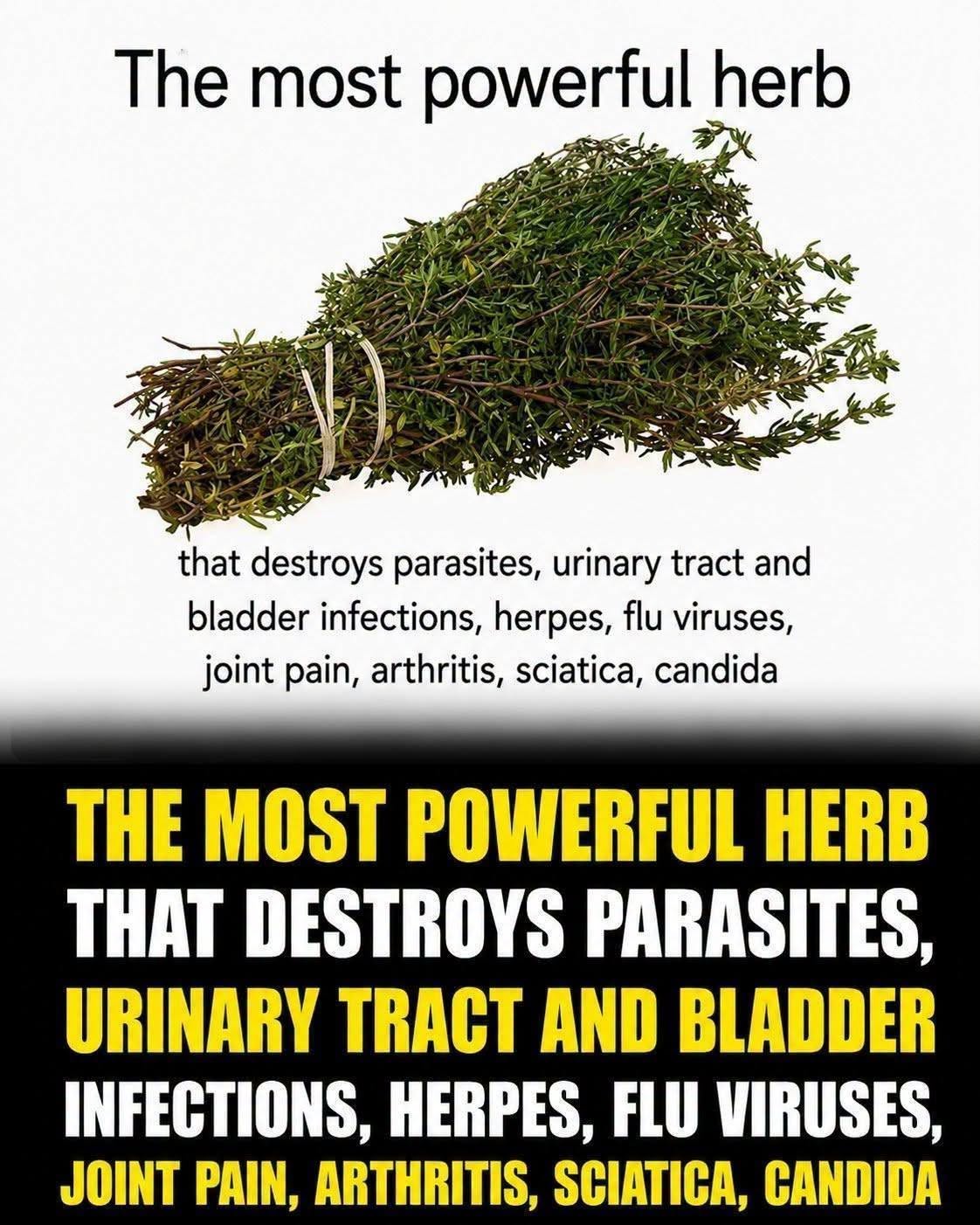
Can One Herb Really Fight Parasites, UTIs, Viruses, and Arthritis? What Science Actually Says
Social media is filled with headlines promoting a single herb as a remarkable natural remedy capable of destroying parasites, eliminating urinary tract infections (UTIs), fighting viruses, relieving arthritis, and treating a wide range of other health conditions. These claims often sound convincing because they appeal to a simple idea: that one powerful plant might offer a natural solution to several different medical problems.
But the reality is considerably more complicated.
Although some medicinal plants contain biologically active compounds with antimicrobial, anti-inflammatory, or antioxidant properties, there is no single herb proven to cure all of these conditions. Different illnesses have different causes, and a substance that affects one type of microorganism in a laboratory may have little or no meaningful effect on an infection or disease in the human body.
Scientific research has identified promising compounds in numerous plants. However, discovering that a substance has biological activity is only the beginning of the research process. Scientists must also determine whether it works safely in people, what dose is appropriate, how the body absorbs and processes it, and whether it produces meaningful improvements in health.
This distinction is particularly important when considering conditions such as UTIs, parasitic infections, viral illnesses, and arthritis.