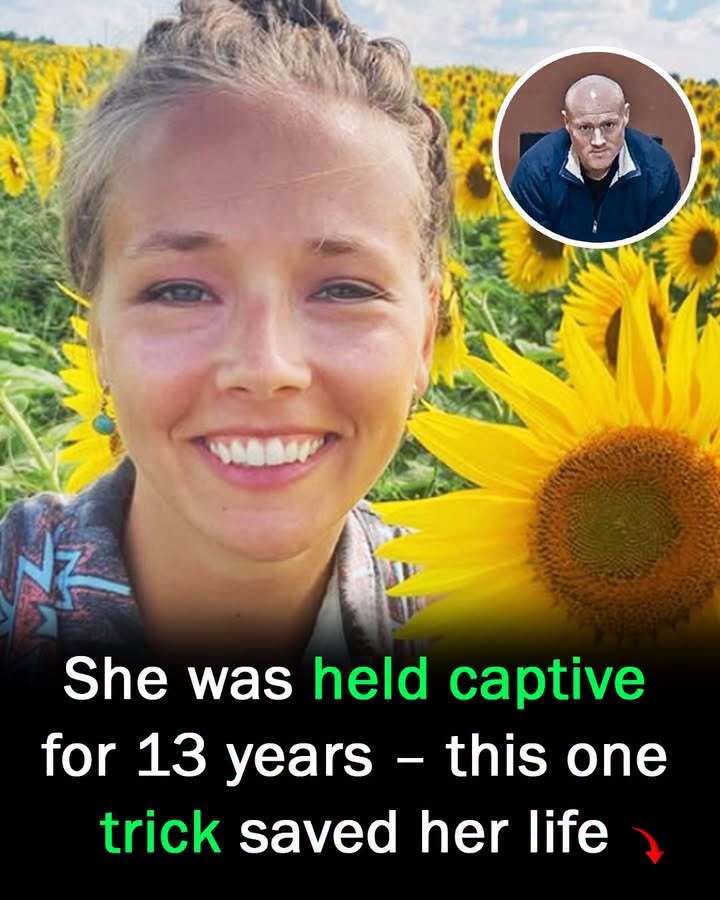
:::writing{variant=”document” id=”51742″ title=”Samantha Stites and the Fight to Survive”} Samantha Stites first met Christopher Thomas when they were college freshmen in 2011. What began as an ordinary encounter eventually developed into a prolonged pattern of unwanted attention and harassment that would follow her for years.
When Stites rejected Thomas’s advances, he did not simply accept her decision and move on. His behavior became serious enough that she sought legal protection, eventually obtaining a six-year personal protection order against him.
For Stites, the order provided an important measure of safety, but it could not erase the fear created by years of unwanted attention.
When the protection order eventually expired, the harassment resumed.
The situation escalated dramatically when Thomas lured Stites to an underground bunker and held her captive for approximately 13 hours. According to Stites’s account, Thomas told her that the Netflix thriller You had inspired the construction of the bunker.
What followed became a struggle not only to escape physically, but to remain calm enough to recognize an opportunity for survival.
Stites drew on her training in social work to keep Thomas talking. Rather than confronting him directly or provoking him, she tried to understand what was driving his behavior and what might influence his decisions.
During those hours, she recognized what she believed was his fear of going to prison.
That realization became important.
Stites understood that surviving the situation might depend on convincing Thomas that releasing her was in his interest. She therefore promised not to report him and pretended to be interested in having a relationship with him.
The circumstances were not romantic.
They were coercive and dangerous.
Stites has described complying with his demand for sex as part of her effort to survive and secure her release. Her actions were made under coercion, in the context of captivity and an overwhelming threat to her safety.
Eventually, Thomas released her.
Once she was safely away from him, Stites did not simply try to put the experience behind her. She went to a hospital, where she underwent an evidence-collection examination, and she cooperated with investigators.
She also helped police identify and locate the underground bunker where she had been held.
Thomas was arrested within 48 hours.
The case later resulted in serious criminal charges. Thomas pleaded guilty to kidnapping, torture, and aggravated stalking and was sentenced to 40 to 60 years in prison.
For Stites, however, the end of the criminal case did not necessarily mean the end of the experience.
Surviving captivity can leave consequences that extend far beyond the hours during which someone is physically trapped. Fear, memories, mistrust, and the awareness of how quickly an ordinary situation can become dangerous may continue long after the immediate threat has ended.
Her decision to speak publicly about what happened was therefore about more than recounting a frightening experience.
Stites later shared her story in a Hulu documentary, using her experience to raise awareness about stalking, coercive control, and survival.
Her story also illustrates why stalking should not be dismissed as harmless persistence or unwanted romantic attention.
Repeated unwanted contact can escalate, and legal protection orders can become an important part of a person’s safety plan. But the responsibility for preventing stalking and violence never belongs to the victim. A person’s rejection is enough. No one is entitled to continued access, attention, affection, or a relationship after being told no.
Perhaps one of the most striking aspects of Stites’s experience is the way she used whatever resources were available to her during an extraordinarily dangerous situation.
Her social-work training helped her communicate under pressure. Her awareness of Thomas’s fear of imprisonment helped her identify a possible path toward release. Afterward, she sought medical care, preserved evidence, and worked with law enforcement.
These actions should not be interpreted as a formula that every victim must follow.
People respond differently to danger, and there is no single correct way to survive captivity or an assault. Stites did what she believed was necessary to stay alive and get home.
That distinction matters.
Survival can require decisions that would look unimaginable or contradictory from the outside. A person in immediate danger may cooperate, negotiate, remain silent, lie, or attempt to build trust with an attacker because those actions may create an opportunity to escape.
None of that makes the victim responsible for the abuse.
Stites’s experience ultimately became a story not about a relationship, but about control, fear, survival, and the long process of reclaiming one’s life after being targeted.
Her willingness to speak about what happened has also given greater visibility to the realities of stalking—particularly the way persistent harassment can escalate when boundaries are repeatedly ignored.
The most important lesson is not that every victim should respond exactly as Stites did.
It is that stalking and coercion deserve to be taken seriously before they reach a crisis point.
When someone repeatedly violates another person’s boundaries, threatens them, follows them, or refuses to accept rejection, those behaviors should not be normalized simply because they are described as affection or obsession.
Stites survived an ordeal that changed her life.
By sharing her experience, she has chosen to turn a deeply traumatic chapter into an opportunity to help others recognize warning signs, understand the seriousness of stalking, and remember one fundamental truth: when someone is being targeted, their safety and choices matter, and responsibility for the abuse belongs to the person committing it—not the person trying to survive it. :::