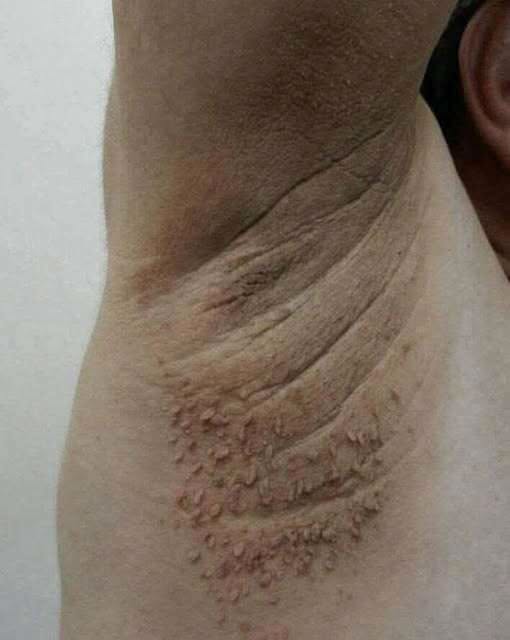
:::writing{variant=”document” id=”84126″ title=”Expanded Explanation of Acanthosis Nigricans”} That stubborn, velvety dark patch that appears on the neck, underarms, groin, or other skin folds has a medical name: acanthosis nigricans. Although it can sometimes look like dirt, staining, or simply a change in skin texture, it is not something that should automatically be dismissed as poor hygiene or an ordinary cosmetic problem.
For some people, this skin change can be an important clue that something else is happening beneath the surface.
Acanthosis nigricans is characterized by areas of skin that become darker, thicker, and often softer or velvety to the touch. It commonly appears in body folds, where the change may initially be subtle and then become increasingly noticeable over time. Because it can develop gradually, people may not realize that the change is significant until it has been present for quite a while.
One of the most common associations is with insulin resistance. When the body’s cells become less responsive to insulin, the body may compensate by producing more of the hormone. Elevated insulin levels can influence processes in the skin and contribute to the characteristic thickening and darkening seen with acanthosis nigricans.
This does not mean that everyone with a darkened skin fold has diabetes or prediabetes.
The condition can have several possible causes, and its presence alone cannot establish a diagnosis. It can be associated with insulin resistance and metabolic conditions, but certain medications, hormonal conditions, genetics, and, more rarely, other medical problems can also play a role.
That is why simply trying to cover the affected area with clothing, makeup, or skin-lightening products may miss the more important question: why did the skin change in the first place?
A healthcare professional can evaluate the skin and consider the person’s overall medical history. Depending on the situation, this may include checking blood glucose or other relevant laboratory markers and reviewing factors such as medications, hormonal health, family history, weight changes, and other symptoms.
The goal is not simply to make the skin look different.
It is to understand what may be causing the change.
If insulin resistance is contributing to the condition, addressing the underlying metabolic problem may help improve the skin over time. Depending on an individual’s circumstances, this can involve changes in nutrition, regular physical activity, weight management when appropriate, and treatment of conditions that are contributing to insulin resistance.
If a medication is suspected to be responsible, a clinician can determine whether it should be adjusted or replaced. Medications should not be stopped or changed independently simply because a skin change has appeared.
As the underlying cause is addressed, acanthosis nigricans may gradually become less noticeable. The skin can sometimes lighten and become softer, although improvement varies from person to person and may take time. Treating the underlying issue is generally more important than attempting to aggressively scrub or bleach the affected skin.
This is particularly important because harsh treatments can irritate already thickened or sensitive areas and may make the appearance worse. A dark patch that does not disappear with ordinary washing is not necessarily something that can be removed through greater effort or stronger soap.
Instead, it can be viewed as a reason to pay closer attention to your health.
Not every case represents a serious problem, and the appearance of acanthosis nigricans should not be interpreted as proof of diabetes. But when the change is new, persistent, spreading, or accompanied by other health concerns, discussing it with a healthcare professional is sensible.
The skin can sometimes provide clues about what is happening elsewhere in the body. In that sense, a seemingly minor change can become an opportunity to identify a problem earlier than it might otherwise be recognized.
So that dark, velvety patch is not something to be ashamed of, and it is not necessarily something you caused. It is a physical change with several possible explanations. Rather than hiding it or repeatedly trying to scrub it away, the more useful response is to understand it.
Sometimes the skin is simply showing you that it deserves a closer look at what is happening underneath. :::