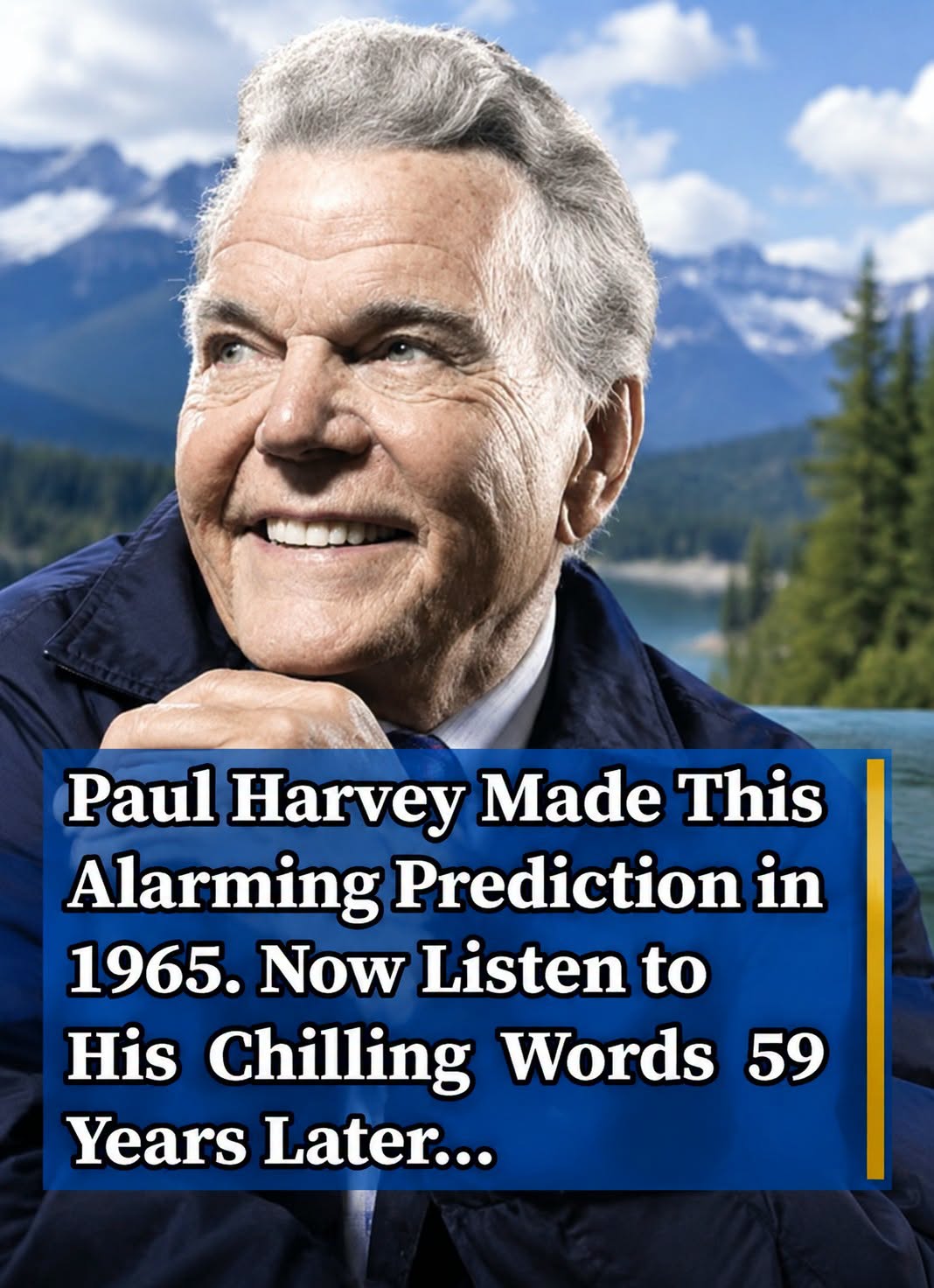
His 1965 monologue endures because it did more than lament changing times; it asked listeners to recognize how gradually a society can lose its bearings. Rather than describing cultural decline as a dramatic collapse that arrives overnight, he presented it as something much quieter—a long sequence of small compromises that can appear harmless when considered individually.
One decision rarely seems capable of changing an entire culture. One weakened family bond, one neglected institution, one piece of shallow entertainment, or one moment of indifference can be dismissed as insignificant. But repeated over years, those choices can begin to reshape the environment in which people live.
That was the deeper concern behind his warning. Cultural change does not always announce itself. Sometimes it arrives through distraction, convenience, and gradual acceptance. People become accustomed to things they once questioned, and eventually what seemed unusual becomes ordinary.
Family relationships can become less connected. Institutions can lose credibility when people stop believing they represent shared values. Entertainment can become so dominant that reflection feels unnecessary or even uncomfortable. None of these changes has to happen through a single dramatic event. They can emerge slowly, through years of distraction and drift.
His argument was ultimately about attention.
What people repeatedly watch, hear, celebrate, tolerate, and ignore can influence the culture they eventually create. If individuals surrender all responsibility for those choices, they may find themselves living in an environment they never consciously chose.
Yet his message was not simply one of resignation or nostalgia. He argued that awareness itself can be a form of power. People can question what they consume rather than accepting every message automatically. They can strengthen relationships with family and neighbors, participate in their communities, and take responsibility for the standards they want to see around them.
That idea remains relevant even for people who do not share his particular moral framework. Every generation eventually faces the same tension between accepting the culture it inherits and deciding what it wants to preserve, challenge, or change.
There is also a danger in interpreting such warnings too literally. Every generation tends to believe that the world is declining from some imagined golden age. What feels like cultural deterioration to one person may simply be social change viewed through the values of another era.
That is precisely why the question remains more valuable than the prediction.
Are we shaping our culture, or are we quietly surrendering to it?
The question applies not only to entertainment or family life, but to nearly every part of modern society. Technology changes how people communicate. Social media changes what receives attention. Algorithms influence what information becomes visible. Institutions evolve, and public expectations shift with them.
None of these developments is automatically good or bad. Their impact depends partly on how consciously people engage with them.
That is where the old monologue still finds an audience. Its relevance does not necessarily come from proving that every warning was correct. It comes from reminding listeners that cultures are built through choices, including choices that seem too small to matter.
The responsibility therefore cannot always be placed on politicians, corporations, schools, entertainers, or the next generation. Individuals participate in culture every day, often without realizing it.
The enduring lesson is not that society must remain frozen in the past. It is that change deserves attention.
A healthy culture should be capable of questioning itself, preserving what is valuable while making room for necessary progress. It should be willing to recognize both genuine decline and the fear that sometimes accompanies unfamiliar change.
His words continue to press an uncomfortable question on every generation: What are we becoming, and are we paying enough attention to notice?
The answer is never final.
And, perhaps most importantly, it is never entirely someone else’s job.