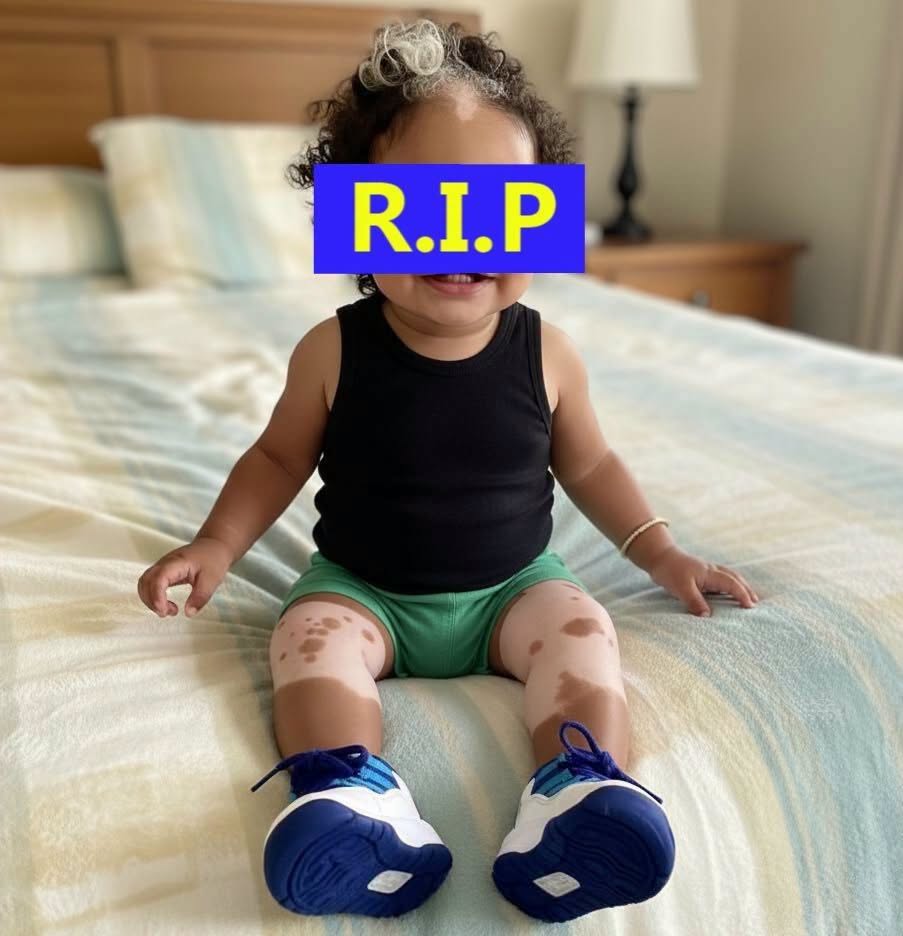
In the quiet that followed the sirens, the house became a monument to everything that should have been. The soft pastels of the nursery, the neatly folded onesies, the waiting toys, and the small belongings prepared for an ordinary childhood suddenly carried a different meaning. Each object seemed to testify to a future that had been imagined with love but vanished in a single, violent moment.
Nothing in the room could explain what had happened. The toys could not be put away by the child who was supposed to play with them. The clothes would never be worn in the ordinary moments for which they had been chosen. The nursery remained frozen between expectation and absence, filled with reminders of a life that should have continued.
Outside, candles burned low beside stuffed animals, flowers, photographs, and handwritten notes. Strangers gathered quietly, some unable to find words, others whispering apologies to a child they had never met. They came because grief has a way of reaching beyond the boundaries of family. A child’s suffering can become a wound shared by an entire community, even among people who knew nothing about her life before the tragedy.
Grief settled over the street like a permanent overcast sky, heavy and unmoving. For those closest to the loss, ordinary routines could suddenly feel impossible. Places that had once seemed familiar became reminders. A passing sound, a child’s voice, or an empty room could bring the reality of what had happened rushing back.
Yet from that unbearable loss emerged an urgent reckoning.
People began asking harder questions—not simply about what happened, but about whether something could have been different. How could no one see the danger? What warning signs were missed? Were there people who needed help but didn’t know how to ask for it? Were there opportunities for intervention that disappeared because someone hesitated, assumed everything was fine, or simply didn’t recognize what they were seeing?
Those questions do not have easy answers, and they should not be used to assign blame without evidence. But they can become part of a larger conversation about how communities recognize vulnerability and respond when a child may be in danger.
The tragedy gradually transformed from a private horror into a public vow: that children should not have to suffer in silence, and that adults should take concerns seriously when something feels wrong.
Her brief life now becomes part of campaigns, conversations, and quiet acts of courage. Neighbors check on one another. Families seek help when circumstances become overwhelming. Teachers, relatives, friends, and community members become more willing to ask difficult questions rather than assuming that someone else will intervene.
Sometimes protection begins with something very small—a phone call, a conversation, a visit, or the courage to say, “I’m worried about this child.”
None of those actions can change what happened. They cannot return the future that was lost or remove the grief carried by those who loved her. But they can influence what happens next.
That is the painful contradiction of tragedy: the loss cannot be undone, yet its meaning can still be shaped by what people choose to do afterward.
In mourning her, the community is not only remembering a child. It is confronting the responsibility that comes with protecting children who are still here. Her story becomes a reminder that childhood should be a place of safety, tenderness, and possibility—and that adults have a responsibility to defend those things whenever they are threatened.
The candles will eventually burn out. The flowers will fade. The handwritten notes will weather. Even the crowds will eventually disappear.
But the questions should remain.
And if those questions encourage one person to notice a warning sign, one neighbor to reach out, one family to seek help, or one community to refuse to look away, then the grief has been transformed into something that can protect others.
In remembering her, they choose not only to mourn the life that was lost, but to stand watch over the lives that still have a chance.