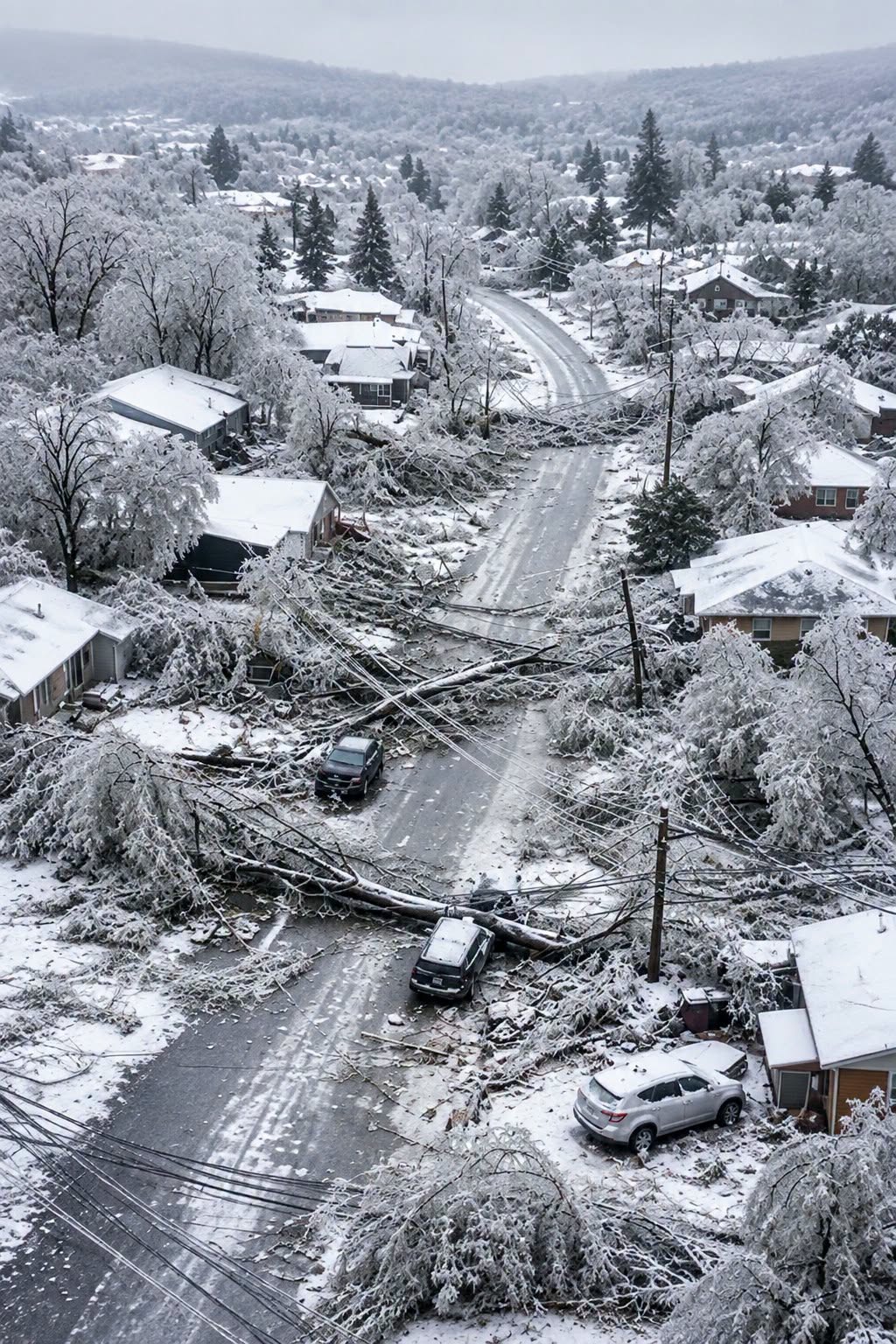
Freezing rain can create dangerous conditions because the droplets freeze when they come into contact with surfaces that are at or below freezing. Instead of simply falling as snow, the rain can form a layer of ice on roads, sidewalks, trees, power lines, and other exposed surfaces. Even a relatively short period of freezing rain can therefore create problems that continue long after the precipitation has stopped.
One of the greatest concerns is the weight of accumulated ice. Branches can become heavily coated and eventually snap, sometimes bringing down power lines or blocking roads. Electrical equipment can also be affected, increasing the possibility of widespread outages. Fallen limbs may obstruct routes that utility workers, firefighters, ambulances, and other emergency responders need to reach affected neighborhoods.
Bridges and elevated roads can be especially vulnerable because they cool more quickly than ordinary road surfaces. Ice can form rapidly and make driving conditions hazardous even when nearby pavement appears merely wet. Drivers who must travel should follow local warnings, slow down significantly, and avoid unnecessary trips whenever authorities advise staying off the roads.
For households, a power outage during freezing temperatures can quickly become more than an inconvenience. Without electricity, heating systems may stop working, indoor temperatures can fall, and families may have difficulty keeping food, medications, or essential equipment at the appropriate temperature. Older adults, young children, and people who depend on electrically powered medical devices may face particular risks.
Preparation can make the first hours of an outage considerably easier. Households should keep warm blankets and appropriate clothing available, along with flashlights, extra batteries, drinking water, shelf-stable food, and fully charged phones or backup power banks. It is also useful to know how to receive local emergency alerts if internet or television service becomes unavailable.
Until conditions improve, follow instructions from local authorities and postpone unnecessary travel. If you encounter a fallen electrical wire, keep well away from it and anything it may be touching. Never assume a wire is safe simply because it appears inactive; downed lines can remain energized and pose a serious electrocution hazard.
Alternative sources of heat and cooking equipment also require caution. Never operate a gasoline-powered generator, charcoal grill, or similar fuel-burning device inside a home, garage, basement, or other enclosed space. These devices can produce carbon monoxide, an odorless and potentially deadly gas. Generators should be operated outdoors and positioned safely away from doors, windows, and ventilation openings according to manufacturer and safety guidance.
If going outside is dangerous, checking on vulnerable neighbors by phone can be a simple but meaningful form of assistance. An older person living alone, someone with limited mobility, or a household dependent on medical equipment may need help making a plan for an extended outage. When heating, medical care, or another urgent need becomes unsafe, contact the appropriate emergency or utility services rather than taking unnecessary risks.
It is also important to remember that recovery may take longer than the storm itself. Utility crews may have to clear fallen trees, repair damaged lines, and safely access areas covered in ice. Roads may remain blocked or hazardous even after precipitation ends, and some neighborhoods may regain power sooner than others.
The safest approach is therefore to prepare for the possibility that difficult conditions will last for hours or even longer. Keep essential supplies accessible, conserve phone batteries, stay informed through official alerts, and avoid unnecessary exposure to icy roads and damaged infrastructure.
Freezing rain can turn an ordinary winter storm into a serious safety challenge, but preparation can reduce many of its risks. Caution, patience, and small acts of care—especially toward people who may be more vulnerable—can help families and communities get through the difficult hours until conditions improve and normal services are restored.