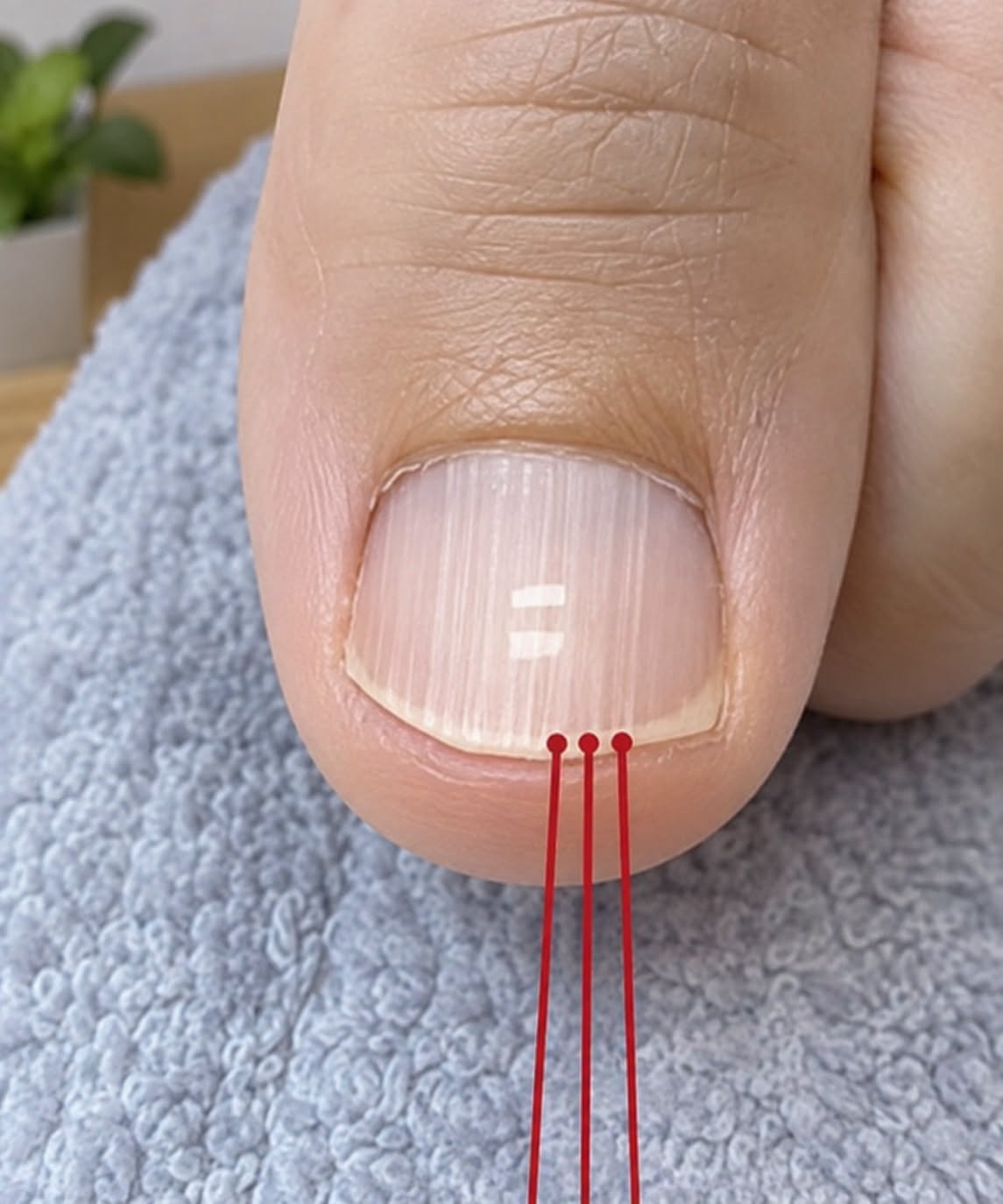
Vertical nail ridges run from the cuticle to the tip of the nail and are a common change, particularly as people get older. They can become more noticeable gradually as nail growth changes and the nails lose some of their natural moisture. Frequent handwashing, exposure to soaps and cleaning products, or repeated contact with water can also make the nail surface look drier and cause existing ridges to stand out more clearly.
In many cases, longstanding vertical ridges are simply a normal variation in the appearance of the nails. Seeing them does not automatically mean that something is wrong with your health. Nails naturally change over time, just as skin and hair do, and subtle differences in texture can become more visible with age.
At the same time, nails can sometimes reflect changes occurring elsewhere in the body. Certain nutritional deficiencies and medical conditions may affect nail growth or appearance, but ridges by themselves cannot establish a diagnosis. They also do not automatically mean that a person needs vitamins or supplements. Starting supplements without identifying an actual deficiency may be unnecessary, so persistent concerns are better discussed with a healthcare professional.
Simple nail care can often help keep the ridges from becoming more pronounced. Moisturizing the nails and cuticles regularly can reduce dryness and brittleness. Wearing protective gloves while cleaning can limit exposure to detergents and other substances that may dry or irritate the hands. It is also wise to avoid aggressive buffing, excessive filing, or harsh manicures that can thin or weaken the nail surface.
Nutrition matters as part of overall health as well. Rather than immediately reaching for supplements because of nail changes, aim for a balanced diet that provides adequate protein, vitamins, minerals, and other nutrients. If there is a genuine concern about deficiency, a medical professional can help determine whether testing or supplementation is appropriate.
What matters most is not simply noticing that ridges exist, but paying attention to changes in the nails over time. A sudden change in texture, persistent splitting, unusual brittleness, pain, swelling, or other symptoms deserves medical assessment. Nail changes accompanied by fatigue or other unexplained symptoms are also worth discussing with a healthcare professional.
A new or widening dark streak, particularly when it appears in only one nail, deserves prompt evaluation rather than being dismissed as an ordinary ridge. Changes that develop suddenly or look substantially different from the person’s usual nail appearance should likewise be checked.
The reassuring takeaway is that ordinary vertical ridges are common and often become more noticeable with age or dryness. Their presence alone is usually not a reason for alarm. The more useful habit is simply to know what your nails normally look like and notice when something meaningfully changes. In many cases, that combination of awareness, gentle care, and appropriate medical advice is all that is needed.