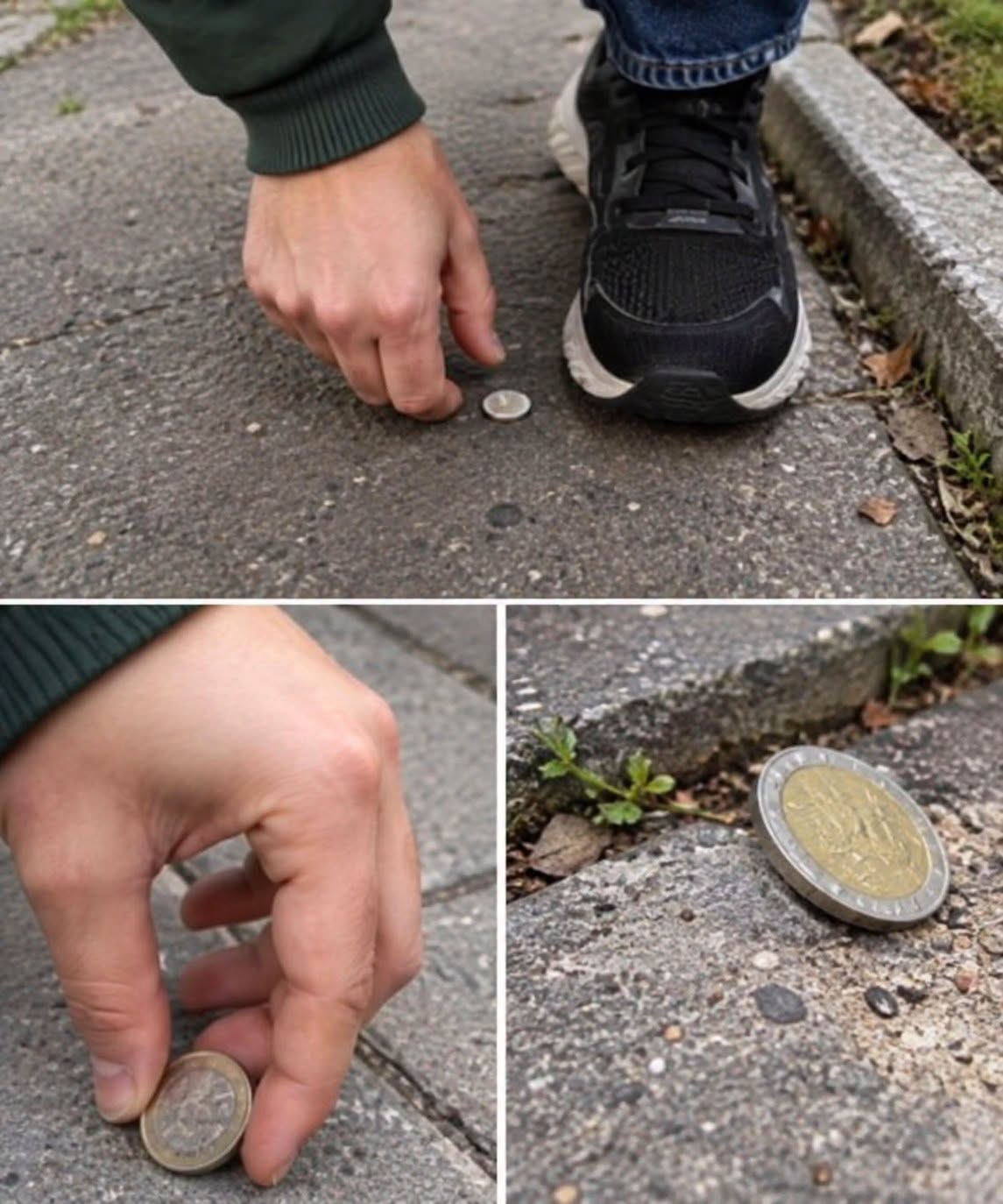
Finding money on the pavement can transform an ordinary walk into a moment of delight. A routine trip to the store, a walk through the neighborhood, or even a hurried journey to work can suddenly feel different when something shiny catches your eye. For a few seconds, the world seems to pause as you bend down to discover a coin or bill that someone else overlooked.
In various folk traditions, finding money is associated with luck, abundance, prosperity, or encouragement during uncertain times. Some people interpret the discovery as a small sign that better things may be approaching, while others simply enjoy the pleasant surprise without attaching any deeper meaning to it. Either way, the unexpected nature of the discovery can make an ordinary day feel slightly more hopeful.
One familiar superstition favors coins lying heads up, with some traditions suggesting that coins facing down should be left untouched or turned over before being picked up. These ideas are matters of belief rather than reliable predictions, and there is no established evidence that the position of a coin can determine what happens next in someone’s life. Yet superstitions often survive because they give everyday events a sense of meaning and mystery.
That may reveal something deeply human. When life feels uncertain, people naturally look for reassurance in unexpected places. A small coincidence can become a reminder that not everything is predictable, and that pleasant surprises can appear even during difficult periods. Finding a coin does not guarantee that circumstances will improve, but the moment itself can still provide a brief emotional lift.
Some symbolic interpretations go even further by assigning particular meanings to different denominations. In one such tradition, a two-peso coin represents communication and personal connection, suggesting the importance of conversations, relationships, and emotional understanding. Five pesos are associated with success, health, and happiness, while ten pesos symbolize an ending that creates space for a fresh beginning.
These interpretations are symbolic rather than factual. A coin cannot establish what tomorrow holds, predict a person’s future, or guarantee that a particular event will occur. Their value lies instead in the meaning people choose to give them. Symbols have always helped people turn ordinary objects into reminders of hopes, experiences, and possibilities.
And perhaps that is what makes finding money so enjoyable in the first place. Whether you believe in luck, superstition, or symbolism—or none of them at all—the discovery interrupts routine. It gives you something unexpected to notice and a small reason to smile.
You might keep the coin as a lucky charm, spend it on something simple, place it somewhere meaningful, or simply appreciate the coincidence and continue on your way. The amount may be insignificant, but the feeling does not have to be.
In the end, the real gift may not be the money itself. It is the reminder that even an unremarkable day can contain something unexpected. Sometimes a tiny discovery on the pavement is enough to make us look down, pause, smile, and remember that ordinary moments can still hold small surprises.