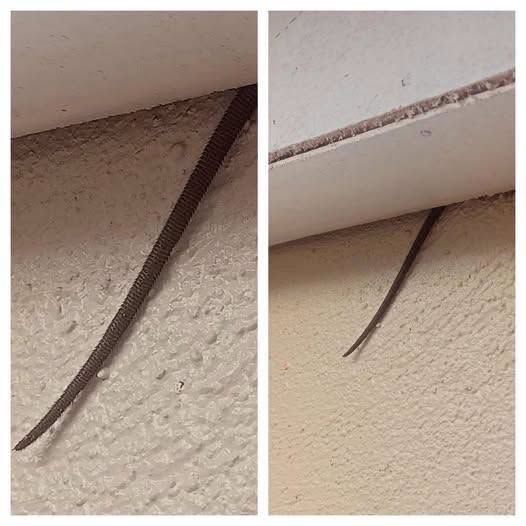
It was only a rat’s tail, limp and ordinary, slipping through a narrow gap from the attic above. No monster, no cursed creature, no supernatural explanation—just a small, unpleasant reminder that something had been living overhead, unseen and unnoticed. For a few seconds, the image was enough to make the ordinary ceiling feel strangely threatening. The viral clip ended when the tail disappeared back into the darkness, leaving viewers to imagine everything that might have been hiding above them.
But the real story began after the cameras stopped.
There was a phone call, an inspection, an invoice, and eventually the sour smell of disturbed insulation. What had looked like a strange internet mystery turned out to be a much more familiar problem: an infestation that had likely been developing quietly for some time. While the internet moved on to its next nightmare, someone else was dealing with the less dramatic reality—sweeping droppings, checking damaged areas, sealing cracks, and trying to determine how much of the attic had been affected.
That is often how hidden problems reveal themselves. They do not always arrive with obvious warnings. Sometimes there is only a strange sound at night, a faint smell, a small stain, or, in this case, something slipping through a gap that should never have been there. By the time the evidence becomes impossible to ignore, the underlying problem may already have existed for weeks or months.
The damage caused by a quiet infestation can extend far beyond what is immediately visible. Rodents can contaminate insulation and stored belongings, create unpleasant odors, damage materials, and chew through wiring or other components of a home. What begins as something easy to dismiss can become considerably more expensive when ignored.
What lingered wasn’t the tail itself, but the lesson it dragged into the light. How quickly we surrender our peace to shadows. How easily a strange shape in the darkness becomes something frightening in our imagination. We often choose the most dramatic explanation because it is more entertaining, more mysterious, and easier to share than the truth.
But reality is frequently less supernatural and more uncomfortable.
The ceiling didn’t hide a demon. It hid neglect, delay, small openings, and a problem that had been allowed to develop out of sight. It was a reminder that the things we avoid checking do not necessarily disappear simply because we refuse to look at them.
Eventually, they find a way into view.
And when they do, the answer is rarely another scary story. It is usually a flashlight, a ladder, a phone call to the right professional, a repair bill, and the willingness to deal with what should have been addressed sooner.
The internet may remember the frightening image of a tail disappearing into a ceiling. But the more useful story is what happened afterward: someone stopped imagining monsters and started looking for the actual problem. Sometimes that is the real difference between fear and action—turning on the light, opening the door, and finally facing whatever has been hiding there.