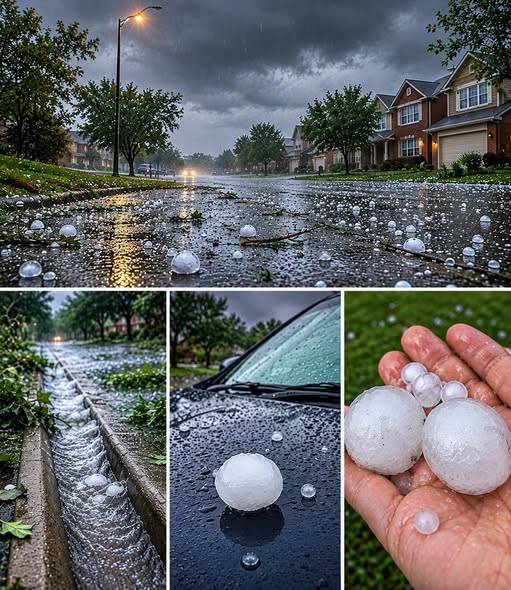
The storm had stopped, but the danger to homes had not necessarily passed. Residents emerged to dented cars, scattered branches, broken leaves, and lawns littered with hail, while seemingly intact roofs offered only a fragile sense of relief. Behind that reassuring appearance, cracked shingles, loosened roofing materials, and overlooked impacts could leave homeowners facing damage they might not discover until the next rainfall revealed what the storm had hidden.
Daylight gave residents their first clear opportunity to assess the aftermath. Ice remained scattered across grass, driveways, and pavement, while leaves had been stripped from trees and fallen limbs interrupted familiar paths. For many homeowners, checking windows, doors, vehicles, and outdoor equipment was a natural first step. Cars could show obvious dents, while damaged screens, gutters, siding, and exterior fixtures might provide additional clues about how severe the storm had been.
Yet the visible damage told only part of the story. Small impacts on glass and damage to outdoor equipment could escape notice, especially where debris still covered surfaces or where the storm had moved through quickly. Gutters and downspouts may also be affected without immediately appearing broken, while small cracks or dents in exterior materials can become more noticeable as the days pass.
Roofs presented a particular concern because hail can weaken shingles without leaving destruction that is obvious from the ground. Repeated impacts may crack, loosen, or remove protective granules from roofing materials, potentially reducing their ability to keep water out. Some damage may not become apparent until rain reaches the weakened areas and begins working its way underneath the roofing system.
That is why a house that looks untouched is not necessarily free of storm damage. Homeowners should avoid climbing onto a damaged or potentially unstable roof themselves, particularly after severe weather has left debris, wet surfaces, or structural concerns. A professional inspection can help identify problems that are difficult to see from ground level and determine whether repairs may be necessary.
The aftermath of a hailstorm can therefore extend well beyond the moment the clouds clear. What first appears to be a minor inconvenience can sometimes develop into a more serious repair issue if damage goes unnoticed. The noise of the storm may fade quickly, but understanding what happened to a home can take considerably longer—and careful assessment can matter long after the morning after.