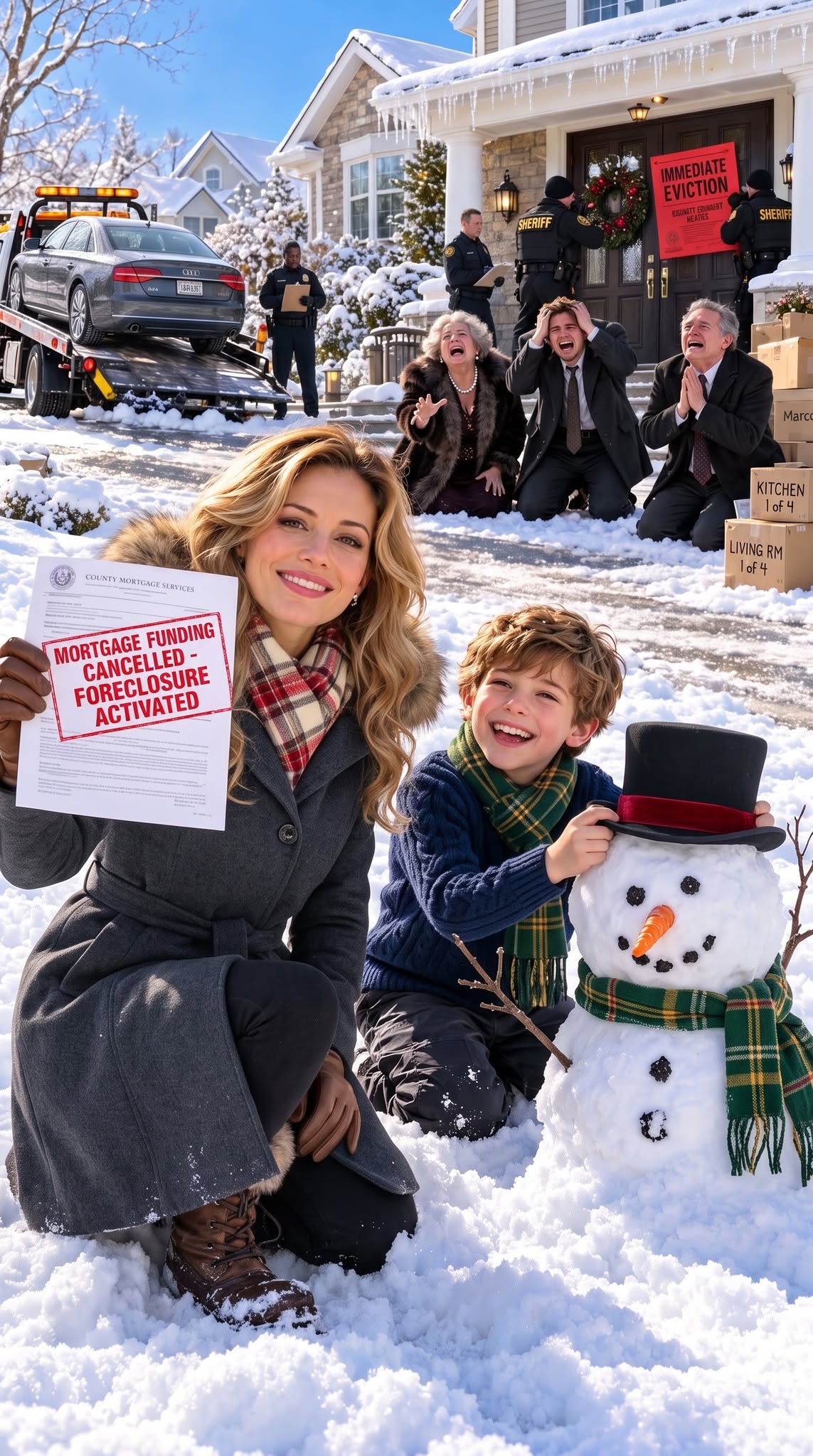
Chapter 1: The Balance Sheet of Blood
I am thirty-one years old, and for thirty-six months, I was the sole financier of a family that treated my survival as an administrative oversight.
My life in Raleigh, North Carolina, looked respectable on paper. I worked as a senior director of marketing communications for WakeStone Health, a mid-sized healthcare conglomerate whose glass-and-steel headquarters overlooked the wooded corridor of the research park. I spent my weeks analyzing multi-million-dollar brand acquisitions, managing cross-functional teams, and presenting risk assessments to executives twice my age. I earned a comfortable six-figure salary. It was the sort of income that should have purchased quiet weekends, a solid retirement portfolio, and peaceful nights in my renovated brick townhouse.
Instead, my checking account functioned as an open hemorrhage.
Every month, like clockwork on the third, exactly $1,850 vanished from my account via an automated clearinghouse transfer to First Piedmont Mortgage. It was the monthly note on my parents’ four-bedroom colonial in Henderson, an aging wooden monolith with sagging gutters, peeling window sills, and a furnace that wheezed like a dying animal every winter. I had stepped in to cover the payment three years prior, immediately following my father’s double knee replacement.
When the surgery was over and his disability checks began their modest, predictable arrival, a curious paralysis gripped the household. My father, Arthur, abruptly retired his work boots, retreated behind the morning newspaper, and took up weaponized silence as a full-time occupation. My mother, Eleanor, announced that maintaining the house—a home whose second floor sat completely empty save for dust mites and boxes of decades-old tax records—was an all-consuming enterprise that precluded her from seeking even part-time retail work.
“Your father gave thirty years to the textile mill before it shuttered,” Eleanor had whispered across the kitchen counter back then, wiping non-existent grease from a laminate counter. “You have a corporate career, Sarah. You have stock options. Would you really watch your own flesh and blood lose the ground beneath our feet?”
I was twenty-eight. I was recently divorced, terrified of failing as a single mother to my son, Jake, and desperate to prove that my success had not severed me from my roots. So, I set up the automated recurring transfer. I told myself it was an emergency bridge. I told myself good daughters built bridges.
Then came my older brother, Marcus.
Marcus was thirty-four and occupied his childhood bedroom on the second floor. He spent his days pacing the worn beige carpet above our parents’ heads, conducting what he grandly christened the Vanguard Strategy Group. In reality, this enterprise consisted of a battered MacBook plastered with startup stickers, two imaginary retainers, and a platinum business charge card for which I had foolishly agreed to act as the primary guarantor.
“It’s just an operational safety net, Sarah,” he had urged over coffee two springs ago, flashing the polished, high-wattage smile he had used since high school to escape consequences. “The tech incubators in Durham are watching our pitch deck. The valuation is going to be exponential. You hold the line for six months, and I will pay off your townhouse mortgage in cash.”
By the first week of December, the operational safety net carried a revolving balance of $14,218.42.
Every billing statement was a fresh insult: $180 at upscale steakhouses in downtown Durham, $420 for artisanal leather folios, $75 monthly gym memberships he never used, and hundreds of dollars in “client entertainment” charges at cocktail lounges where craft bourbon cost twenty dollars a glass. Whenever I cornered him on the phone, his tone instantly curdled from charming visionary to aggrieved patriarch.
“You have the narrow, risk-averse mindset of an hourly bureaucrat,” he sneered during a call in mid-November. “Entrepreneurs require runway. If you choke off my liquidity right before the Series-A round clears, you are actively sabotaging my future. Is that what you want on your conscience?”
My mother’s defense of him was swift and theatrical. “Marcus is building something magnificent,” Eleanor would sob into the receiver whenever I threatened to cancel the card. “He doesn’t have your corporate safety harness, Sarah! Why must you kick your brother while he’s climbing? Why are you always so cold?”
My father said nothing. Arthur simply turned the volume on the television up until the drone of the evening news drowned out my voice entirely.
So, I absorbed the blows. I skipped upgrading my car. I delayed putting aside money for Jake’s 529 college savings plan. I drove my nine-year-old boy up Interstate 85 through gray, rain-slicked highway stretches, pretending that our Sunday visits were joyous family reunions rather than mandatory parole hearings where I was required to show proof of financial restitution.
On the afternoon of Christmas Eve, the Carolina sky turned the color of bruised slate. The meteorologists warned of an uncharacteristic flash freeze sweeping down from Virginia. I stood in the kitchen of my townhouse, carefully wrapping a lemon pound cake in three layers of aluminum foil. I had zested four fresh lemons at dawn, creaming the butter by hand while Jake was still asleep, because it was his absolute favorite dessert in the world.
Jake stood by the front door, wearing the emerald-green knit sweater his fourth-grade teacher had helped him choose for winter picture day. He had combed his dark hair with water, the neat part already curling slightly at his crown. He held his small duffel bag with both hands, his brown eyes solemn and bright.
“Mom?” he asked, his voice thin against the hum of the refrigerator. “Are we sleeping over there tonight?”
“Not tonight, sweet pea,” I said, forcing brightness into my tone as I zipped my winter coat. “Dinner, dessert, and then we come right back to our own beds so Santa knows where to find us. Deal?”
“Deal,” he whispered, a small flicker of relief softening his shoulders.
My phone buzzed against the marble island. A text message from Marcus glowed on the screen:
Drive safe. We need to have a serious sit-down about your long-term contribution to this family tonight. Come prepared.
The cold knot that formed at the base of my throat was instantaneous and sharp. I slipped the phone into my purse, grabbed the warm pound cake, and took my son’s hand, entirely blind to the ambush waiting behind the front door of my childhood home.