I found out by accident that my mother had sold my grandmother’s house.
I was driving down Seagle Street on my way home from work, mostly on autopilot, when I saw the sign.
**SOLD.**
For a second, I honestly thought I was looking at the wrong house.
I slowed down.
Then I hit the brakes so hard the car behind me honked.
I didn’t even react.
I just sat there gripping the steering wheel, staring through the windshield at the house I had grown up in.
The curtains were still the same.
The porch still leaned slightly to the left.
Even the old wooden bench Grandpa had built was sitting beneath the front window.
But there was a SOLD sign in the yard.
Someone else owned it.
I hadn’t even known it was for sale.
Nobody had told me.
Not my mother.
Not my sister.
Nobody.
I called my mother so fast I nearly dropped my phone.
She answered on the fourth ring, sounding mildly winded, like she’d been folding laundry or rearranging something unnecessary.
“Hello?”
“Mom.”
A pause.
“What?”
“Why is there a SOLD sign in front of Grandma’s house?”
Silence.
Long enough that I already knew the answer.
Then she sighed.
“Ken, lower your voice.”
“Lower my voice? Mom, you sold Grandma’s house.”
“Laura handled it. The paperwork is done.”
My sister.
Of course.
My fingers tightened around the steering wheel.
“Laura handled it?”
“Yes.”
“When?”
“Recently.”
“How recently?”
She hesitated.
“Last week.”
I stared at the house.
Last week.
My grandmother had been gone for only six weeks.
Six weeks.
That was all the time it had taken for them to decide that the house, the place that had held nearly every important memory of my childhood, was something they could simply sell.
“You promised we’d talk about it after the funeral.”
“No,” my mother said sharply. “You and Laura talked about it. You said you weren’t sure what should happen.”
“I said I wanted to see the house first.”
“You’ve seen it your whole life.”
“That’s not the point.”
“Ken, don’t make this into something it isn’t.”
I laughed bitterly.
“Then what is it?”
My mother made that clipped little sound she always made when she thought emotions were tacky.
“Don’t be dramatic. The house was old. It needed work. Selling quickly was best for the family.”
I looked at the cracked steps.
The flower bed Grandma had maintained every spring.
The upstairs window where I’d slept during summers.
“Best for who?”
She didn’t answer directly.
Which was answer enough.
Laura had always moved faster when money was involved.
She was the practical one, according to my mother.
The organized one.
The one who “knew how these things worked.”
I was the emotional one.
The one who wanted to keep old photographs.
The one who couldn’t throw away Grandma’s handwritten recipes.
The one who had asked to walk through the house one more time after the funeral.
Apparently, that had been too much to ask.
I remember pulling over two streets down because I was shaking too hard to drive.
I sat there with both hands in my lap, staring at nothing.
I wanted to call Laura.
Instead, I called my mother again.
She didn’t answer.
I called Laura.
Straight to voicemail.
I left no message.
That was the moment I decided I was done.
I stopped speaking to both of them.
Not because I wanted revenge.
Not because I wanted the house.
I just couldn’t understand how they could make such a decision without me.
That house was not some giant estate people fight over in movies.
It was a narrow two-story place with creaky floors, a tiny upstairs bathroom, and kitchen cabinets Grandpa Shawn had built by hand before my mother was born.
The front door stuck whenever it rained.
The hallway floor squeaked in exactly three places.
The stairs had a tiny crack near the fourth step that Grandma always warned everyone about even though nobody had ever actually fallen.
The wallpaper in the dining room had tiny blue flowers on it for thirty years because Grandma Cindy said changing it would “confuse the room.”
Every good thing in my childhood happened in that house.
Every Christmas morning.
Every Thanksgiving dinner.
Every summer afternoon when Grandma would open all the windows and let the smell of her cooking drift through the neighborhood.
When I was eight, I broke my arm riding my bike.
Grandma sat beside me on that old porch until my mother came.
When I was thirteen and my parents were fighting constantly, I spent an entire summer in the upstairs bedroom.
Grandma never asked me to explain.
She just brought me lemonade.
When I graduated from high school, she stood in the doorway crying so hard she could barely speak.
When I left for college, she packed cookies into a container and told me to bring the empty container back because “good containers shouldn’t be wasted.”
I never returned it.
She laughed when I told her.
“Then I guess you live there now.”
That house wasn’t valuable because of the money.
It was valuable because it remembered me.
And now someone else owned it.
For the next several weeks, I tried not to think about it.
I deleted my mother’s messages without opening them.
I ignored Laura’s calls.
I stopped driving down Seagle Street.
I took longer routes home just to avoid seeing the house.
Then, almost four weeks after I first saw the SOLD sign, my phone rang.
The number wasn’t saved.
I almost ignored it.
But something made me answer.
“Hello?”
There was a pause.
Then a woman’s nervous voice said, “Is this Ken?”
“Yes.”
“Hi. My name is Rachel.”
I frowned.
“Okay.”
She took a breath.
“I think I bought your grandmother’s house.”
My stomach dropped.
“Who gave you my number?”
“I got it from the closing documents.”
I sat up.
“What do you want?”
“Honestly, I wasn’t sure whether I should call.”
“Then why did you?”
Another pause.
“Because we found something.”
I said nothing.
Rachel continued.
“It’s in the house.”
“What?”
“I think it was meant for you.”
My heart started beating faster.
“How would you know that?”
“We were cleaning out the basement.”
The basement.
My grandmother’s basement.
A place I hadn’t been allowed to enter during the rushed cleanup after the funeral.
My mother had said there was nothing important down there.
Rachel lowered her voice.
“There was a box hidden behind one of the old shelves.”
I stood up.
“What kind of box?”
“I don’t know.”
“Then why do you think it’s for me?”
“Because your name is written on it.”
I couldn’t speak.
Rachel continued.
“Your full name.”
My hands began to shake.
“What does it say?”
She hesitated.
“Just your name.”
Then she added:
“And underneath it, there’s a note.”
“What note?”
She swallowed.
“It says, ‘Give this to Ken when he’s ready to know the truth.'”
Everything inside me went still.
I sat back down.
“Who wrote it?”
“I think your grandmother did.”
For the first time in weeks, I thought about going back to that house.
Not because my mother had sold it.
Not because Laura had betrayed me.
Not because I wanted something from the estate.
But because Grandma had apparently left something behind.
Something she had intended for me.
I drove to Seagle Street that evening.
When I pulled up, I almost couldn’t get out of the car.
The house looked smaller than I remembered.
Rachel opened the door before I knocked.
She was younger than I expected.
She looked nervous.
“I wasn’t sure you’d come.”
“Neither was I.”
She stepped aside.
“I haven’t opened the box.”
“Why not?”
She gave a small shrug.
“Because it had your name on it.”
That answer made me trust her immediately.
She led me downstairs.
The basement smelled exactly the way I remembered.
Old wood.
Dust.
Damp concrete.
And something faintly sweet that reminded me of Grandma’s laundry room.
Rachel pointed toward a wooden shelf.
“There.”
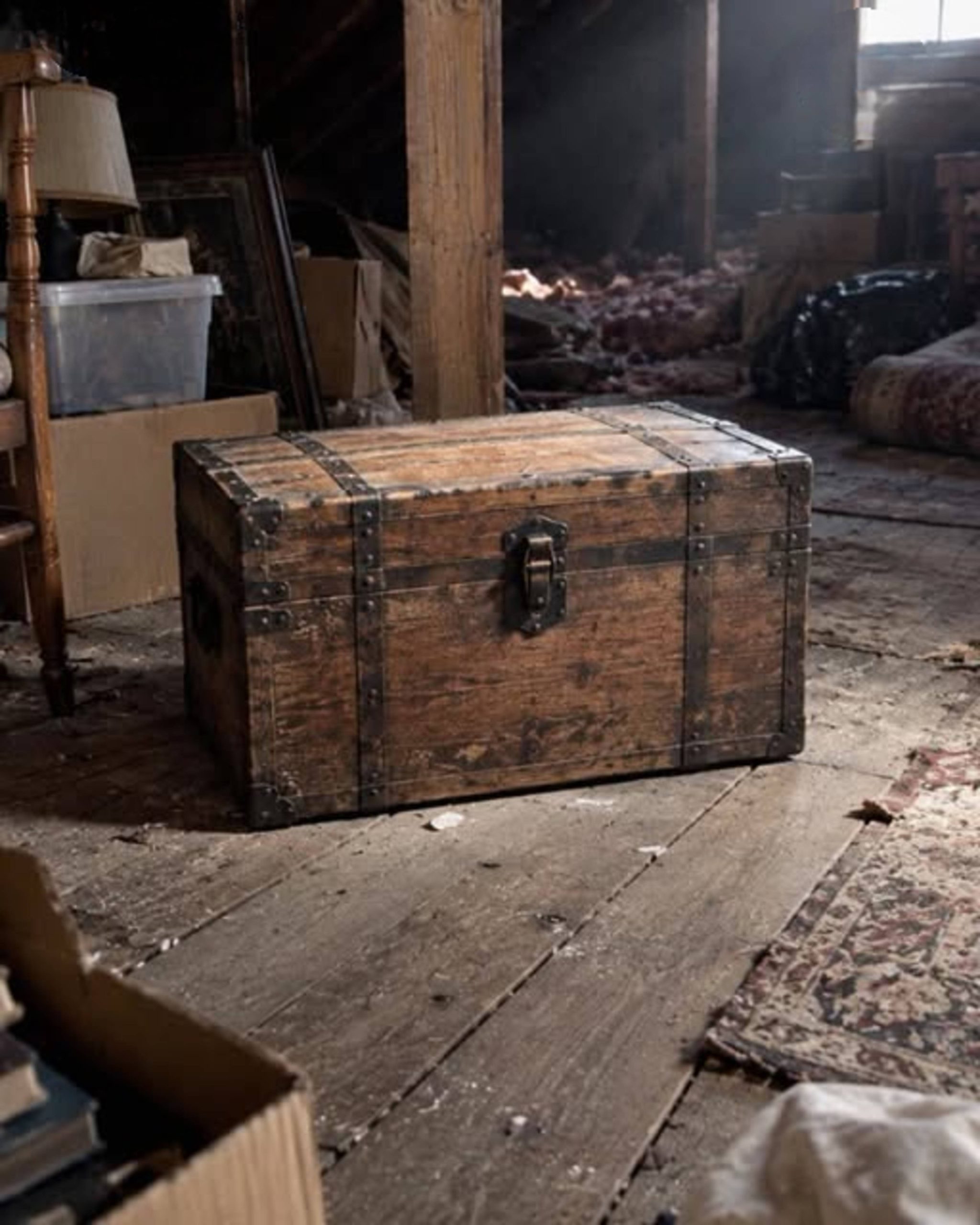
Behind it was a small cardboard box covered in dust.
My name was written across the top in Grandma’s handwriting.
I recognized it instantly.
My throat tightened.
I reached for the box.
But before I opened it, I noticed something else.
There was a second envelope underneath.
This one had only four words written on it.
**For you. Alone.**
I looked at Rachel.
She immediately stepped back.
“I’ll give you some privacy.”
I nodded.
She walked upstairs.
I sat on the basement floor with the box in my lap.
For several minutes, I couldn’t make myself open it.
Then I finally lifted the lid.
Inside were photographs.
Dozens of them.
Some I’d never seen before.
There were pictures of Grandma and Grandpa when they were young.
Pictures of my mother as a child.
Pictures of me as a baby.
And beneath them was a small stack of letters.
The first one had my name on it.
I opened it with trembling hands.
The first sentence made my breath catch.
*”If you’re reading this, then the house is no longer ours.”*
I stopped.
I read it again.
Then again.
Grandma had known.
She had known the house might be sold.
But what came next was the part that changed everything I thought I knew about my mother and sister.
Because Grandma wasn’t writing about money.
She wasn’t writing about the house.
She was writing about something that had happened years earlier.
Something she had kept secret from everyone.
And somehow, she’d known that one day, I would be the person who needed to find out.