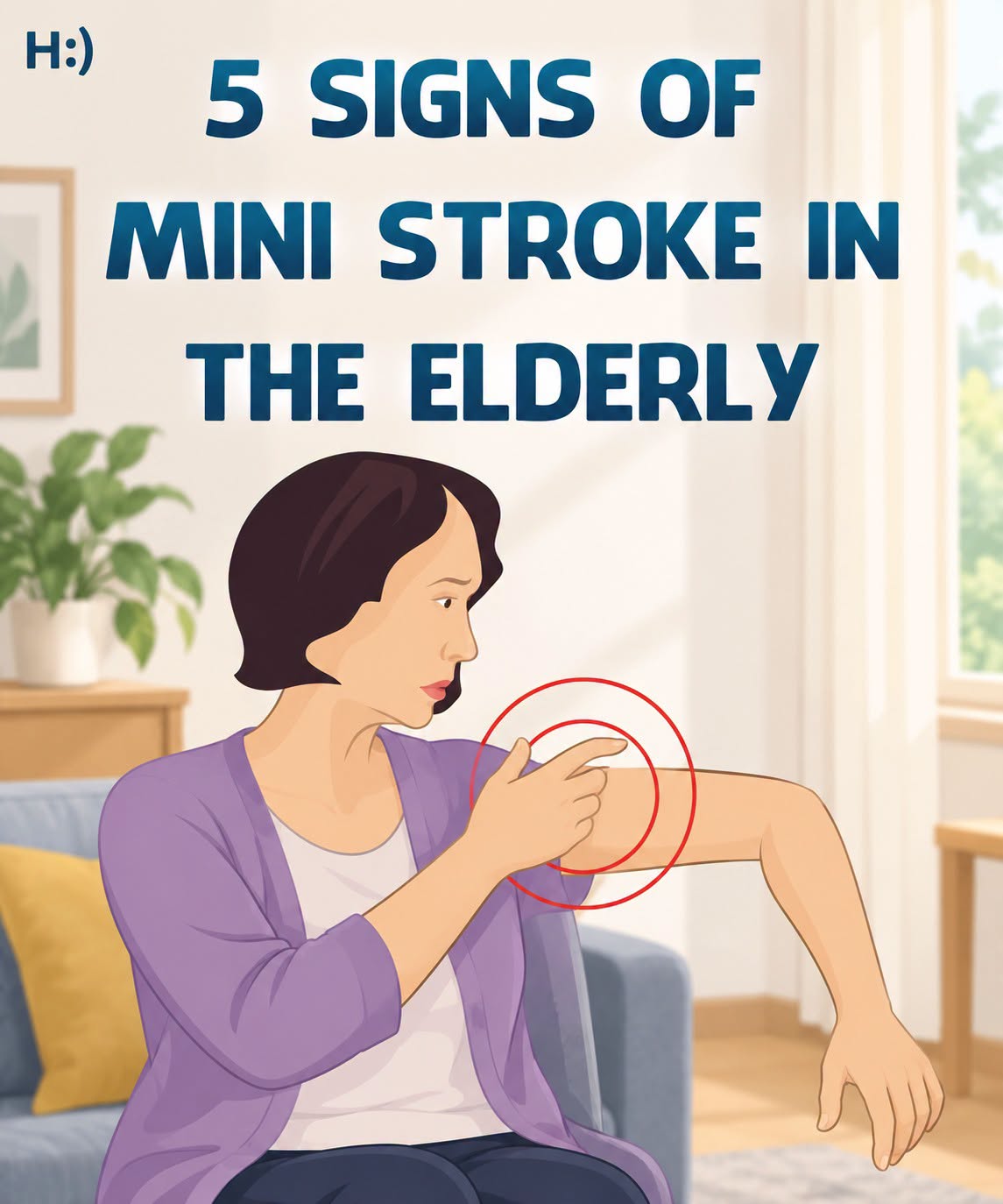
Margaret was standing in front of the mirror when something suddenly felt terribly wrong.
One second, she was looking at her own reflection.
The next, her face seemed to change.
The words she was trying to speak came out broken and unclear. Her mouth felt strange, almost as if it no longer belonged to her. She lifted one hand, but it wouldn’t respond the way she expected.
For a few terrifying seconds, Margaret couldn’t understand what was happening.
Then, just as suddenly as it had started, everything disappeared.
Her face looked normal again.
Her hand moved.
Her speech returned.
There was no lingering pain.
No obvious paralysis.
Nothing that seemed serious enough to explain the terrifying few moments she had just experienced.
And that was precisely what made the episode so dangerous.
Margaret’s first instinct was to dismiss it.
Maybe she had been tired.
Maybe she had stood up too quickly.
Maybe stress had caused some strange reaction.
She wanted to forget the whole thing and continue with her day.
But her daughter refused to let her.
Something about what Margaret described frightened her.
“You need to get checked,” her daughter insisted.
Margaret tried to reassure her.
“I feel fine now.”
“I know,” her daughter replied. “But that’s not the point.”
One phone call eventually led to an emergency-room visit.
What doctors discovered changed everything.
Margaret had experienced a transient ischemic attack, commonly called a TIA.
A TIA occurs when blood flow to part of the brain is temporarily interrupted. The symptoms can disappear quickly, sometimes leaving a person feeling completely normal again.
But the fact that the symptoms vanish does not mean the event should be ignored.
A TIA can serve as an important warning that a more serious stroke could follow.
For Margaret, the episode became a doorway into a medical problem she hadn’t realized was developing.
Doctors discovered dangerously high blood pressure.
They also found signs of narrowed arteries and concerns that required further evaluation of her heart rhythm.
Suddenly, the strange few seconds in front of the mirror didn’t seem mysterious anymore.
They were a warning.
A warning Margaret had almost ignored because it disappeared.
That was the frightening part.
There had been no dramatic collapse.
No prolonged paralysis.
No obvious emergency that forced everyone around her to react immediately.
Instead, her body had briefly sent signals that something wasn’t right — and then those signals vanished.
Margaret later realized how easy it would have been to convince herself that nothing had happened.
If her daughter hadn’t pushed her to seek medical attention, she might have gone back to her normal routine without ever discovering the underlying risks.
The treatment that followed became part of a new routine.
Medication.
Regular medical appointments.
Monitoring her blood pressure.
Making changes to her daily habits.
Paying closer attention to her overall health.
Her family became more watchful, too.
Margaret wasn’t interested in living in fear, but she no longer wanted to confuse feeling normal with being completely safe.
She learned that sudden weakness isn’t something to simply wait out.
Neither is facial drooping.
Neither is slurred or unusual speech.
Neither is sudden confusion, difficulty understanding, trouble seeing, or unexplained problems with balance.
Those symptoms can signal a medical emergency, even when they disappear.
Margaret’s experience became a lesson for everyone who knew her.
Sometimes the most dangerous warning signs are the ones that don’t last.
A person may feel frightened for a few minutes, then look in the mirror and see everything has returned to normal.
That relief can become a trap.
Margaret was fortunate that someone recognized the importance of acting quickly.
Her story is a reminder that when sudden neurological symptoms appear, the safest response is not to wait and see whether they disappear.
Call emergency services and seek immediate medical attention.
Because the first warning may pass.
The next one may not.
And when the brain sends a sudden, unmistakable signal that something is wrong, every second matters.