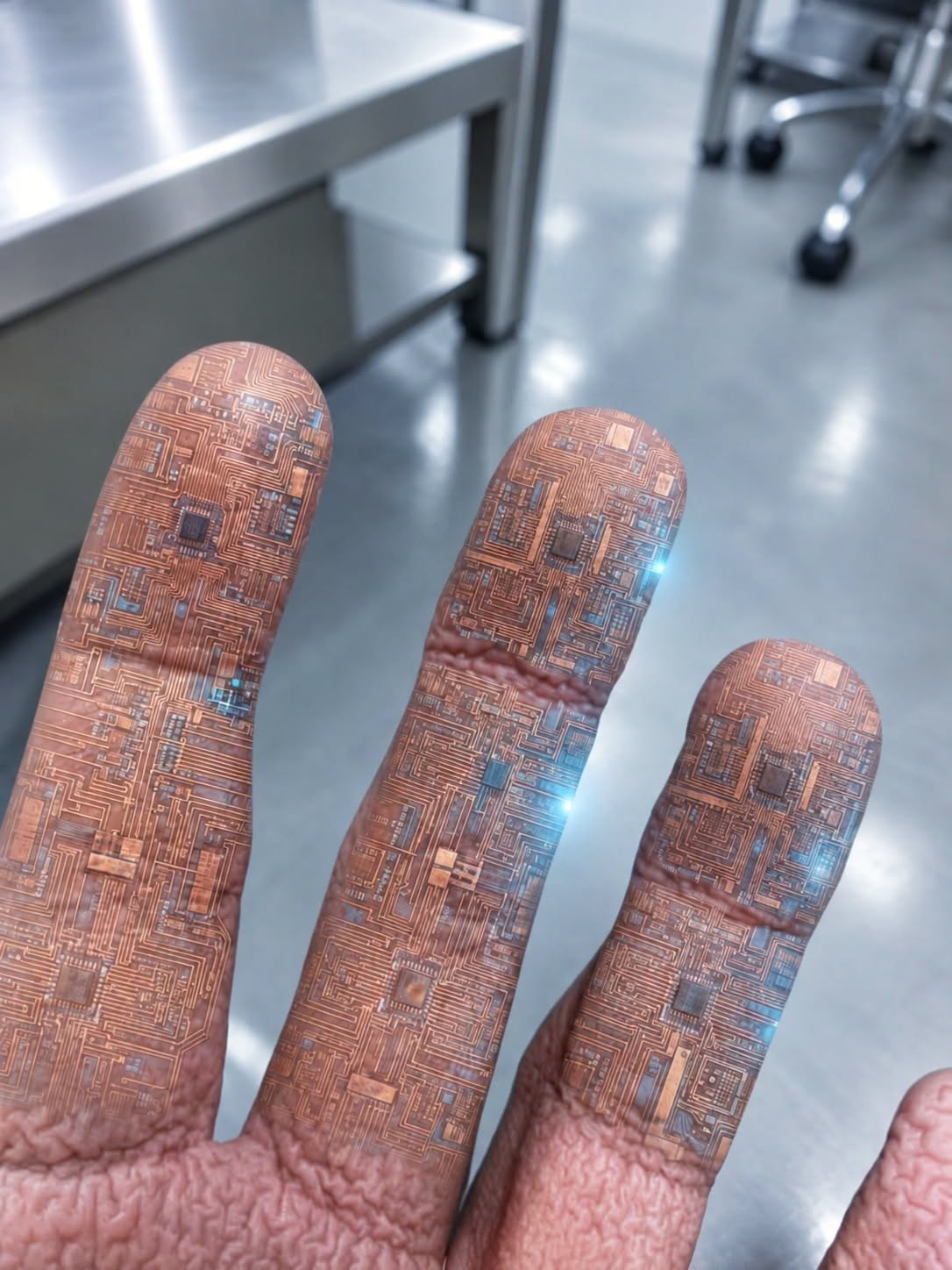
Your fingers don’t suddenly turn wrinkly in water for no reason. It may look like your skin is simply absorbing water, but there is something much more interesting happening beneath the surface. While you sit in a warm bath or keep your hands submerged in water, your nervous system begins making subtle adjustments that can change the appearance of your fingertips within minutes.
Those familiar lines and grooves aren’t simply swollen skin. They are connected to a response involving your nerves and tiny blood vessels beneath the skin. As your hands remain underwater, signals from your nervous system cause small blood vessels in the fingertips to constrict. As those vessels narrow, less blood occupies the tissue underneath the skin, causing the surface to pull inward and form the characteristic wrinkles.
Scientists have long been fascinated by this reaction because it appears to serve a practical purpose. Instead of being a completely useless side effect of sitting in water, the temporary grooves may help your fingers maintain a better grip on wet objects. The channels can create pathways for water to move away from the contact surface, somewhat like the grooves on the tires of a car help move water away from the road.
That could explain why wrinkled fingertips can be useful when handling slippery objects. Imagine trying to pick up a wet stone from a stream, hold onto a damp branch, or grip a slippery object after heavy rain. Smooth fingertips might struggle for traction, while the temporary ridges could provide additional channels and improve contact with the surface.
The reaction is also interesting because it shows that your skin isn’t acting independently. Your nervous system is involved in the process, meaning your body is actively changing how your fingertips behave in response to the environment around you. What looks like a simple bath-time curiosity is actually an example of the complex communication taking place between your brain, nerves, blood vessels, and skin.
Researchers have proposed that this response may have offered an advantage to humans and our ancestors when dealing with wet environments. Gathering food near streams, handling wet materials, moving across rain-soaked surfaces, or climbing in damp conditions could all have benefited from improved grip. While scientists continue to study the exact evolutionary story behind the phenomenon, the connection between water-induced wrinkling and grip is one of the most fascinating explanations.
And then, just as mysteriously as the wrinkles appear, they disappear.
Once you take your hands out of the water and your circulation returns to its usual state, the blood vessels gradually relax and the fingertips return to their normal appearance. The grooves fade, leaving almost no evidence that your body had just switched into this temporary mode.
There is another reason scientists pay attention to water-induced finger wrinkling. Because the response involves the nervous system and blood vessels, unusual patterns can sometimes be worth discussing with a medical professional, particularly if one hand behaves very differently from the other or the change is persistent and accompanied by other symptoms. It isn’t a diagnosis by itself, but unusual changes in a normally familiar bodily response can sometimes provide useful clues about underlying nerve or circulation function.
So the next time you look down at your hands after a long bath and see those strange little ridges covering your fingertips, remember that your skin isn’t simply “pruney.”
Your body has been responding to its surroundings.
Tiny blood vessels have changed, nerves have sent signals, and the surface of your fingers has temporarily transformed—possibly giving you a better grip when the world around you becomes wet and slippery.
A phenomenon that looks completely ordinary may actually be one of the body’s quietest and most fascinating survival responses.