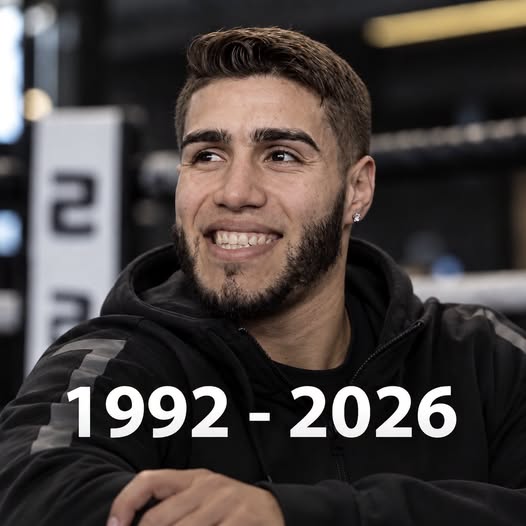
He walked into the ring undefeated.
He left in a coma.
One brutal night in Virginia turned a rising boxing star into a symbol of everything the sport has long struggled to confront. Illegal blows. Missed warnings. Officials who failed to stop what was happening. And a young fighter whose brain was being injured while the crowd watched and cheered.
His story would become bigger than one fight.
It would become a warning about what happens when toughness is celebrated more than safety, when a fighter’s determination is mistaken for proof that he is still able to continue, and when the people responsible for protecting an athlete fail to act soon enough.
Prichard Colón entered the ring in October 2015 carrying an extraordinary record and an even bigger future. At 16–0, the Puerto Rican super welterweight prospect was unbeaten and climbing toward the level of competition he had dreamed about since he first began fighting. He was young, talented, confident, and close enough to the sport’s biggest stages that the next victory could have changed everything.
Across from him stood Terrel Williams, an opponent prepared to make the fight difficult from the opening bell.
The night quickly became a physical battle.
But something more dangerous was happening beneath the spectacle.
Colón absorbed repeated punches to the back of the head—so-called rabbit punches, blows that are illegal because of the severe neurological damage they can cause. They were not simply another part of the punishment fighters expect when they enter a ring. They were precisely the kind of blows officials are supposed to prevent.
Warnings were issued, but the enforcement did not stop the pattern.
Colón continued.
That decision reflected something deeply ingrained in boxing culture: fighters are trained to endure. They are taught that backing away can look like weakness, that pain is part of the profession, and that the instinct to keep going is something to be celebrated.
For Colón, however, continuing was becoming increasingly dangerous.
As the rounds passed, he became disoriented. Something was wrong, yet the fight continued. The young fighter remained determined to finish, pushing forward even as the damage inside his head was becoming more serious.
A boxer can look conscious and still be catastrophically injured.
That is one of the cruelest realities of head trauma.
The body can remain upright while the brain is already losing its ability to protect itself.
Eventually, the fight ended.
But the real crisis was only beginning.
Colón collapsed in the dressing room afterward and was rushed for emergency medical treatment. Doctors discovered a massive brain bleed. The fighter who had entered the arena as an undefeated prospect was suddenly fighting for his life.
His family was forced to confront a nightmare no parent should ever experience.
The ring was gone.
The crowd was gone.
The lights were gone.
There was only a hospital room and the desperate hope that their son would somehow return to them.
He spent 221 days in a coma.
When he finally emerged, he did not simply wake up and resume the life he had before the fight. The young man who had trained to become a professional boxer had suffered devastating neurological injuries. Years followed in which his family became his caregivers and advocates, helping him navigate a life that had been permanently transformed.
The future he had imagined disappeared in a single night.
The medals, the undefeated record, the possibility of championship fights—none of it mattered anymore.
The goal became something much more basic.
To survive.
To communicate.
To experience moments of connection.
To find dignity in a life that had been radically altered.
Colón’s story sparked outrage throughout boxing and beyond. Questions emerged about officiating, medical supervision, the enforcement of rules, and the culture that can allow dangerous behavior to continue after a fighter has already shown signs of distress.
The issue was not simply whether one person had made a mistake.
It was whether the system surrounding a fighter had done enough to recognize danger before it became irreversible.
His case helped fuel renewed attention to fighter safety, concussion protocols, and the responsibility of officials and medical teams to intervene when a boxer is no longer capable of safely continuing.
Because the central lesson was painfully simple:
A fighter should never have to prove how much damage he can survive.
The sport exists because two athletes agree to compete within rules designed to create some measure of safety. Those rules only matter if they are enforced. A warning that does not stop illegal behavior is not enough. A fighter’s courage cannot substitute for medical judgment.
And determination cannot be allowed to become a death sentence.
For years, Colón’s family carried the consequences of that night. They watched a young man who once dreamed of becoming a champion navigate a completely different reality. His story became inseparable from the larger conversation about the risks fighters accept—and the additional risks they should never be forced to endure.
Then came the news that made the story even more heartbreaking.
Colón died at 33.
He had survived the immediate aftermath of the fight for years, but the injuries from that night had already rewritten the rest of his life.
He never got the chance to discover how far his boxing career might have taken him.
He never got to grow into the fighter he might have become.
The undefeated prospect remained frozen in the memories of those who knew him before the tragedy.
And that is perhaps the cruelest part of his story.
The boxing world remembers the record.
His family remembers the person.
Behind the 16–0 statistic was a young man with dreams, a personality, a family, and a future that extended far beyond the ring. Behind the photographs of him fighting was someone who should have had decades left to become older, to change, to make mistakes, to succeed, to build a life after boxing.
Instead, one night became the dividing line between everything before and everything after.
Prichard Colón’s legacy should not be reduced to the brutality he endured.
It should also be remembered as a warning.
Boxing will always involve risk. Fighters will always enter the ring knowing they can be hurt. But accepting risk does not mean accepting preventable failures.
Rules exist for a reason.
Warnings exist for a reason.
Medical protocols exist for a reason.
And when an athlete’s safety is in question, stopping a fight is not taking away a fighter’s courage.
It is protecting the human being beneath the gloves.
Colón entered that Virginia ring as an undefeated young man chasing a dream.
He left it with a life-changing injury.
Years later, he was gone.
What remains is his family’s love, the memory of the fighter he once was, and an uncomfortable question the sport can never afford to stop asking:
**How many more young fighters must lose everything before safety becomes more important than the spectacle?**