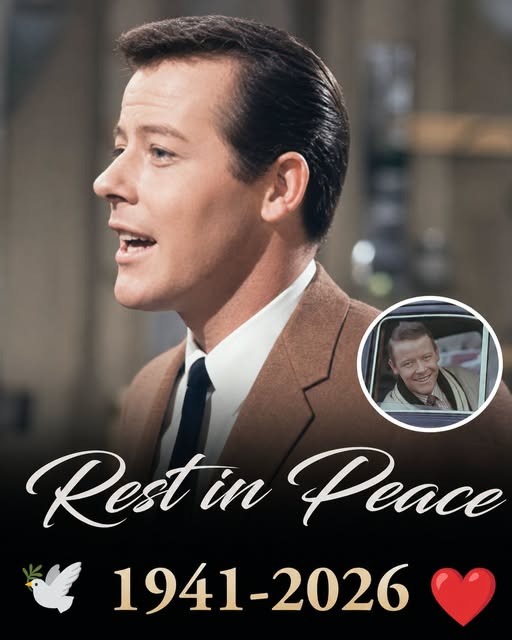
His voice raised a generation – and now it’s gone.
The man who went from delivering milk at dawn to delivering No. 1 hits to millions has taken his final bow. News of his passing has left fans stunned, while memories of post-war Britain come rushing back through old records, faded photographs, radio broadcasts, and songs that somehow never disappeared. For generations of listeners, his voice was part of the soundtrack of growing up—a familiar presence in living rooms, dance halls, cinemas, and quiet afternoons when the radio was often the center of the home.
Now, as tributes pour in, one bittersweet regret from his private life is breaking hearts all over again. Behind the chart success, the television appearances, and the easy charm was a man who eventually reflected on the road he had chosen—and on the one thing that fame could never give back once the years had passed.
He began as Terence Perkins, a teenage milkman on the Isle of Wight. His early mornings were spent delivering bottles through quiet streets, long before most people had started their day. There was little reason to believe that this young man would one day become a household name. Yet there was something in his voice that his mother recognized before almost anyone else did.
A proud mother encouraged him to step onto a stage, believing that his talent belonged somewhere beyond country lanes, milk rounds, and the familiar clinking of glass bottles. It was a gamble rooted not in money or connections, but in faith. She believed her son had something worth hearing.
That small push changed everything.
The teenager who once delivered milk began performing, slowly moving from local opportunities toward a much larger world. Terence Perkins became Craig Douglas, a stage name inspired by a Scottish doorstep, and that new identity would soon travel far beyond the Isle of Wight.
The transformation was extraordinary.
The milkman became a singer.
The local performer became a star.
And the young man who once started his mornings carrying bottles would eventually hear his own voice coming from radios across Britain.
Then came “Only Sixteen.”
The song became far more than another successful record. It became a cultural memory. It found its way into first dances, school discos, teenage romances, family gatherings, and countless quiet Sunday afternoons beside the radio. For many listeners, hearing those opening notes decades later was enough to transport them instantly to another time.
That was the special power of Craig Douglas.
He did not simply record songs.
He became part of people’s memories.
His smooth vocals and warm public image gave his music an effortless quality, but behind that apparent ease was a career shaped by persistence, timing, and an extraordinary journey from ordinary beginnings to national fame. At a time when popular music was changing rapidly, he managed to capture something deeply personal about young love, longing, innocence, and the excitement of a generation discovering a new kind of entertainment.
His success carried him into the charts, cinemas, television studios, and living rooms throughout post-war Britain. His name became recognizable far beyond the streets where his story had begun.
But fame has a way of hiding its costs.
The public saw the singer.
The audience saw the smile.
The records preserved the voice.
What they did not always see was the private man wondering what had been sacrificed along the way.
Behind the easy smile and smooth vocals was someone who quietly acknowledged one aching absence: the family he never had.
It was a deeply personal realization, made more painful by the passing of time. The same career that had brought him applause had also demanded years on the road, commitments, performances, travel, and a life organized around the demands of being a successful entertainer.
He chose the road.
He chose the stage.
He chose the spotlight.
And later, he wondered what those choices had cost him.
That regret does not erase the joy his career brought to millions. If anything, it makes his story more human. Success is often measured in records sold, chart positions, television appearances, and applause, but a life cannot always be measured by those things alone.
There are achievements that fill newspapers.
And there are absences that only become visible when the noise finally stops.
As the years passed, the crowds became smaller, the spotlight softened, and the world that had once seemed to move at incredible speed began to change. New generations discovered new sounds, new performers emerged, and the musical landscape transformed.
Yet his voice remained.
Old records were rediscovered.
Songs were played again.
Children heard the music their parents once loved, and sometimes grandparents introduced those same songs to another generation.
That is how an artist survives beyond the stage.
Not simply through fame, but through memory.
A song can outlive the person who recorded it. It can sit untouched for years before suddenly appearing in someone’s life at exactly the right moment. It can remind a listener of a first love, a childhood home, a parent who is no longer there, or an evening that seemed ordinary at the time but became precious in retrospect.
Craig Douglas became part of those memories for countless people.
And now, as news of his death brings his music back into focus, listeners are being reminded of both sides of his story: the extraordinary success of the performer and the quieter questions faced by the man behind the microphone.
His journey from teenage milkman to chart star remains remarkable.
But perhaps the most touching part is what happened afterward.
The applause eventually fades.
The records become pieces of history.
The photographs grow older.
But the choices made along the way remain part of a person’s private story.
For Craig Douglas, one of those choices appears to have carried a bittersweet weight—the knowledge that while he had spent his life entertaining families, he never created a family of his own.
It is a reminder that even the brightest careers can contain shadows invisible to the audience.
He gave people songs.
He gave them memories.
He gave generations a voice to grow up with.
And perhaps that is why his passing feels so personal to listeners who never knew him.
Some artists raise us not as their children, but as the children of their music.
Their voices become part of our childhood before we are old enough to understand what they mean. Years later, when we hear those same voices again, we realize they were there during moments we had almost forgotten.
Now the stage is silent.
But the songs remain.
And somewhere, a record still spins, carrying the voice of a teenage milkman from the Isle of Wight who became Craig Douglas—and reminding the world that while fame may eventually disappear, music has a remarkable way of staying behind.