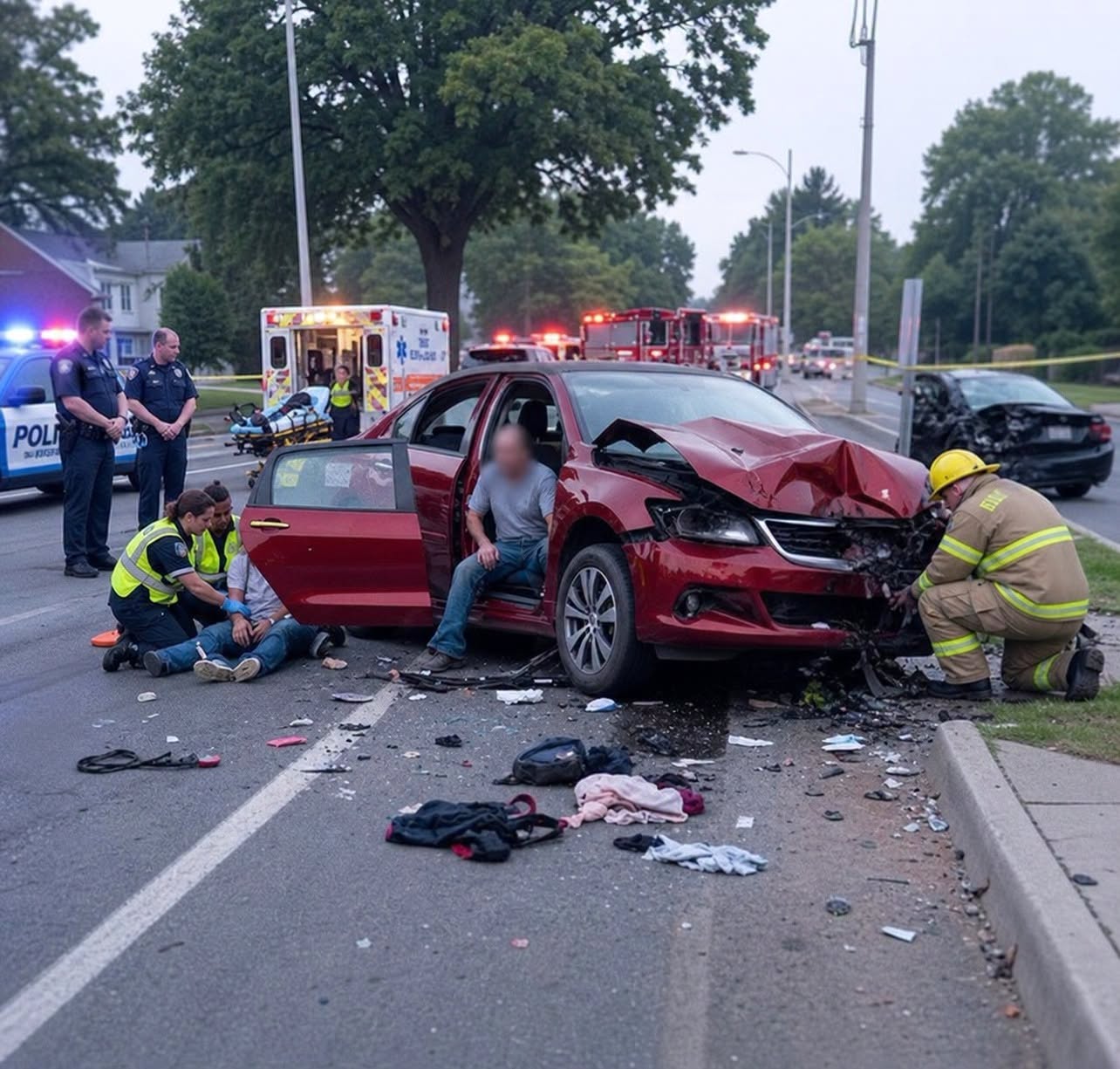
The impact was brutal. Metal screamed, glass exploded, and in seconds an ordinary suburban street became a nightmare no one nearby would ever forget. The sound of the collision ripped through the evening, turning an otherwise quiet stretch of road into a scene of chaos. Sirens tore through the air as neighbors froze behind windows and doorways, watching a red sedan crumpled around a utility pole like foil. Pieces of glass glittered across the pavement. Fluids leaked beneath the wreckage. Someone was crying. Someone wasn’t moving. And as paramedics rushed toward the vehicle, fighting the clock and trying to create order in the middle of destruction, one question hung in the air, unspoken, suffocating: how had an ordinary drive ended this way?
The first few minutes seemed to stretch forever. Emergency crews moved with practiced urgency, cutting through the confusion as bystanders struggled to understand what they were seeing. Police pushed people back from the scene while paramedics assessed injuries and worked to stabilize anyone who could still be helped. Every second mattered. Every decision carried weight. What had been a normal evening commute had become a fight against time, and the people standing nearby could do little except watch and hope.
Long after the sirens faded, the marks of that night stayed behind. Deep gouges scarred the asphalt. The utility pole stood splintered and damaged. Broken plastic and tiny fragments of glass remained scattered along the roadside, physical reminders of a moment that had lasted only seconds but would remain in people’s memories for years. The street eventually reopened, traffic returned, and life slowly resumed its ordinary rhythm, but something had changed.
The driver who had simply been going from one place to another now sat beneath harsh hospital lights, surrounded by machines, unfamiliar voices, and questions that had no easy answers. In the quiet moments between examinations and conversations with doctors, the mind had nowhere to hide. Every second before the crash could be replayed. Every movement could be questioned. Every glance, turn, speed change, or decision suddenly seemed enormous.
What if the driver had waited another few seconds?
What if the phone had remained untouched?
What if the speed had been lower?
What if someone had made one tiny different decision?
Investigators faced their own version of those questions on the street. They measured skid marks, photographed the wreckage, mapped debris patterns, examined the damaged pole, and documented every detail they could recover. The crash scene became a puzzle assembled from fragments. Tire marks told one part of the story. The position of the vehicle told another. Broken glass, twisted steel, road conditions, traffic patterns, and witness accounts all had to be considered.
There was no single piece of evidence capable of explaining the entire tragedy. Instead, investigators had to reconstruct the final moments from clues scattered across the pavement. Every measurement mattered because somewhere inside those details was an explanation of how an ordinary drive had turned into a catastrophic collision.
But beneath the official reports, photographs, insurance claims, hospital bills, and tow-truck winches lay a quieter truth: how fragile the illusion of control really is.
Most people get into a car believing they understand the risks. They buckle their seat belts, start the engine, check the road, and assume they will arrive where they are going. Millions of ordinary journeys happen every day without incident. That repetition can create a powerful illusion—that because nothing has happened before, nothing will happen this time.
The wrecked sedan destroyed that illusion for everyone who saw it.
Families drove past the following morning a little slower than usual. Hands tightened around steering wheels. Parents reminded children to stay buckled. Drivers who normally glanced at their phones at red lights suddenly thought twice. Conversations inside passing cars became quieter as people looked toward the damaged pole and remembered what had happened there only hours earlier.
For neighbors, the crash was no longer just something they had witnessed. It became part of the identity of the street. People would remember where they were when they heard the impact. They would remember the flashing emergency lights reflecting against houses. They would remember the sound of sirens arriving and the sight of first responders moving toward the wreckage.
And for the people closest to the victim, the consequences would extend far beyond the accident scene. A crash can leave injuries that require months of treatment, rehabilitation, and painful adjustment. It can create financial pressure, emotional trauma, and questions that cannot be answered simply by reading an accident report.
That is what makes moments like this so haunting.
The crash itself lasted seconds.
The consequences can last a lifetime.
The red sedan eventually disappeared from the roadside, loaded onto a tow truck and taken away from public view. The broken glass was swept up. The road was repaired. The utility pole was replaced or reinforced. Eventually, the physical evidence of the collision began to disappear.
But the memory remained.
That wrecked sedan became a warning no road sign could match—a reminder that danger does not always arrive with a dramatic buildup. Sometimes it begins with something almost invisible: one distracted glance, one moment of impatience, one reckless burst of speed, one decision that seems harmless until it is too late.
A journey that begins with a simple destination can suddenly become a dividing line between everything that came before and everything that comes after.
And perhaps that is the hardest lesson left behind on that quiet suburban street: we often believe we are in complete control until one unexpected second proves how little control we ever truly had.
The road eventually became ordinary again.
But for everyone who witnessed that night, it would never feel quite the same.