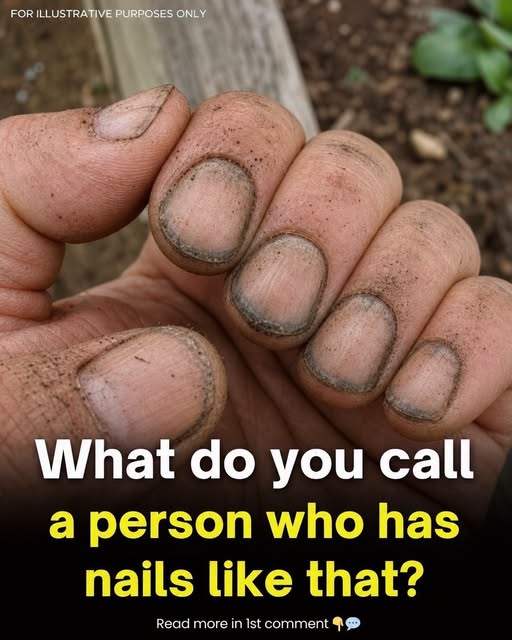
Some people are sentenced in a single glance. A flash of chipped polish, dirt-packed crescents beneath the nails, rough skin, cracked knuckles—and suddenly a judgment is made. Dirty. Lazy. Careless. Less. We see a few seconds of someone’s appearance and convince ourselves we understand the entire story behind it. But what if that judgment is a lie? What if those stained fingertips are not evidence of neglect at all, but quiet scars of survival, exhaustion, responsibility, and love?
What if the hands we dismiss are the same hands that worked while everyone else was sleeping?
We don’t see the night shifts, the broken sleep, the unpaid bills, the early alarms, or the hours spent doing work that leaves little time for anything else. We see the dirt, but not where it came from. We notice the cracked skin, but not the cold warehouse, the harsh chemicals, the heavy tools, or the endless dishes that caused it. We judge the evidence without ever asking what happened before we arrived.
We are taught to read hands like verdicts, as if a clean manicure proves virtue and a stained nail bed exposes failure. Smooth skin becomes associated with care, success, and discipline, while rough hands are too easily interpreted as signs that someone has failed to take care of themselves. But appearance is not character.
Some hands are simply tired.
They belong to the people turning wrenches in freezing garages, repairing engines while their fingers go numb. They belong to workers hauling crates before dawn, lifting boxes until their wrists ache. They belong to restaurant workers washing other people’s dishes, cleaners scrubbing floors, caregivers helping someone else bathe, farmers working in soil, mechanics covered in grease, construction workers handling materials all day, and countless people whose jobs leave physical evidence behind.
The dirt that lingers beneath a nail can be the residue of showing up.
It can be the mark left by a person who had to keep working when quitting would have been easier. It can belong to someone who spent the entire day solving problems for other people and finally came home too exhausted to worry about appearances. It can belong to a parent who used the last bit of energy helping a child with homework instead of standing over a sink scrubbing their hands again.
Sometimes, the hands people judge most harshly are the hands that have done the most.
A cracked knuckle may have opened a stubborn door. A stained fingertip may have repaired something that another person depended on. A rough palm may have carried groceries, held a sleeping child, cleaned a home, lifted a patient, or earned the money that kept the lights on.
It’s easy to praise “hard work” in the abstract and still recoil from the bodies that bear its cost. We celebrate the idea of labor while sometimes looking down on the physical signs of labor. We admire the finished house without thinking about the hands that built it. We appreciate a clean restaurant without considering the workers who scrubbed the kitchen after everyone went home. We enjoy a repaired car without thinking about the mechanic whose hands are covered in oil.
We want the results of difficult work without always wanting to look at what that work does to the person performing it.
And there is another privilege hidden in the judgment: not everyone has the same access to time, water, products, or comfortable conditions. Not everyone has hot water waiting at home. Not everyone has gentle soap, protective gloves, expensive creams, professional manicures, or an hour at the end of the day to soak, scrub, moisturize, and restore their skin.
Some people have much bigger problems to solve.
If you are deciding whether there will be enough money for groceries, whether the electricity bill can wait another week, whether you can afford to miss a shift because your child is sick, or whether your body can handle another ten hours of work, perfectly clean fingernails may not be at the top of your list.
That doesn’t make you dirty.
It makes you human.
And sometimes, even when someone has access to everything they need, their hands may still show the effects of their work. Dirt can be stubborn. Chemicals can damage skin. Repeated washing can cause dryness and cracking. Certain jobs make perfectly clean hands difficult to maintain throughout the day. A person can care deeply about hygiene and still finish a shift with evidence of what they have been doing.
That distinction matters.
Cleanliness and dignity are not the same thing.
A person can have stained nails and still be deeply responsible. Someone can have rough hands and still be generous, loving, disciplined, and kind. A perfect manicure tells us almost nothing about whether someone is a good person. Neither does a dirty one.
The problem is that first impressions happen quickly. Our brains look for shortcuts. We see a visual detail and create a story around it. Once the story is formed, we often stop looking for evidence that contradicts it. The person becomes the assumption we made about them.
But we rarely know what another person has survived before we met them.
Maybe they worked overnight.
Maybe they spent the morning fixing a broken machine.
Maybe they cared for an elderly parent.
Maybe they cleaned a house for ten hours.
Maybe they simply had a difficult week and more important things on their mind.
Maybe their hands are marked because they are constantly being used to help someone else.
There is also something deeply beautiful about remembering what hands are for. Hands are not decorations. They are tools, instruments of care, and extensions of the lives we live. They build, carry, repair, cook, comfort, protect, create, and hold.
A hand that looks worn has not necessarily been neglected.
It may have been busy.
It may have been needed.
It may have been giving more than it had to give.
So the next time you notice someone’s chipped polish, rough skin, or stained fingertips, pause before turning that observation into a judgment. You don’t know what those hands did that day. You don’t know who depended on them. You don’t know what the person had to sacrifice simply to make it through the week.
And you certainly don’t know their worth.
If we must read anything from another person’s nails, let it be this: appearance is not a moral scorecard. Dirt is not a character flaw. Rough skin is not a measure of intelligence, ambition, or dignity.
Some hands carry the visible evidence of invisible responsibilities.
And perhaps instead of asking why they don’t look cleaner, we should sometimes ask ourselves what they have been working so hard to carry.