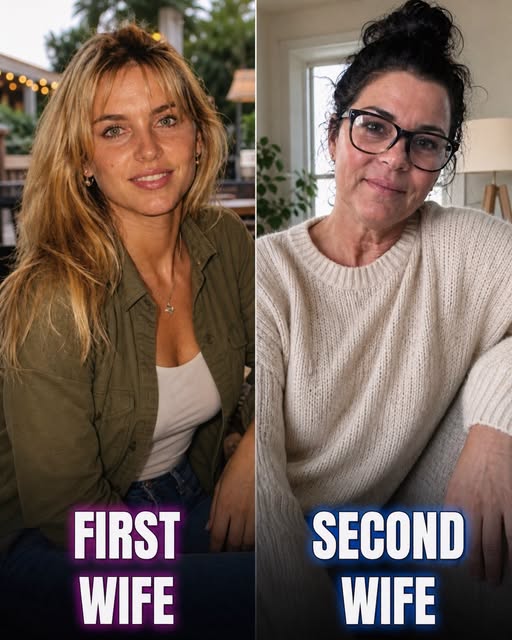
For twenty years, I laughed at the same joke.
For twenty years, my husband let me laugh.
And for twenty years, his entire family guarded a secret they had convinced themselves I was too fragile, too protected, or perhaps simply too far removed from their version of the past to know. At family dinners, his brothers would make the same teasing comments, and everyone would laugh while I smiled along, never imagining that the joke had a meaning I was never supposed to understand.
I thought it was harmless family teasing.
Then, at a birthday dinner, one careless joke finally snapped something open.
Someone said it again, casually, almost automatically. But this time I stopped smiling. I looked around the table and asked a single question.
The room went silent.
No one laughed. No one answered immediately. Faces changed. Eyes dropped toward plates. My husband suddenly looked as though the secret he had protected for decades had finally become too heavy to carry.
That night, I discovered that the betrayal was not another woman.
It was an entire life I had never been trusted to see.
There was a VHS tape. A hospital bed. A wedding performed in desperation. A marriage without a proper license. And a dead fiancée whose name I had never heard spoken in our home.
Her name was Joanna.
I had spent years believing my husband’s life before me was a simple story of dating, heartbreak, and eventually moving on. I had never imagined that there was an entire chapter so painful that everyone around him had decided to bury it.
Joanna wasn’t an ex.
She hadn’t simply left him, and he hadn’t simply left her.
She had been the person he loved before me, and their story had ended in a way that left no room for a clean goodbye. When Joanna became critically ill, she and Daniel had a desperate hospital “wedding,” a final attempt to make their commitment official in whatever way they could before time ran out.
Six days later, she died.
Daniel was only twenty-five years old.
He came away from those days believing himself to be a widower, carrying a grief far too enormous for someone so young. His family watched him fall apart and became terrified that talking about Joanna would destroy him completely. Instead of teaching him to live honestly with his grief, they tried to protect him from it.
And eventually, that protection became silence.
Then silence became secrecy.
And secrecy became a family joke.
When Daniel eventually chose me, he did not simply bring his future into our marriage. He brought the silence with him. His brothers knew. His family knew. They understood the meaning behind their jokes when they called me the “second wife.”
I didn’t.
I smiled at the jokes because I thought they were harmless.
Sometimes I even laughed.
And all those years, the people sitting around the table knew something about my own marriage that I did not.
That was the part that hurt most.
It wasn’t the fact that Daniel had loved someone before me. I had loved before him too. I understood that people could have lives, relationships, and losses before they met the person they eventually married.
What I could not understand was why everyone had decided that I was not worthy of the truth.
When I finally learned everything, anger came before compassion.
I wanted answers.
Why hadn’t he told me? Why had his brothers been allowed to turn something so devastating into a private joke? Why had his family decided that protecting Daniel meant excluding me? And why had my husband, the person who promised to build a life with me, allowed me to live beside a story I was never permitted to know?
For a while, I wondered whether our entire marriage had been built on something false.
But I didn’t leave.
Not because grief excused what he had done.
It didn’t.
I stayed because, for the first time, Daniel finally stopped hiding.
We sat in counseling rooms and talked until there was nothing left to avoid. We sat at the kitchen table late at night, sometimes saying nothing for long stretches, sometimes talking until the sun began to rise. We sat together on the porch in the quiet, and I asked questions I had carried for years without knowing I was missing them.
And this time, he answered.
He did not flinch.
He did not rush my anger.
He did not tell me that I should understand because he had been grieving. He simply listened and answered, even when the answers were painful.
Slowly, Joanna became a name we could say aloud.
She stopped being a ghost hidden between us and became what she had always been: a real person who had mattered deeply to my husband and whose death had shaped the man he became.
I learned about her life, their relationship, the hospital, the desperate wedding, and the years Daniel spent carrying guilt and grief. I began to understand that his family had not protected him in the way they thought they had. They had taught him that pain should be hidden, that grief should be buried, and that silence was safer than honesty.
But the real wound was never that my husband had loved before.
It was that, for twenty-two years, everyone else had been trusted with his sorrow except his wife.
That realization changed everything.
A marriage is not simply about being the person someone chooses for the future. It is also about being trusted with the parts of their past that shaped who they became.
I cannot change the years we lost to silence. I cannot erase the cruel jokes or pretend that discovering the truth after so long did not break something inside me.
But we can choose what happens next.
Now, Joanna is no longer a secret. Her name can exist in our home without fear. Daniel can remember her without pretending that remembering her betrays me, and I can acknowledge her place in his story without believing it diminishes mine.
Twenty years of laughter were built around a secret.
But what came after the truth was finally spoken was something neither of us had known how to build before:
an honest marriage.