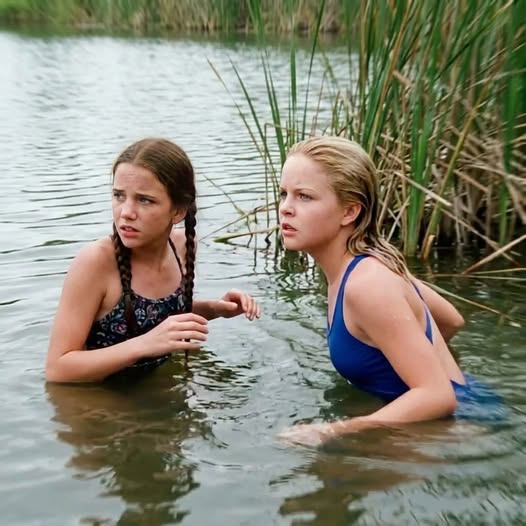
Don’t let the nostalgia fool you.
Behind the soft sunsets, wholesome speeches, prairie landscapes, and comforting family lessons, *Little House on the Prairie* was far from perfect. The beloved series that became a treasured part of television history was also filled with continuity mistakes, strange production choices, behind-the-scenes drama, and moments that would never pass without controversy today. For generations of viewers, Walnut Grove represented innocence, family, faith, hardship, and hope. But behind that carefully constructed image were stories that were considerably messier.
Some of the most amusing discoveries came from mistakes hiding in plain sight.
Fans who grew up watching reruns eventually began noticing Laura’s seemingly endless pregnancy. The timeline appeared to stretch and bend around her growing belly, creating the impression that the writers had lost track of how much time was actually supposed to have passed. Scenes that should have lined up chronologically sometimes didn’t, and details from one episode could contradict what viewers had seen only a short time earlier.
At the time, many viewers simply accepted the story and moved on. Years later, however, fans began examining the episodes more closely, and the inconsistencies became much harder to ignore. What once felt like a seamless frontier story suddenly revealed the fingerprints of television production: rushed schedules, changing scripts, and writers trying to keep an enormous fictional world moving forward.
Then there was Nellie Oleson’s famous hair.
Those perfect golden curls were part of Nellie’s unmistakable appearance, helping create the polished, spoiled, and almost cartoonishly proper image that made the character so memorable. But the hairstyle was not nearly as effortless as it looked on television. Achieving those curls could be uncomfortable and time-consuming, requiring extensive styling and careful positioning.
What appeared to be natural beauty was actually a production challenge.
The styling became so difficult that a wig eventually served as a quiet solution. Metal combs, pins, and other methods were used to keep everything in place while remaining hidden from the camera. To viewers sitting comfortably at home, Nellie’s hair looked perfectly ordinary for the period. Behind the scenes, however, maintaining that look could be anything but comfortable.
And the illusion of innocence became even more complicated once the cameras stopped rolling.
Michael Landon’s playful personality was an important part of the atmosphere surrounding the production. Stories of practical jokes and mischievous behavior, including his famous frog pranks, helped create the impression of a cast and crew who sometimes felt more like an extended family than coworkers. The set could be playful and chaotic, filled with the kind of jokes that helped people survive long production days.
But not every behind-the-scenes story was harmless.
Landon’s affair with a much younger crew member deeply affected Melissa Gilbert, who had grown close to him and viewed him as an important figure in her life. The revelation damaged her trust and permanently changed their relationship. For viewers who had grown up seeing Landon as the warm-hearted father figure at the center of the show, the reality behind the scenes was difficult to reconcile with the comforting image presented on screen.
That contrast is perhaps what makes the story of *Little House on the Prairie* so fascinating.
The show projected an almost idealized version of family life, where difficult problems could often be confronted through love, honesty, faith, and perseverance. Yet the people creating that world were imperfect themselves. Their personal lives, relationships, mistakes, and conflicts could not always remain outside the frame.
Even the episodes themselves contained reminders that television is an illusion.
Fans have spotted unusual editing choices, continuity slips, anachronistic details, and strange visual moments that were easy to overlook when the show originally aired. There were also memorable cameos and visual oddities, including appearances that made viewers wonder whether they had just spotted a Colonel Sanders lookalike wandering through Walnut Grove.
None of these mistakes destroyed the series.
If anything, they made it more human.
*Little House on the Prairie* was never the flawless window into frontier life that nostalgia sometimes suggests. It was a television production created under real-world pressures, with actors learning lines, crews solving problems, writers changing stories, and editors working to turn hours of footage into finished episodes.
That is why modern viewers can laugh at the mistakes while still feeling the emotional pull of the show.
The impossible timelines, uncomfortable hairstyles, editing slips, bizarre cameos, and painful off-screen revelations all exist alongside the scenes that made audiences cry, laugh, and remember the series decades later.
Perhaps that is the real secret behind Walnut Grove.
It was messy. It was imperfect. Sometimes it was completely unrealistic. And behind the wholesome speeches and beautiful sunsets were real people dealing with very human problems.
But somehow, despite all those cracks in the illusion, the memories survived.
For many fans, that may be exactly why *Little House on the Prairie* still lingers. Not because it was perfect, but because it became part of their own imperfect memories—a show that could transport them back to another time, even when the details on screen didn’t quite add up.