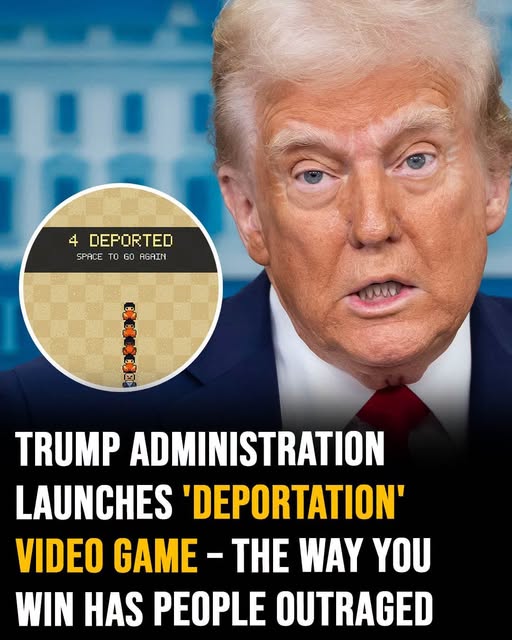
Trump’s White House just turned immigration crackdowns into a video game — and people are horrified. In one, players literally rack up points by deporting “crossers” along the Rio Grande. Another challenges them to “Build the Wall” against a “zombie border siege.” Supporters call it fun. Critics call it dystopian. At a moment when the country is already overwhelmed by political division, economic pressure, and global crises, the decision to turn immigration enforcement into arcade-style entertainment has sparked a fierce backlash.
Turning immigration enforcement and border politics into an online arcade is more than a quirky communications strategy; it represents a revealing choice about how political power is presented to the public. When deportations, border crossings, and walls become high-score mechanics, the real people affected by those policies can disappear behind points, graphics, and jokes. Complex human stories are reduced to something players can click, shoot, build, and win.
The White House has embraced a deliberately provocative style, presenting the games as “fun and winning” while contrasting them with what it describes as “dark socialism.” The approach is unmistakably meme-ready, designed to capture attention in an online culture where outrage and humor can spread faster than traditional political messaging. But for many Americans dealing with war headlines, medical expenses, rising rent, and everyday financial pressure, the timing feels grotesque — as if serious national problems have been transformed into entertainment.
The backlash on social media is therefore about more than taste, trademarks, or whether political messaging belongs inside a game. At its core, it is about trust. Critics question whether government resources and attention should be directed toward provocative digital campaigns rather than toward practical solutions to the problems people are facing. Others see the games as another example of politics becoming increasingly focused on branding, viral moments, and partisan spectacle.
Even some conservatives have reportedly questioned whether the strategy goes too far, with comparisons to the satirical world of “Idiocracy” appearing in the reaction. Supporters, meanwhile, see the games differently: as a clever way to communicate the administration’s immigration priorities to an audience accustomed to memes, gaming, and short-form political content.
Whatever side of the debate someone occupies, the controversy reveals something larger about modern political communication. The games are not simply about immigration. They are about the changing language of power — and how government increasingly competes for attention in the same digital spaces as influencers, entertainers, advertisers, and internet personalities.
In the end, the most unsettling question may not be whether the games are offensive or entertaining. It may be what they reveal about the presidency’s view of politics itself: not simply as governing, but as spectacle — where policy becomes a meme, conflict becomes content, and political victory is measured not only in legislation, but in clicks, reactions, and who gets the highest score.