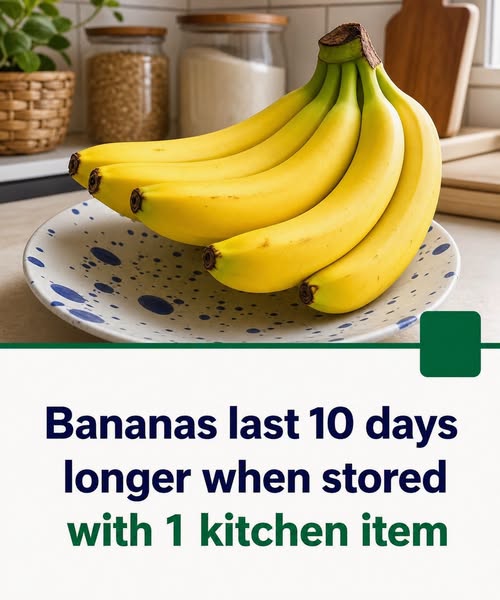
Bananas aren’t “going bad too fast” by accident. Something in your own kitchen may be quietly sabotaging them without you even realizing it. It’s invisible, it spreads through the air, and it can turn perfectly yellow fruit into soft, brown mush days before you were planning to eat it. Most people never notice what is happening because there is no obvious warning. The bananas simply seem to ripen overnight. But the real culprit may already be sitting right beside them—around your apples, your avocados, your pears, and all the other fruit gathered on the counter. Every time you fill that pretty fruit bowl, you may unknowingly be speeding up the clock.
Most of the time, the problem isn’t the bananas themselves—it’s where they are kept and what they are kept beside. Bananas are extremely sensitive to ethylene, a natural ripening gas that many fruits release as they mature. Ethylene acts like a signal telling nearby fruit to continue ripening. When bananas sit beside fruits that produce significant amounts of this gas, they can be exposed to much more ethylene than they would be on their own.
That means the innocent-looking mixed fruit bowl sitting in the center of your kitchen may actually be working against you. Apples, avocados, and pears can all contribute to the ethylene surrounding nearby bananas. Instead of ripening gradually, the bananas may move through the process much faster, going from green to perfect yellow and then to brown and mushy before you have enough time to enjoy them. What looks like a beautiful, organized fruit display can quietly cut their good days in half.
The frustrating part is that you may think you are doing everything right. You buy fresh bananas, bring them home, arrange them neatly with the rest of your fruit, and expect them to last several days. Then suddenly the peel develops dark spots, the fruit becomes softer, and the window for eating them seems to disappear. You may blame the store, the weather, or the bananas themselves, when the real issue may simply be their surroundings.
Fortunately, you can slow everything down with a few simple changes. One of the easiest solutions is to give your bananas their own space on the counter. Keep them away from apples, avocados, pears, and other fruit that releases ethylene. They do not need to be hidden away or stored somewhere complicated. Even moving them a short distance away from a crowded fruit bowl can help reduce the amount of ripening gas they are exposed to.
Another simple trick is to keep the bananas together in a bunch. Instead of separating them as soon as you bring them home, leave them connected until you are ready to eat them. You can also wrap the stems tightly with plastic wrap or foil. The stems are an important area where ethylene is released, so covering them can help trap much of the gas there rather than allowing it to spread as freely around the rest of the fruit.
It may seem like an insignificant kitchen trick, but small changes in how you store fruit can make a noticeable difference. The goal is not to stop ripening completely. Bananas are supposed to ripen. The goal is simply to slow the process enough that you have more time to eat them while they are at their best.
And then there is the refrigerator.
When your bananas finally reach that perfect yellow stage—the point when they are sweet, firm, and ready to eat—moving them into the fridge can help extend their useful life. The peel may darken considerably, and that can make the bananas look as though something has gone wrong. But don’t judge the fruit entirely by its appearance. The inside can remain sweet, firm, and perfectly enjoyable for several days longer than it might have on the counter.
The darkening peel is one of the reasons people often avoid refrigerating bananas, assuming the fruit has spoiled. But the outside and inside do not necessarily change at the same rate. The skin can become dark while the flesh remains in good condition. So if the bananas have already reached the level of ripeness you want, refrigeration can be a useful way to buy yourself additional time.
In the end, keeping bananas fresh isn’t necessarily about buying different bananas or checking them constantly. It can be as simple as changing what you put next to them. Give them space, reduce their exposure to ethylene, protect the stems, and refrigerate them once they reach the ripeness you prefer.
That beautiful fruit bowl may look harmless, but it can quietly accelerate the ripening process. Separate the bananas, slow the ethylene, and you may discover that the fruit you thought was “going bad too fast” was never the problem at all. Your kitchen environment was.