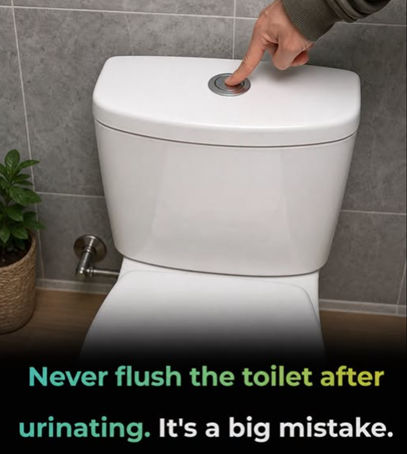
We waste more water in the bathroom than most people ever stop to consider. Every casual flush sends clean, treated water swirling down the drain, disappearing in seconds and leaving almost no trace that it was ever there. Because the process is so ordinary, we rarely think about what it actually costs. But what if one of the smallest, most private habits in your daily routine is quietly consuming a resource that millions of people cannot afford to waste?
Behind a closed bathroom door, a single button can set several liters of treated water rushing away. Then we wash our hands, brush our teeth, take showers, and repeat the cycle day after day without questioning it. In many homes, flushing a toilet can account for a surprisingly large share of indoor water use. And unlike water used for drinking or cooking, much of the water used for flushing never needs to be of drinking quality in the first place.
The uncomfortable part is that this water has already been cleaned, treated, transported, and delivered to our homes before we use it for something as simple as carrying waste through a pipe. In a world where drought is becoming a persistent challenge in many regions and communities struggle to secure reliable supplies of safe water, that raises a difficult question: how much of our everyday consumption is actually necessary?
Changing the habit doesn’t require everyone to stop showering or spend thousands of dollars rebuilding a bathroom. Sometimes it begins with much smaller decisions.
For some households, that could mean adopting the familiar “if it’s yellow, let it mellow” approach, provided the toilet is kept clean and odor is managed. Others may choose a dual-flush toilet that uses different amounts of water depending on what needs to be flushed. Low-flow and high-efficiency toilets can reduce water consumption even further while still performing the same basic job.
In rural settings, some people may even consider composting toilets, which can dramatically reduce or eliminate the need for water during flushing. These systems aren’t practical everywhere, and they require proper installation and maintenance, but they demonstrate that the traditional flush isn’t the only possible solution.
Even simple maintenance can make a difference. A toilet that quietly leaks can waste large amounts of water without producing the dramatic sound of a running tap. Checking for leaks, replacing worn components, and making sure the toilet isn’t unnecessarily refilling can prevent water from disappearing around the clock.
The larger lesson is not that every person must follow one perfect bathroom routine.
It’s that water has become so convenient in many homes that we have stopped noticing it.
We turn a handle and clean water appears.
We press a button and it disappears.
That convenience can make an enormous resource feel almost unlimited.
But it isn’t.
Every flush is part of a larger system involving reservoirs, treatment plants, pipes, electricity, infrastructure, and the natural water sources that communities depend on. Reducing unnecessary use doesn’t solve every water crisis, but millions of small reductions can add up.
And perhaps that’s what makes the bathroom such an interesting place to begin.
We don’t need to transform our entire lives overnight.
We can start by questioning one automatic habit.
Do we really need that much water every time?
Could a more efficient toilet do the same job?
Could a small leak be fixed?
Could we simply become more conscious of what disappears every time we press that button?
When we begin treating water as something valuable rather than something endless, ordinary routines start to look different.
The toilet is no longer just a toilet.
The flush is no longer just a flush.
It’s a choice.
And sometimes, conservation begins with recognizing that the smallest choices are still choices.