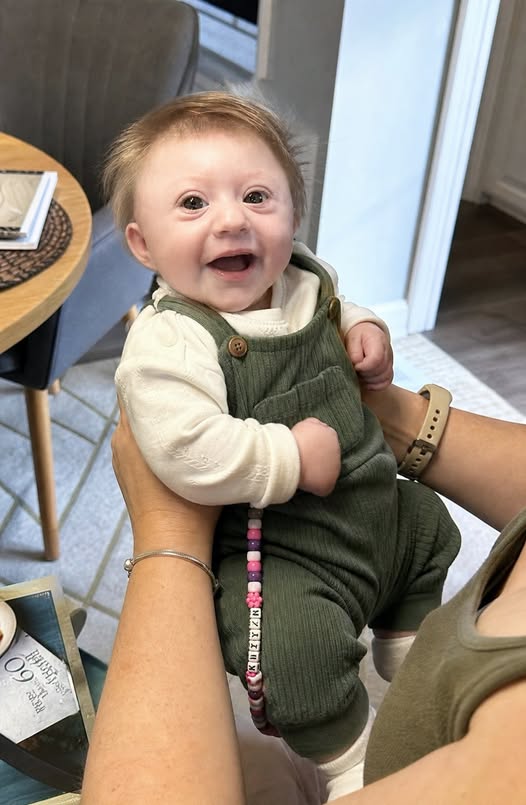
A father closed his eyes for just a moment.
When he woke up, his two-month-old baby was no longer breathing.
In the space of what may have been only a few minutes, an ordinary night turned into an unimaginable tragedy. A father who had been holding his infant son suddenly found himself facing the worst moment a parent can experience. Now, an entire city wants answers. Police, doctors, relatives, and investigators are trying to understand exactly what happened during those final moments and whether the child’s death was a heartbreaking accident or whether something darker may have been involved.
The investigation is only beginning, and authorities are carefully reconstructing the events of that night. Until every detail is understood, many questions remain unanswered. What happened while the father was asleep? How did the baby fall? Could anything have been done differently? And was the death the result of a tragic accident, or is there another explanation that investigators have yet to uncover?
In the quiet of the night in Jardim das Américas, a scene that should have been filled with the tenderness of a parent caring for his newborn child became a moment of irreversible loss.
The father was exhausted. Like countless parents caring for a very young baby, he had likely been dealing with the sleeplessness and fatigue that come with caring for an infant. He was cradling his two-month-old son, apparently believing the baby was safe in his arms. Nothing about the moment suggested that his life was about to change forever.
Then exhaustion took over.
He fell asleep without imagining that closing his eyes could lead to a tragedy from which he would never recover.
When he woke, the baby had fallen from his arms and was no longer breathing.
The panic that followed was immediate. A moment that had begun with a father simply trying to care for his child became an emergency that could not be undone. Help was called, and paramedics from SAMU rushed to the scene. But despite the efforts made, there was nothing they could do. The baby’s death was confirmed at the location.
For the family, the reality was devastating.
A home that had once held the sounds of an infant suddenly became painfully quiet. The ordinary objects of family life—baby clothes, blankets, bottles, toys, and the places where the child had been held—were transformed into reminders of what had been lost.
And for the father, there was another burden.
Guilt.
Even when a tragedy may have been completely accidental, parents can spend years replaying the smallest details in their minds. What if I had stayed awake? What if I had placed the baby somewhere else? What if I had done something differently? Those questions can become impossible to silence.
But investigators cannot simply rely on emotion.
They must determine what actually happened.
Now the Civil Police are carefully retracing each step of that dawn, examining the circumstances surrounding the baby’s death and speaking with people who may be able to clarify what happened. The Forensic Medical Institute’s report helped trigger the formal investigation, giving authorities an important starting point as they attempt to establish the circumstances of the death.
Family members and possible witnesses are being heard as investigators work to reconstruct the final moments of the child’s life.
Every detail matters.
Where was the father when he fell asleep?
How was the baby positioned?
How long had the father been asleep?
What happened immediately after he woke up?
Were there any other people present?
And were there any circumstances that investigators need to examine more closely?
These are difficult questions, but they are necessary.
A death involving such a young child requires authorities to consider every reasonable possibility before reaching a conclusion. Investigators must distinguish between a tragic domestic accident and circumstances that might suggest another cause.
At this stage, however, the investigation itself is what matters most.
A tragedy can create immediate assumptions, especially when emotions are overwhelming and people are desperate for an explanation. But investigators must work from evidence rather than speculation. Their responsibility is to reconstruct the sequence of events as accurately as possible and determine whether the evidence supports the initial account.
For the family, that process can feel painfully slow.
While officers gather information, a grieving family is left facing a reality that cannot be changed. There will be no more nights of holding the baby. No more first milestones. No more photographs of the child growing older. No opportunity to watch the infant become a toddler, a child, or an adult.
All of those imagined futures disappeared in a single night.
And that is what makes the story so difficult to process.
The tragedy was not supposed to happen.
There was no expectation that a father holding his newborn would wake up to silence. There was no reason for anyone in that home to believe that the night would become a permanent dividing line between the life they knew before and the life they would be forced to live afterward.
Now, the community is watching and waiting for answers.
People want to know what happened, but behind the headlines is a family experiencing a loss that cannot be measured by an investigation or explained by a police report. Whatever the final conclusion may be, a child is gone and a family has been permanently changed.
The investigation will determine the legal and factual circumstances surrounding the death.
But it cannot answer the emotional questions that will remain.
Why did this happen?
Why did a moment of exhaustion become a lifetime of grief?
And how does a parent move forward after losing a child in circumstances that may have been completely beyond his control?
Those answers may never come easily.
For now, authorities are left to examine the evidence, speak with witnesses, review the forensic findings, and reconstruct the final moments of the infant’s life. They must determine whether this was a heartbreaking accident or whether any other circumstance played a role.
Until that process is complete, speculation cannot replace facts.
What remains certain is the devastating human cost.
A two-month-old child is gone.
A father is left with grief and questions.
A family is facing a future they never imagined.
And a home that should have been filled with the promise of a new life is now marked by silence.
Sometimes tragedy does not arrive with a warning.
Sometimes it comes during an ordinary night, in an ordinary home, during a moment when someone is simply too exhausted to keep their eyes open.
And when morning comes, everything has changed.