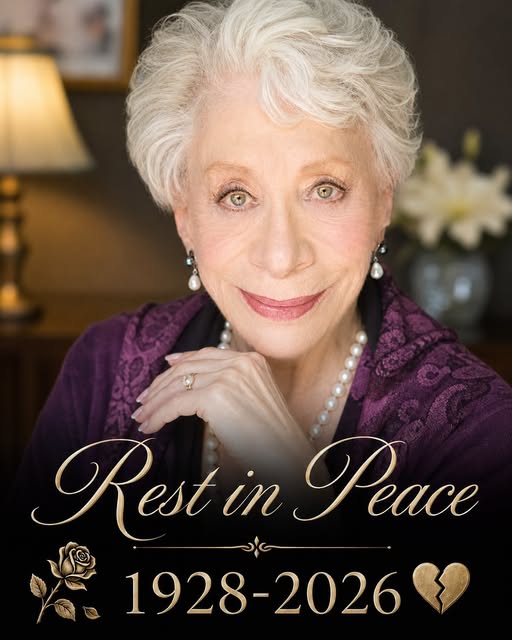
The first act of her life was spent in silence between library shelves.
The second lit up Hollywood.
For 25 years, Bunny Levine shelved books, helped students find stories, and spent her days surrounded by other people’s adventures while quietly carrying a dream of her own.
For years, acting remained something she had pushed into the category of “too late.”
Then, almost 60 years old, she walked into her first audition.
And she never truly looked back.
Bunny Levine’s story sounds almost impossible because Hollywood has never been particularly kind to people who arrive late.
The entertainment industry is obsessed with youth.
Actors are often told they need to start young.
Audition young.
Build a résumé young.
Make mistakes young.
And somehow become successful before the world decides they are too old to begin.
Bunny did almost the opposite.
She spent decades living a completely different life before finally deciding that the dream she had carried quietly wasn’t dead.
It was simply waiting.
For approximately 25 years, she worked as a school librarian.
Her world was books, classrooms, students, teachers, and the quiet rhythm of an academic day.
She helped young people discover stories.
She watched them imagine themselves as heroes, adventurers, artists, detectives, dreamers, and anything else they could find between the pages.
Perhaps there was something fitting about that.
Bunny spent years helping other people imagine different lives while keeping one of her own dreams tucked away.
Acting was always there somewhere.
But life had other priorities.
Work came first.
Family came first.
Responsibility came first.
And as the years passed, it became easier to tell herself that the opportunity had disappeared.
Maybe it was too late.
Maybe Hollywood wasn’t looking for someone her age.
Maybe dreams belonged to younger people.
Then she reached an age when many people are thinking about retirement.
Bunny decided to audition.
Not someday.
Not when the circumstances were perfect.
Now.
Her first audition came when she was nearly 60.
Instead of being the end of her acting ambitions, it became the beginning.
She started appearing in television shows and films, often in supporting or smaller roles.
But Bunny understood something important about acting:
A small role doesn’t have to create a small impression.
She became one of those familiar faces audiences recognized even when they couldn’t immediately remember her name.
She appeared in shows such as *Everybody Loves Raymond*, *Law & Order*, *Criminal Minds*, and *Shameless*.
She later appeared in major films and projects including *Gilmore Girls* and *La La Land*.
Her performances didn’t necessarily involve huge monologues or characters who dominated the screen.
Instead, she had the ability to make brief appearances feel authentic.
She looked like someone who genuinely belonged in the world of the story.
A teacher.
A neighbor.
A grandmother.
A professional.
A woman standing in the background of everyday life.
And that was part of her appeal.
Bunny didn’t need to announce herself.
She simply appeared and made the moment feel real.
Audiences began encountering her without necessarily realizing that the woman on screen had entered the industry decades later than most actors.
Hollywood had expected her to arrive early.
She arrived when she was ready.
And then she kept going.
Her story becomes even more remarkable when you consider how long she continued.
Bunny didn’t treat acting as a brief experiment.
She worked.
She auditioned.
She continued learning.
She continued appearing on sets.
And she continued doing it well into her 90s.
At an age when many people are encouraged to slow down, Bunny was still pursuing the work she had once been afraid was out of reach.
That persistence became part of her legacy.
But acting wasn’t the only way she tried to help other people achieve their dreams.
Off camera, Bunny and her husband, Bernie, founded Actors Connection.
The organization became a place where aspiring performers could learn, connect with professionals, and find opportunities that might otherwise have been difficult to access.
There was something beautifully circular about that.
Bunny had spent her early career helping students find stories.
Then she became an actor.
Then she began helping other actors find their opportunities.
She knew what it felt like to stand outside the door.
She knew what it felt like to wonder whether there was still time.
So she opened doors for other people.
Some aspiring actors who benefited from her guidance may not even have realized the irony.
Behind someone else’s opportunity was a woman who herself had once been told, implicitly or otherwise, that her moment had passed.
Bunny’s life became proof that it hadn’t.
And perhaps that’s why her story resonates so strongly.
Her greatest achievement wasn’t simply getting acting jobs.
It was refusing to accept the idea that age automatically determines possibility.
She demonstrated something that sounds simple but is incredibly difficult to believe when you’re living through it:
You can begin later.
Not everything has to happen according to the timeline other people expect.
Maybe you don’t become an actor at 22.
Maybe you don’t write your book at 30.
Maybe you don’t start the business at 40.
Maybe you don’t discover your purpose until 60.
That doesn’t make the dream invalid.
It simply means the story is taking longer to unfold.
Bunny’s own life illustrates that perfectly.
Her first act was quiet.
She worked in a library.
She helped young people.
She spent years surrounded by stories.
Then, decades later, she entered one of the most competitive industries in the world.
And somehow, she found a place there.
Not by pretending to be younger.
Not by hiding her age.
Not by becoming someone else.
She simply became Bunny.
That may have been her greatest advantage.
She had already lived.
She had experience.
She had observed people for decades.
She understood how ordinary people spoke and behaved.
She knew the little details that make a character believable.
When she appeared on screen, she didn’t look like someone trying desperately to prove she belonged.
She looked like someone who had already lived enough life to belong anywhere.
That authenticity is difficult to manufacture.
Young actors can learn technique.
They can study performances.
They can memorize lines.
But life experience cannot be downloaded.
Bunny had accumulated decades of it.
And she brought that experience with her to every role.
There is also something powerful about the fact that she spent so much of her early life around books.
Libraries are places filled with possibility.
Every shelf contains another world.
Every book offers another life.
Every story reminds us that circumstances don’t have to determine the ending.
Perhaps Bunny absorbed that lesson long before she stepped onto a Hollywood set.
She spent years watching fictional characters begin again.
Overcome obstacles.
Change direction.
Discover themselves.
And eventually, she gave herself permission to do the same.
Her transition from librarian to actor wasn’t simply a career change.
It was a personal declaration.
She was no longer willing to define herself by what she had already done.
She wanted to find out what else she could become.
That attitude carried her through decades of work.
It also made her relationship with other aspiring actors particularly meaningful.
Through Actors Connection, she helped performers navigate an industry that can be intimidating, confusing, and discouraging.
She understood that talent alone doesn’t always open doors.
Sometimes you need guidance.
Sometimes you need someone to explain how auditions work.
Sometimes you need someone to introduce you to the right person.
Sometimes you simply need someone to tell you not to quit.
Bunny could provide that encouragement because she had lived the lesson herself.
She knew what it meant to begin late.
She knew what it meant to feel uncertain.
And she knew that persistence could create opportunities that initially seemed impossible.
Her husband Bernie was part of that journey as well.
Together, they built something that extended beyond Bunny’s own career.
They created a way to help other performers.
That may be one of the most meaningful parts of her legacy.
She didn’t simply achieve her own dream.
She helped other people pursue theirs.
And she continued doing it while still working herself.
There was no moment when she decided she had reached the top and no longer needed to help anyone else.
She kept giving.
Kept auditioning.
Kept appearing.
Kept encouraging.
That is what makes the final years of her life so remarkable.
Bunny continued working into her late 90s.
Imagine that.
Most people associate retirement with slowing down.
Bunny associated later life with possibility.
She didn’t treat age as evidence that the story was over.
She treated it as evidence that she had more experience to bring to the next chapter.
That mindset doesn’t mean aging is easy.
It doesn’t mean there aren’t limitations.
It doesn’t mean everyone can pursue every dream at every age.
But it does challenge the assumption that a certain birthday automatically closes the door.
Bunny’s life says otherwise.
Her peaceful passing at home in California marked the end of an extraordinary journey.
But it did not erase what she had accomplished.
The roles remain.
The television appearances remain.
The film credits remain.
The students she once helped remain.
The actors she encouraged remain.
The people who met her and were inspired by her remain.
And perhaps most importantly, the lesson remains.
A dream can wait.
Sometimes for years.
Sometimes for decades.
But waiting is not always the same thing as giving up.
Bunny’s life proves that there is a difference.
She could have stayed in the library forever.
There would have been nothing shameful about that.
She had already built a meaningful life.
But something inside her still wanted to know what would happen if she tried.
So she tried.
And that decision changed everything.
The first audition didn’t magically erase all the obstacles.
Hollywood remained Hollywood.
Auditions still involved rejection.
Roles still came and went.
Some opportunities worked out.
Others didn’t.
But Bunny had already learned an important lesson from life:
Rejection is not the same thing as failure.
Sometimes it simply means you keep going.
She had spent years watching students struggle with difficult books.
Watching them make mistakes.
Watching them try again.
Perhaps she understood better than most that progress rarely happens in a straight line.
That wisdom became useful when she entered acting.
She wasn’t there to prove she was young.
She wasn’t there to compete with every actor in Hollywood.
She was there to work.
And she did.
That attitude may explain why she became such a memorable character actor.
She didn’t need to be the center of every story.
She understood that sometimes the smallest role can help create the world around the main characters.
A single expression.
A short line.
A brief appearance.
A familiar face.
That’s enough.
And sometimes, that’s exactly what audiences remember.
Bunny became the kind of actor viewers felt they had always known.
You might not remember her name immediately.
But when she appeared, there was recognition.
That face.
That voice.
That presence.
She belonged.
And perhaps that is the perfect metaphor for her entire life.
She spent decades believing that Hollywood might not have a place for her.
Then she walked through the door and proved that she belonged there all along.
Her story also challenges the way we think about “success.”
Success isn’t always becoming the lead.
It isn’t always winning awards.
It isn’t always becoming a household name.
Sometimes success is simply doing the thing you once thought you were too old to do.
Sometimes it’s helping someone else get their chance.
Sometimes it’s waking up at an age when people expect you to stop and deciding you still want to work.
Sometimes it’s leaving behind evidence that you never stopped growing.
Bunny did all of those things.
She became an actor.
She became a mentor.
She became a teacher in another sense.
She helped aspiring performers understand the business.
She showed them what persistence looked like.
And by continuing to audition herself, she made the lesson personal.
She wasn’t telling younger actors to chase their dreams from the comfort of retirement.
She was chasing hers too.
That made her advice different.
It came from experience.
Her story may also be particularly meaningful for people who have spent years putting their own dreams aside.
People who said:
“After the kids.”
“After retirement.”
“After I have more money.”
“After things calm down.”
“Maybe next year.”
“I’m too old now.”
Bunny’s life doesn’t promise that every delayed dream will become a Hollywood success story.
But it does offer something more realistic.
You don’t know until you try.
And sometimes the first step is simply deciding that “too late” isn’t a fact.
It’s an opinion.
For Bunny, nearly 60 wasn’t the end of the road.
It was the beginning of another road entirely.
She walked it for decades.
She kept working into her 90s.
And she left behind a career that would have been impossible if she had listened to the voice telling her to stay where she was.
That is why her peaceful passing feels less like the end of a story and more like the closing of a remarkable book.
The first chapters were spent among library shelves.
The later chapters unfolded on television and film sets.
Between them was a woman who refused to let age decide the ending.
She spent her life surrounded by stories.
First, she helped other people read them.
Then she decided to write one of her own.
And the story she wrote with her life carries a message that doesn’t belong only to actors.
It belongs to anyone who has ever wondered whether their chance has already passed.
Maybe you’re 30.
Maybe you’re 50.
Maybe you’re 70.
Maybe you’re even older.
The calendar can tell you how many years you’ve lived.
It cannot tell you whether you are finished becoming who you want to be.
Bunny Levine understood that.
She didn’t wait for permission.
She auditioned.
She worked.
She learned.
She helped others.
She kept showing up.
And she kept proving, year after year, that age could slow a person down without necessarily stopping the dream.
Her peaceful passing at home in California closes an extraordinary life.
But the lesson she leaves behind is still moving.
Still traveling from person to person.
From actor to actor.
From dreamer to dreamer.
It is simple enough to remember and powerful enough to change a life:
You are not necessarily late.
You may simply be waiting for your first audition.