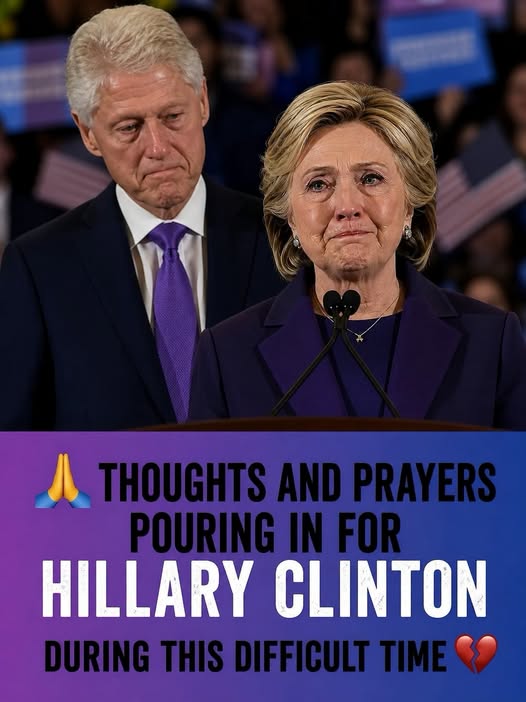
The warning had already arrived. Bill and Hillary Clinton found themselves at the center of one of the most politically explosive congressional confrontations of their post-White House lives. Subpoenas, missed depositions, accusations of defiance, and the continuing congressional investigation into Jeffrey Epstein and Ghislaine Maxwell had collided into a confrontation that threatened to drag two of the most recognizable names in American politics back into the national spotlight.
The House Oversight Committee had subpoenaed both Clintons in August 2025 as part of its investigation into the federal government’s handling of Epstein and Maxwell and the broader questions surrounding Epstein’s network and influence. The subpoenas were approved after a bipartisan subcommittee vote, making the dispute more than a simple partisan demand from one side of Congress.
At first, the Clintons did not appear for the scheduled depositions.
That refusal transformed the situation.
What had begun as a congressional investigation became a battle over the power of Congress to compel testimony. House Oversight Chairman James Comer warned that failure to comply could lead to contempt proceedings, arguing that the subpoenas were lawful and that the committee had a responsibility to obtain answers.
In January 2026, the confrontation escalated further.
Both Bill and Hillary Clinton failed to appear for scheduled depositions, and the House Oversight Committee voted on a bipartisan basis to advance resolutions recommending that they be held in contempt of Congress. The committee said their refusal to comply with the subpoenas warranted formal action and argued that their testimony was important to the investigation.
For a moment, it appeared the dispute could become a much larger legal and political confrontation.
The symbolism was enormous.
These were not ordinary witnesses. Bill Clinton had been president of the United States. Hillary Clinton had served as secretary of state and had been a major presidential candidate. The question of whether former occupants of some of the highest offices in the country could refuse congressional demands for testimony became part of the larger argument.
Could Congress compel them?
Would they continue fighting the subpoenas?
And if Congress formally held them in contempt, what would happen next?
The answers were not immediately clear.
The political atmosphere surrounding the Epstein investigation made everything more combustible. Epstein’s crimes and his connections to powerful people had already generated years of suspicion, speculation, and public demands for transparency. The congressional investigation sought information about the government’s handling of Epstein and Maxwell, as well as the broader network surrounding them.
The Clintons, however, argued that the congressional pressure was politically motivated and disputed the need for the depositions in the form demanded by the committee. Their lawyers and representatives maintained that they were willing to provide information and had already given sworn statements about what they knew.
Then the situation changed dramatically.
In early February, with contempt votes approaching, the Clintons agreed to testify.
The agreement called for transcribed and filmed depositions conducted under oath. The development forced the House to reconsider whether contempt proceedings should continue, because the central objective—obtaining testimony—was suddenly within reach.
The confrontation therefore did not end with the dramatic indictments some commentators had predicted.
It ended, at least for that stage of the dispute, with an agreement to appear.
That distinction matters.
Contempt of Congress is not the same thing as an indictment, and a congressional subpoena dispute does not automatically lead to criminal charges. Whether prosecutors ultimately pursue any criminal matter depends on a separate legal process and the facts established through evidence.
The political consequences, however, are already significant.
The Epstein investigation has once again placed the Clintons under intense public scrutiny, reviving questions about their past connections to Epstein and the extent of what they knew or did not know. Being asked to testify does not itself establish wrongdoing, and appearing before Congress does not mean a witness has been accused of a crime.
But testimony can create another kind of pressure.
Once a witness is under oath, answers become part of the official record.
Contradictions can be examined.
Previous statements can be compared.
Records can be confronted with testimony.
And questions that have survived for years can finally be put directly to the people who may have information.
That is why the upcoming depositions matter beyond the immediate political theater.
For Congress, they represent an assertion of investigative authority.
For the Clintons, they represent an opportunity to answer questions they had previously resisted answering in the requested format.
For the public, they represent another chapter in an investigation that has refused to disappear.
The Epstein saga has already touched people from the worlds of politics, finance, entertainment, academia, and international society. Its continued investigation guarantees that the story will remain politically explosive, particularly whenever new documents, testimony, or allegations emerge.
But amid the noise, one distinction must remain clear.
Questions are not convictions.
Associations are not proof of criminal conduct.
And a congressional investigation is not the same thing as a criminal prosecution.
What is certain is that the Clintons have agreed to sit for depositions as part of the House investigation.
The next chapter will be what happens when they finally answer the questions under oath.
That is where the political spectacle could become something much more consequential: a formal record of what two of America’s most recognizable political figures say they knew, what they did, what they did not know, and how their answers compare with the evidence already gathered by Congress.
For months, the battle was about whether they would appear.
Now, the question is much simpler.
What will they say?