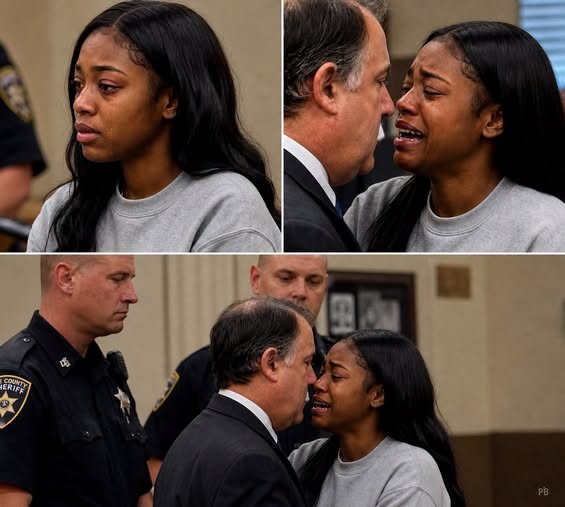
The sentence landed like a shockwave. A teenage girl, condemned to 86 years behind bars. For the families of the victims, the verdict represented a form of justice after unimaginable loss. For others, the number created a different kind of horror: how do you punish a child for devastation that feels impossibly adult in scale? Is such a sentence protection, accountability, revenge, or something far more complicated?
The courtroom may have gone quiet after the judge delivered the sentence, but the questions did not.
For grieving families, no sentence can bring their loved ones back. No number written on a legal document can restore a child’s laughter, return a parent to the dinner table, or undo the finality of a death. Yet a lengthy prison term can feel like the only response that fully acknowledges the magnitude of what was lost.
To those families, a severe sentence can carry a painful message: their loved ones mattered.
It tells them that what happened was not being dismissed as youthful recklessness or written off as a terrible mistake. It acknowledges that real people died, real families were shattered, and the consequences will last forever.
But there is another uncomfortable truth.
The person who caused that devastation is still a young human being.
Adolescence is a period of enormous development. Judgment, emotional regulation, impulse control, and the ability to anticipate long-term consequences continue developing well into young adulthood. A teenager can make a catastrophic decision without possessing the same capacity for foresight as a fully mature adult.
Recognizing that does not erase responsibility.
It does not diminish the suffering of victims.
And it does not mean consequences should disappear.
But it does raise difficult questions about what justice is supposed to accomplish when the person being sentenced is still a child.
Is punishment meant primarily to protect society?
Is it meant to hold someone accountable?
Is it meant to provide a sense of closure to victims’ families?
Or is it partly an expression of society’s anger at something that can never be undone?
Those purposes can overlap, but they are not always the same.
An 86-year sentence is so long that it effectively becomes a lifetime sentence for someone who began life as a teenager. It raises the possibility that the person entering prison as a child could spend virtually every remaining stage of development behind bars.
The teenager sentenced today may not be the same person at 25.
She may not be the same person at 35.
She may not be the same person at 50.
That does not guarantee rehabilitation. It does not guarantee remorse. It does not guarantee that someone who caused terrible harm will eventually become safe to return to society.
But it does leave open a question that justice systems have struggled with for generations: should a person’s worst moment determine the value and possibility of their entire remaining life?
For the victims’ families, however, that question can feel painfully abstract.
They do not get to grow older with their loved ones.
They do not get to see who those people would have become.
They do not get another birthday, another conversation, another ordinary morning.
Their lives were permanently frozen by the actions of someone else.
That reality must remain at the center of any conversation about sentencing.
Compassion for an offender cannot require forgetting the victims.
Likewise, honoring victims does not necessarily require believing that a young offender is incapable of change.
Both truths can exist at the same time.
A just society has to be able to hold them together.
It can say that what happened was devastating.
It can say that the victims deserved better.
It can demand accountability.
And it can still recognize that a teenager’s capacity for growth is not necessarily finished.
That is what makes cases like this so difficult. There is no perfect sentence capable of balancing grief, accountability, public safety, rehabilitation, and the possibility of redemption.
There is only a decision made by a legal system trying to respond to an irreversible act.
For the families who lost someone, the sentence may never feel long enough because nothing could ever be long enough to compensate for the loss.
For those concerned about juvenile justice, the sentence may feel like a warning about what happens when society treats a developing child as though their capacity for judgment were already complete.
Between those positions is the uncomfortable space where real justice has to operate.
The easiest answer is to choose one side completely.
The harder answer is to acknowledge both.
Victims deserve recognition.
Families deserve accountability.
Communities deserve safety.
And even people who commit terrible acts while still young do not necessarily stop being human.
Justice becomes more difficult when we refuse to simplify it.
Perhaps the real challenge is not deciding whether the teenager deserves punishment. She does.
The challenge is deciding what punishment should mean when the person being punished is still capable of becoming someone different from the person who committed the crime.
Because accountability can be necessary without becoming a declaration that redemption is impossible.
And remembering the victims does not require us to stop believing in human change.
The sentence may have closed the courtroom chapter.
But the moral question it raised will remain much longer:
**Can justice honor the lives that were lost while still leaving room for the possibility that a young life, even one marked by terrible harm, can someday become something more than its worst moment?**