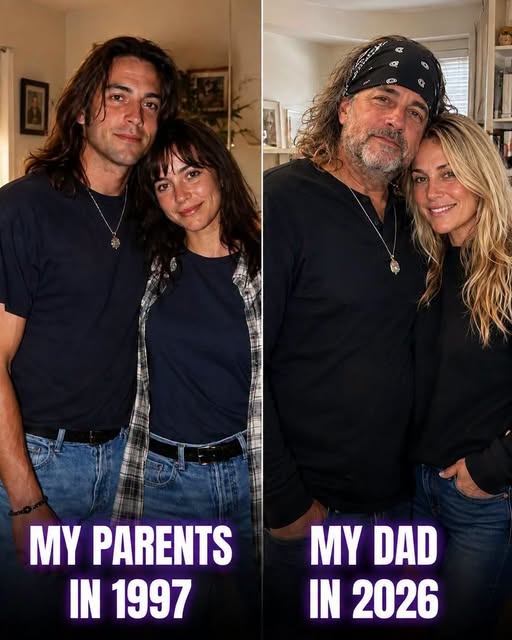
For twelve years, my father lived like a ghost in his own life. After losing the person he had once built his future around, he slowly withdrew from the world, carrying his grief so quietly that most people never understood how much it had changed him. When he finally found the courage to date again, I saw something I hadn’t seen in years: a small flicker of hope. But that hope was crushed again and again. Six women. Six warm goodnights. Six sudden disappearances. No explanation, no confrontation, and no closure. They simply vanished from his life as though something had convinced them to walk away without saying why.
At first, we tried to tell ourselves that it was coincidence. Dating was complicated, people changed their minds, and not every connection was meant to last. My father understood that better than anyone. Still, the pattern became impossible to ignore. Every time he began to care about someone, the relationship would suddenly end. Sometimes they stopped answering his messages. Other times, they would simply disappear after what seemed like a perfectly pleasant evening.
I watched the man who had once been my steady anchor begin to unravel under the weight of rejection he could not explain. Each failed connection seemed to carve another line into his face. He started questioning everything about himself. Maybe he was too old. Maybe he was too difficult to love. Maybe the years of grief had somehow made him incapable of being the person someone could choose again.
Eventually, he stopped asking what was wrong with the women who left and started asking what was wrong with him.
That was the part that frightened me most.
My father had spent years believing that his life was supposed to remain frozen after his loss. When he finally allowed himself to imagine companionship again, I wanted desperately for it to work. I wanted someone to see the kindness, patience, humor, and loyalty that I had always seen in him.
Then Rachel came along.
She seemed different. She listened to him. She laughed at his stories. She appeared genuinely interested in getting to know him, and for the first time in a long while, my father seemed lighter. He started making plans again. He looked forward to phone calls. He talked about the future without immediately apologizing for wanting one.
I encouraged him to meet her, even though part of me was afraid to become hopeful again.
Asking Rachel to spend more time with him felt like a last attempt to prove the world wrong. Maybe the previous relationships had simply been unfortunate coincidences. Maybe this time would be different.
Then Rachel disappeared too.
My father was devastated.
He didn’t become angry. He didn’t blame her. Instead, he became quiet. The disappointment seemed to confirm every terrible thing he had begun believing about himself. He told me that maybe he should stop trying altogether.
I could see him retreating back into the emotional isolation he had spent twelve years building around himself.
But Rachel’s disappearance was different.
She eventually came back—not to continue the relationship, but to tell us something that changed everything. She had been receiving anonymous threats and frightening messages telling her to stay away from my father.
Suddenly, the pattern had an explanation.
Someone had been interfering with his relationships.
Someone had been deliberately convincing women to leave him.
Someone had been watching from the shadows while my father blamed himself for every disappearance.
The revelation was horrifying because it meant that his suffering had not been accidental. Someone had been actively creating it.
We began looking at the past differently. The six women were no longer six unrelated disappointments. Their disappearances suddenly seemed connected. The unanswered messages, abrupt changes in behavior, and unexplained endings took on a completely different meaning.
Then we discovered the person behind it.
My aunt Sabrina.
Learning that Sabrina had been responsible felt like losing my mother all over again. She was family. She was someone we had trusted. And yet she had deliberately manipulated the people entering my father’s life, apparently believing that keeping him alone was somehow a way of protecting the past.
Her actions were rooted in grief, but grief had become twisted into control.
Sabrina believed my father moving forward meant leaving something—or someone—behind. Instead of accepting that life could continue after loss, she tried to freeze him in the same emotional place where she believed he belonged.
Her confession forced our entire family to confront an uncomfortable truth: love can become destructive when it is confused with possession.
Sabrina may have believed she was protecting my father’s memory of the person he had lost, but she was actually taking away his chance to build another life. She was making decisions for him without his consent, using fear and manipulation to control who could enter his world.
My father struggled to understand how someone from his own family could do such a thing.
There was anger.
There was betrayal.
There was grief.
And there was the painful realization that the person who had been sabotaging his happiness had been standing much closer than any of us imagined.
Healing did not happen quickly.
There was no single conversation that repaired everything. Therapy became part of the process, giving my father a place to understand how years of rejection had affected his confidence. Boundaries became necessary within the family. Trust had to be rebuilt slowly, and some relationships could never return to what they had been.
Most importantly, my father had to learn that the six women leaving him had never been proof that he was unlovable.
Their disappearances had been manipulated.
His loneliness had been engineered.
And the cruelest part was that he had spent years turning someone else’s actions into evidence against himself.
With time, he began to see himself differently.
He started laughing again. Not the polite laughter he used to reassure other people, but the genuine laughter that made his whole face change. He started making plans without immediately expecting them to fail.
Eventually, he met Jocelyn.
I was nervous when he told me about her. After everything that had happened, I was afraid that another relationship would only reopen old wounds. But there was something different about the way my father spoke about her.
There was no desperation.
No need to prove anything.
He simply seemed happy.
When I eventually saw them together, I noticed that his laughter had returned. It was softer than it had been when he was younger, perhaps more cautious, but it was real.
And watching him, I finally understood something I had struggled to accept for years.
Moving forward does not mean forgetting the person you lost.
It does not erase the love that came before.
It does not betray the past.
My father could continue loving the memory of the person he had lost while still allowing someone new to become part of his life. Those two kinds of love did not have to compete.
The dead do not ask us to stop living.
The memories we carry are not chains. They can become foundations.
Sabrina’s actions had nearly convinced my father that his life was over simply because one chapter had ended. But eventually, he proved that grief does not have to be the final chapter.
His story became a reminder that sometimes healing begins when we stop believing every painful thing that happened to us was our fault.
Six women had disappeared.
One friend had disappeared.
For years, my father thought the common denominator was him.
It wasn’t.
The truth had been hiding behind someone else’s fear, grief, and need for control.
And when that truth finally came into the light, my father was given something he hadn’t had in years: a choice.
He could remain trapped inside the life someone else had tried to preserve for him, or he could step forward.
He chose to step forward.
And when Jocelyn entered his life, I realized that the greatest victory wasn’t simply that my father had found someone new.
It was that he had found himself again.
Moving forward didn’t betray the dead.
It honored the love they had left behind by proving that love can survive without preventing life from continuing.
Sometimes the bravest thing we can do for the people we have lost is to keep living fully enough to make their love part of a future they never got to see.