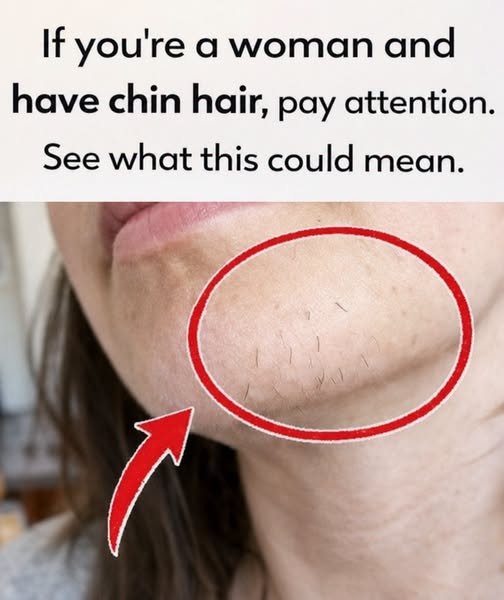
Chin whiskers can shatter confidence in seconds. One glance in the mirror, one unexpected hair appearing under harsh bathroom light, and suddenly everything can feel wrong. What seemed like a completely ordinary morning can turn into an anxious search for tweezers, a closer inspection of the mirror, and the uncomfortable feeling that someone else might notice it too. But what if this so-called “shameful secret” is actually far more common, and far more complicated, than many people admit? Hormones, genetics, natural changes in the body, silent medical conditions, and impossible beauty standards can all collide when women notice darker or thicker facial hair.
Chin whiskers in women are far from rare, yet many women feel isolated by them. Facial hair growth can be influenced by a combination of hormones, genetics, ethnic background, and different stages of life, including puberty, pregnancy, and menopause. The amount, thickness, and color of facial hair can vary significantly from one woman to another, and what looks unusual to one person may be completely normal for someone else. There is no single definition of what a woman’s body is supposed to look like, even though beauty culture often suggests otherwise.
Androgens such as testosterone play an important role in the hair-growth cycle, which means changes in hormone levels can sometimes make facial hairs more noticeable. Even relatively subtle hormonal shifts may influence where hair grows, how quickly it grows, and how thick individual hairs become. Conditions such as polycystic ovary syndrome, commonly known as PCOS, can also contribute to increased facial hair in some women. Certain medications and other hormonal changes may have an effect as well, which is why a sudden or significant change can sometimes be worth discussing with a healthcare professional.
Genetics can be just as important. Some women naturally inherit a tendency toward more visible facial hair from their families, while ethnic background can also influence hair thickness, density, and pigmentation. In other words, a few noticeable chin hairs do not automatically mean something is wrong. For many women, they are simply another variation of normal human biology. Yet because facial hair on women is often treated as something that must be hidden, a completely ordinary biological trait can become a source of unnecessary embarrassment.
The emotional toll can be surprisingly intense. A woman may begin checking her chin repeatedly throughout the day, carrying tweezers everywhere, avoiding bright lighting, or worrying that someone will notice a hair before she has a chance to remove it. What begins as one small cosmetic concern can become hypervigilant grooming and constant self-consciousness. Some women may even avoid photographs, social events, dates, or close relationships because they fear being judged or “found out.”
That shame can become especially painful because facial hair is often treated differently depending on who has it. Men may be praised for thick facial hair, while women can feel pressure to make even a single visible hair disappear immediately. These contradictory expectations can make women believe that their bodies are somehow failing when they are actually experiencing a normal variation. The problem is often not the hair itself, but the enormous cultural pressure surrounding what women are supposedly allowed to look like.
Still, increased facial hair should not always be dismissed. If growth becomes suddenly darker, thicker, or more widespread, particularly when accompanied by other noticeable changes, medical evaluation may be worthwhile. A healthcare professional can look at the broader picture and determine whether hormones, medications, or an underlying condition could be contributing. Seeking medical advice does not mean assuming the worst; it simply means giving yourself the opportunity to understand what is happening rather than living with uncertainty.
Women also have many options if they personally want to remove facial hair. Plucking, shaving, waxing, threading, depilatory products, and laser treatments can all be considered depending on individual preferences, skin type, and circumstances. Some may prefer a temporary method that can be done at home, while others may choose professional treatment for longer-lasting results. There is no single correct approach because the decision belongs to the person looking in the mirror.
And there is another perfectly valid option: doing nothing at all. A woman does not have to remove every hair simply because society says she should. For some, removing facial hair provides confidence and comfort; for others, accepting it as part of their body feels more empowering. Neither choice is inherently more correct. The important thing is that the decision comes from personal preference rather than fear, humiliation, or pressure.
Whether you choose to remove every hair or accept them as part of your body, chin whiskers do not make you less feminine, less attractive, or less worthy of confidence. They are one small part of a complicated human body shaped by genetics, hormones, age, and countless other factors. The most important outcome is not achieving someone else’s definition of perfection. It is being able to look into the mirror without shame and feel in control of your own reflection.