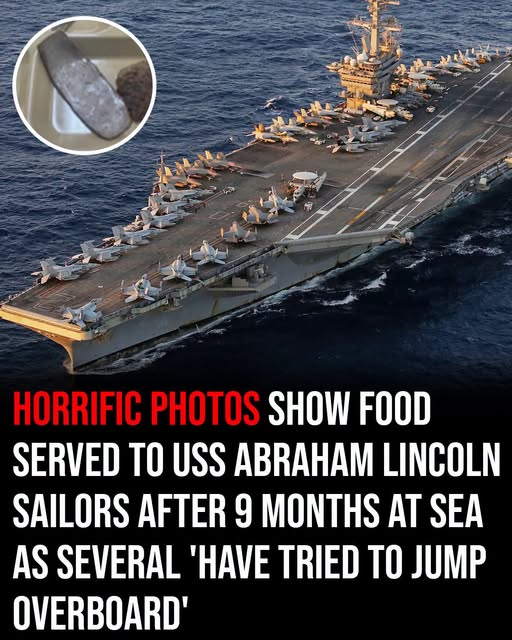
About 5,000 sailors are approaching a breaking point. Nine months at sea, little relief, almost no time on land, and growing reports of severe stress, mental-health struggles, supply problems, poor food, plumbing issues, and inadequate living conditions have left families terrified about what their loved ones are experiencing. Reports have even described sailors attempting to go overboard, intensifying fears that the prolonged deployment is taking a devastating psychological toll. Yet while families are demanding answers and help, officials have pushed back strongly against the most alarming descriptions, saying the situation has been misrepresented.
For the families left waiting on shore, each new report from the USS *Abraham Lincoln* feels like another crack in the promise that their loved ones would be properly cared for. The carrier has spent an extraordinary amount of time continuously at sea, with the crew operating under sustained pressure while supporting U.S. military operations in the Middle East. Family members say the long separation has become increasingly difficult, especially when messages from sailors describe exhaustion, fear, and emotional distress. Some relatives have said their loved ones are afraid to admit just how overwhelmed they have become because they worry that speaking openly about their mental health could damage their careers.
They mailed comfort in cardboard boxes—snacks, soap, clean socks, and other small reminders of home—only to face disruptions in getting those items to the ship. For families already feeling powerless, even something as simple as sending a package became another source of frustration. Instead of relief, some received late-night messages filled with dread, from sailors who said they were struggling with the relentless pace and uncertainty. One sailor reportedly told family members that both their mental and physical health were in danger and that they needed help.
The concerns have gone far beyond homesickness. Families and lawmakers have raised questions about food supplies, sanitation, plumbing, water, mail service, and access to mental-health support. Reports circulating among military families have described poor-quality meals, broken facilities, and other uncomfortable conditions aboard the carrier. At the same time, reports of sailors attempting to jump overboard have transformed what might once have been dismissed as ordinary deployment complaints into a much more serious conversation about safety and psychological strain.
In Washington, however, officials insist that the most dramatic descriptions do not accurately represent conditions aboard the ship. Defense Secretary Pete Hegseth has called reports of widespread poor conditions “completely misrepresented,” while emphasizing that Navy crews receive support during difficult deployments. Navy officials have also disputed claims of a documented increase in suicide attempts, even as families and lawmakers continue pressing for answers about the incidents that have been reported.
That disagreement has created a bitter divide between official reassurances and the experiences described by some families. Leaders point to counselors, supplies, operational support, and efforts being made to care for the crew. Families, meanwhile, say they are hearing something very different from the people they love. Caught between those competing accounts, the sailors continue performing their duties while thousands of miles from home, carrying the weight of a deployment that has stretched far beyond what many expected.
The USS *Abraham Lincoln* has now become a symbol of the enormous human cost that can come with prolonged military operations. The crew has broken modern records for consecutive days at sea, with the ship reaching more than 200 continuous days earlier in the summer and continuing well beyond that milestone. A replacement carrier, the USS *George Washington*, is now moving toward the region, offering the possibility that the Lincoln and its crew may finally receive the relief families have been demanding.
For the sailors still aboard, however, the debate in Washington does not change what happens during the next watch, the next meal, or the next night spent far from home. They remain caught between duty and exhaustion, professionalism and fear, loyalty and the simple desire to see their families again. Whether every allegation is ultimately confirmed or challenged, the growing concern itself is difficult to ignore. When thousands of people spend months at sea under extraordinary operational pressure, their physical and mental wellbeing becomes a matter of national readiness as well as personal survival. The question now is not simply how long the ship can remain at sea, but how much its crew has already sacrificed—and whether someone will decide they have sacrificed enough.