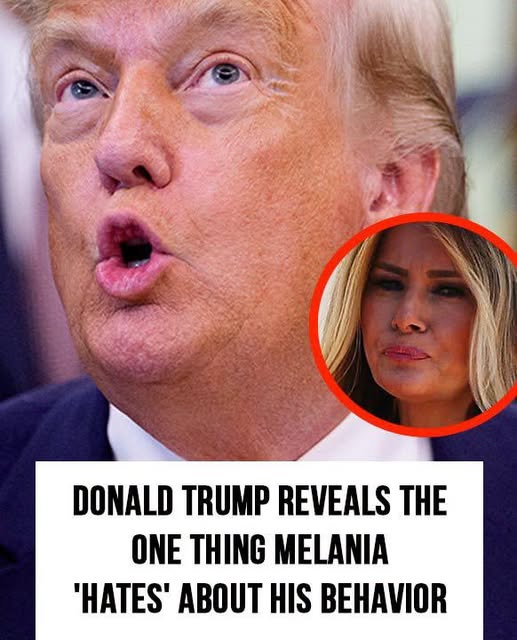
The truth slipped out, and the crowd gasped. Donald Trump revealed that Melania Trump has never been particularly fond of one of his most recognizable campaign traditions. For years, supporters have cheered as he performed his now-famous dance moves at rallies, while videos spread rapidly across social media. To many supporters, the routine became a lighthearted trademark. According to Trump, however, Melania has a very different opinion.
Behind the scenes, the former First Lady has reportedly described the dancing with a single, pointed criticism: it isn’t “Presidential.”
The remark surprised many because the dance has become one of the most recognizable images associated with Trump’s campaign events. Whether people praise it, laugh at it, or criticize it, the brief routine has generated millions of views online and become a familiar part of his public appearances.
Donald Trump’s rally persona has long been built around high energy, audience interaction, and memorable visual moments. His entrances and exits often feature upbeat music, enthusiastic crowds, and the now-famous combination of fist pumps, arm movements, and the distinctive shuffle many people immediately recognize.
For supporters, those moments represent enthusiasm and confidence.
For critics, they have often become material for jokes, memes, and endless commentary across television and social media.
According to Trump, Melania views the performances differently.
He has suggested that she believes a president should project a more restrained image, arguing that the office carries a level of dignity that should remain separate from playful dance routines, no matter how much the audience enjoys them.
Trump has even recounted conversations in which Melania reportedly reminded him that cheering crowds do not necessarily mean every public gesture fits the traditional image of a president.
In her view, supporters may simply be encouraging him.
Trump, however, appears to embrace the opposite philosophy.
Rather than distancing himself from the now-famous routine, he has continued repeating it at rallies, often smiling as the crowd responds with applause, laughter, and chants. The familiar movements have become as recognizable to many attendees as the music itself.
Songs such as “Y.M.C.A.” have become closely associated with those appearances, turning the dance into a recurring feature that audiences often anticipate before it even begins.
The result has been one of the more unusual cultural moments in modern American politics.
A few seconds of dancing have generated countless headlines, internet memes, parody videos, and debates over whether the routine is harmless entertainment or inconsistent with the traditional expectations of a president.
Supporters generally see the dance as evidence that Trump is willing to laugh at himself and connect with crowds in an informal way.
Others argue that presidential appearances should project a more formal and restrained image, believing that public office carries expectations extending beyond campaign enthusiasm.
The contrast between Melania’s reported preference for formality and Trump’s willingness to embrace spectacle has become an intriguing subplot in discussions about their public image.
It reflects two noticeably different approaches to visibility: one favoring composure and restraint, the other embracing showmanship and audience engagement.
Whether people admire the routine, find it amusing, or simply view it as another memorable campaign tradition, there is little doubt that it has become part of Trump’s public identity.
Years after it first appeared, the dance continues generating conversation, proving that even the smallest gestures can become enduring symbols in modern political culture.
In the end, what lasts may not simply be the dance itself, but what it represents: the ongoing contrast between traditional expectations of political leadership and an approach that deliberately blurs the line between politics, personality, and entertainment.