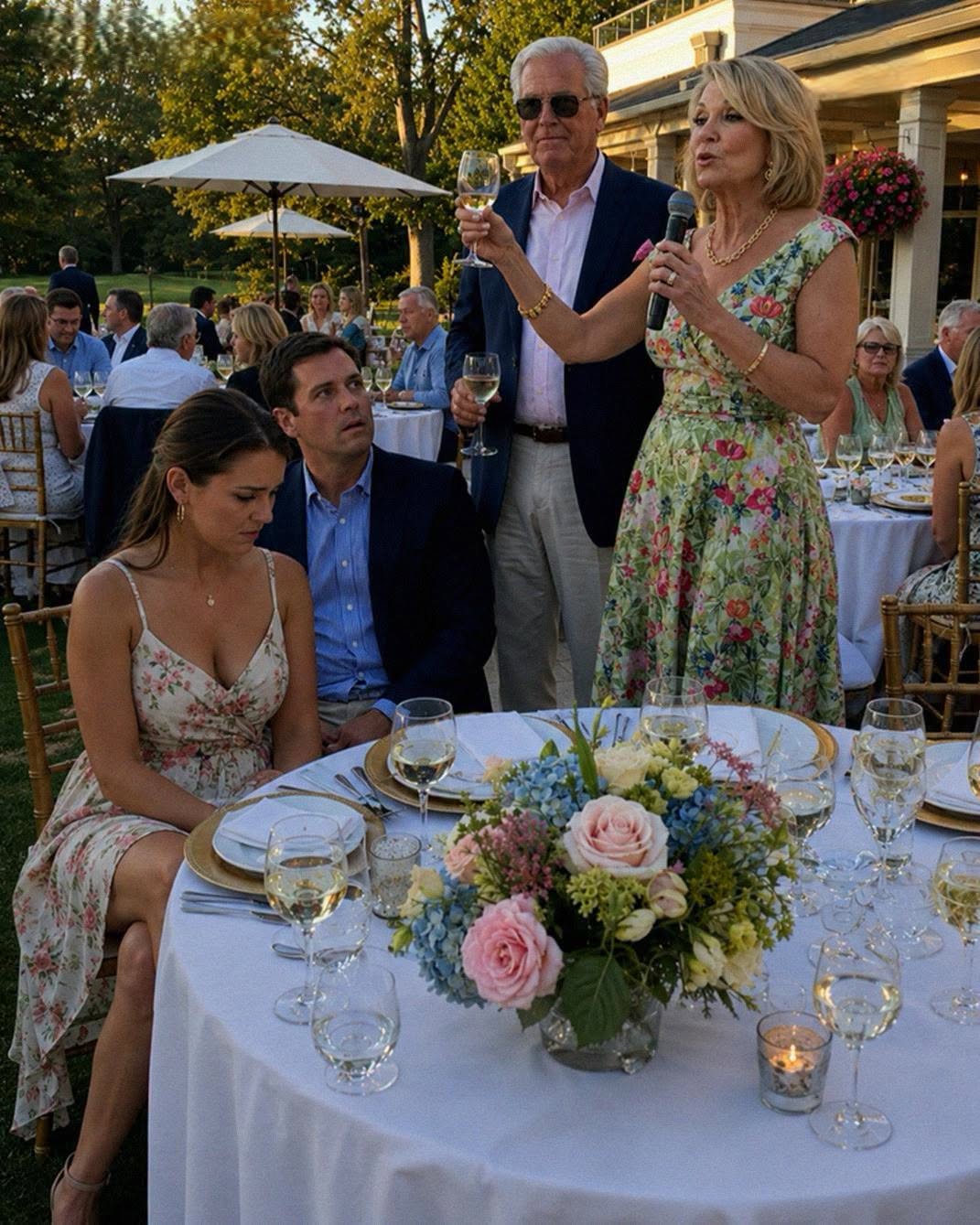
Standing beneath a glittering crystal chandelier at our daughter’s high-society christening dinner, my wealthy mother-in-law raised her champagne glass with a chilling smile and publicly humiliated me. In front of all her elite friends, she announced that taking in a girl from my background was her son’s ultimate charity project, sneering that she was glad to fund the night so I could experience civilization. As my husband froze in horror, I wanted the floor to swallow me whole. But then, my quiet 80-year-old grandfather slowly stood up from his chair, walked straight toward her, and delivered a devastating dose of karma that left the entire room utterly pale and speechless.
The evening had started with quiet tension on the drive to the country club. I kept adjusting my borrowed dress and checking on my three-month-old daughter, Hazel, who was wrapped safely in a hand-knitted blanket Grandpa had lovingly made. Sitting quietly in the back in his worn brown suit, Grandpa didn’t say much—he never did. He had raised me on a remote farm after my parents passed away, teaching me how to work the land and look people straight in the eye. When my mother-in-law Margot met us at the door and dismissively called Grandpa’s handmade blanket “rustic,” I saw that familiar, calm smile cross his face. It was the exact smile he always wore right before someone made a devastatingly expensive mistake.
Inside the ballroom, my father-in-law Harrison was loudly holding court at the bar, bragging to his associates about a shady four-hundred-acre land acquisition. He laughed about pitching a tiny, wholesome wellness center to the town council just to keep people from asking questions, while secretly planning to bulldoze the rest for a massive, highly lucrative data center with heavy cooling infrastructure. “Time somebody civilized those backwater towns,” Harrison smirked, swirling his drink. Grandpa went completely still beside me, listening with intense focus. At the time, I thought he was just offended by Harrison’s arrogance, but I soon learned he was sizing up the exact man trying to destroy his hometown.
Dinner progressed through polite insults and icy glances. Margot seated me away from the important guests, making sure I felt entirely out of place while Garry squeezed my knee under the table in a silent plea not to make a scene. But then came the moment that changed everything. Margot tapped her crystal glass, took the microphone, and delivered her venomous toast branding me a charity case. The crushing silence in the room was deafening. Just as I gathered my things to walk out with my baby, Grandpa pushed back his chair. In his worn suit, he calmly walked the length of the long table, stopping right beside a visibly confused Margot.
“I’ll accept your apology now,” Grandpa said softly. Margot scoffed, dismissing him as a country bumpkin and doubling down on her cruelty, claiming she was just telling the hard truth about us clawing our way out of poverty like a lottery ticket. Harrison chuckled from his seat, but Grandpa remained completely unshaken. With a gentle, devastating calm, Grandpa looked straight at Harrison and revealed the ultimate twist: the four-hundred-acre backwater farm Harrison’s firm was desperately trying to buy for their data center scam belonged to none other than him.
The color drained entirely from Harrison’s face as Grandpa systematically dismantled his deceitful business practices in front of all his wealthy peers. “People like you treat charity as a performance,” Grandpa declared, his voice cutting through the silent room like a knife. “You count the tax benefits in the back room and the applause in the front room. My town is not a write-off.” When Harrison panicked and tried to salvage the multi-million-dollar deal on the spot, Grandpa calmly shut the door in his face, revealing that he hadn’t signed a single paper and had no intention of selling his land to liars.
When Margot and Harrison desperately pivoted, begging for forgiveness and claiming the toast was just a joke that went wrong, I looked at the people who had just tried to crush my dignity. Turning to my grandfather, I stood tall with my head held high. “Margot, an apology given only when money is on the table isn’t an apology. It’s a receipt,” I said clearly. Garry proudly stood by my side, cutting ties with his toxic parents once and for all. We walked out of that country club together, leaving the snobs frozen in their seats. Weeks later, Grandpa sold a portion of his land to a regional co-op that actually built the community center the town deserved, proving that humble ground isn’t just strong enough to grow a loving family—it’s strong enough to bring arrogant empires crashing down.