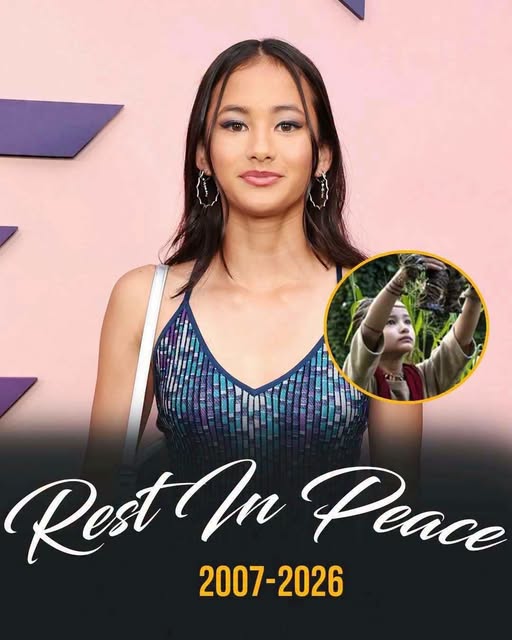
The world expected monsters. Instead, a young Deaf girl shattered something far bigger than any skyscraper on screen. In a franchise built around roaring titans, explosive battles, and collapsing skylines, Kaylee Hottle’s stillness demanded attention in a completely different way—and helped change how millions of viewers saw Deaf lives represented on screen. Without needing enormous speeches or spectacular effects, her presence carried an emotional power that could stand beside the franchise’s gigantic creatures. Her work raised hope, sparked conversations about authentic casting, and exposed just how important—and still fragile—meaningful representation can be in mainstream entertainment.
Kaylee Hottle’s performance as Jia did more than simply add emotion to a blockbuster; it invited audiences to experience communication as something far richer than spoken dialogue. Her signing, facial expressions, movements, and silences were not treated as background details or convenient additions to the character. Instead, they became central parts of Jia’s identity and relationships, helping carry some of the film’s most intimate moments. In a story surrounded by enormous spectacle, communication through sign language created a quieter emotional space that audiences could immediately understand.
That choice also challenged long-standing habits in studio filmmaking, where Deaf characters have historically been given limited opportunities, simplified into familiar stereotypes, or sometimes portrayed by hearing performers. Casting a young Deaf actress brought an authenticity that could not simply be manufactured through performance alone. Hottle wasn’t asked to make Deafness feel unusual or exotic; Jia was allowed to exist as a complete character whose way of communicating was simply part of who she was.
The contrast was especially striking because of the world surrounding her. Everything in the MonsterVerse is designed to feel enormous—the creatures, destruction, sound, music, and scale. Yet Jia’s quiet interactions repeatedly proved that emotional weight doesn’t depend on volume. A glance, a carefully signed message, or a moment of understanding could create tension and tenderness without another explosion filling the screen. In those scenes, audiences were encouraged to pay attention differently.
For many Deaf viewers, seeing a young Deaf actress occupy such an important place in a globally successful franchise offered something that mainstream Hollywood has not always provided: recognition and possibility. Young viewers could see someone communicating as they do while remaining essential to the story rather than standing somewhere at its edges. For families and hearing audiences unfamiliar with Deaf culture, the character also provided an opportunity to encounter sign language and visual communication without treating them merely as obstacles that needed to be overcome.
Her success suggested something important to studios as well: authentic casting does not have to be viewed as a creative or commercial risk. It can strengthen storytelling by bringing lived experience, specificity, and credibility to characters. Representation becomes more powerful when performers are given meaningful material rather than appearing briefly so a production can claim diversity without actually allowing those characters to matter.
At the same time, the conversations surrounding Hottle’s work underscore a quieter responsibility. Young performers deserve to have their lives and careers discussed carefully, particularly in an online environment where speculation and rumors can spread faster than verified information. Celebrating representation also means respecting the person behind that representation rather than turning them into a symbol responsible for carrying an entire community’s expectations.
And perhaps that is where the larger significance of Kaylee Hottle’s work truly lies. One successful role cannot solve decades of limited representation, and genuine progress requires more than a single character or franchise. Opportunities need to continue, expand, and become ordinary rather than exceptional. Her impact is not about making the loudest noise in Hollywood. It is about leaving a door visibly open—showing studios, audiences, and the next generation of Deaf performers that there is space on the biggest screens in the world for whoever comes next.