The morning began like thousands of others along the crowded roads connecting Iztapalapa and Chalco.
Cars packed the highway as commuters headed toward work, school, and appointments, unaware that within moments the ordinary traffic around them would descend into chaos.
At the center of the disaster was a tanker transporting liquefied petroleum gas.
After the vehicle overturned, leaking fuel created an extremely dangerous situation.
Then came the explosion.
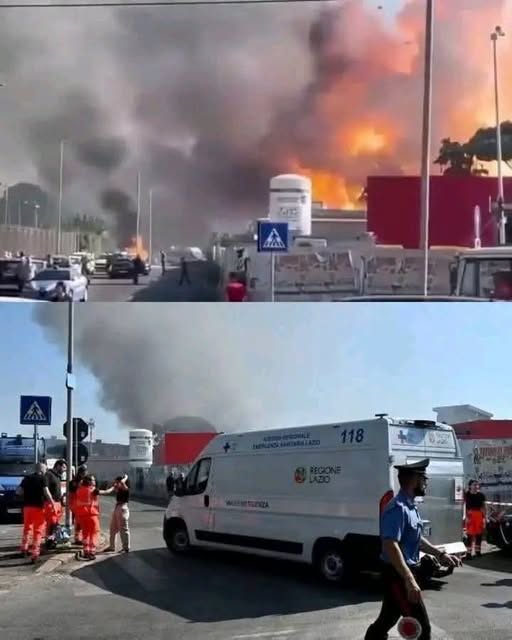
Witnesses described an enormous burst of fire rising above the roadway as people abandoned their vehicles and ran.
Dark smoke climbed into the sky and became visible from surrounding neighborhoods.
For drivers closest to the tanker, there was almost no time to understand what was happening.
People who had been sitting impatiently in traffic seconds earlier suddenly found themselves running for safety.
Emergency calls began flooding dispatch centers.
Firefighters, paramedics, police officers, and civil-protection personnel rushed toward the scene while civilians moved in the opposite direction.
The roadway quickly became filled with emergency vehicles.
First responders began searching for injured people while firefighters fought to control the flames and prevent additional hazards.
Some victims suffered devastating burns.
Others were treated for injuries associated with the blast, smoke, and frantic evacuation.
Hospitals received patients as families desperately tried to determine whether their relatives had been caught in the disaster.
Behind every casualty number was an ordinary morning interrupted without warning.
Someone had been heading to work.
Someone else was returning home.
Others simply happened to be traveling along the same road at precisely the wrong moment.
Videos and photographs from the scene quickly spread online, showing towering flames, damaged vehicles, emergency crews, and stunned witnesses.
For residents nearby, however, the disaster wasn’t something happening on a screen.
They had heard the explosion themselves.
Some reported feeling the force of the blast from surrounding areas.
Once firefighters brought the immediate emergency under control, another difficult process began.
Investigators needed to determine exactly why the tanker overturned and whether the catastrophe could have been prevented.
Questions naturally turned toward the vehicle’s speed, mechanical condition, operating procedures, and compliance with transportation regulations.
Authorities also faced broader questions about moving hazardous materials through heavily populated areas.
LPG is used extensively throughout Mexico, making its transportation necessary.
But when large quantities of flammable gas travel through congested urban corridors, even a single accident can have extraordinary consequences.
That reality has intensified calls for stronger safety measures.
Vehicle inspections, driver training, enforcement of speed limits, emergency procedures, insurance requirements, and transportation routes all become critically important when the cargo itself can dramatically magnify an accident.
For survivors, however, those policy discussions cannot erase what happened.
Some escaped with only seconds to spare.
Others watched strangers help injured people despite the danger around them.
Emergency personnel entered an environment everyone else was desperately trying to escape.
In the days afterward, grief replaced the initial shock.
Families waited outside hospitals.
Communities searched for information.
And people who regularly traveled the route began looking at the familiar highway differently.
The tragedy also left behind difficult questions that extend far beyond one tanker or one driver.
How much risk should communities be expected to accept from hazardous-material transportation?
Were existing safety regulations sufficient?
And if regulations already existed, were they being properly enforced?
Those questions deserve answers based on a complete investigation rather than speculation.
Because determining exactly what failed isn’t simply about assigning responsibility for what already happened.
It’s about preventing the next tanker accident from producing the same devastating consequences.
For the people caught in the explosion, an ordinary commute became a dividing line in their lives—everything before it, and everything afterward.
And for the wider community, the blackened roadway became a painful reminder of how quickly routine can become catastrophe.
The most meaningful tribute to those affected will ultimately be more than flowers, candles, or promises.
It will be ensuring that every lesson uncovered by the investigation is taken seriously, so another family doesn’t leave home for an ordinary morning and suddenly find itself facing the unimaginable.