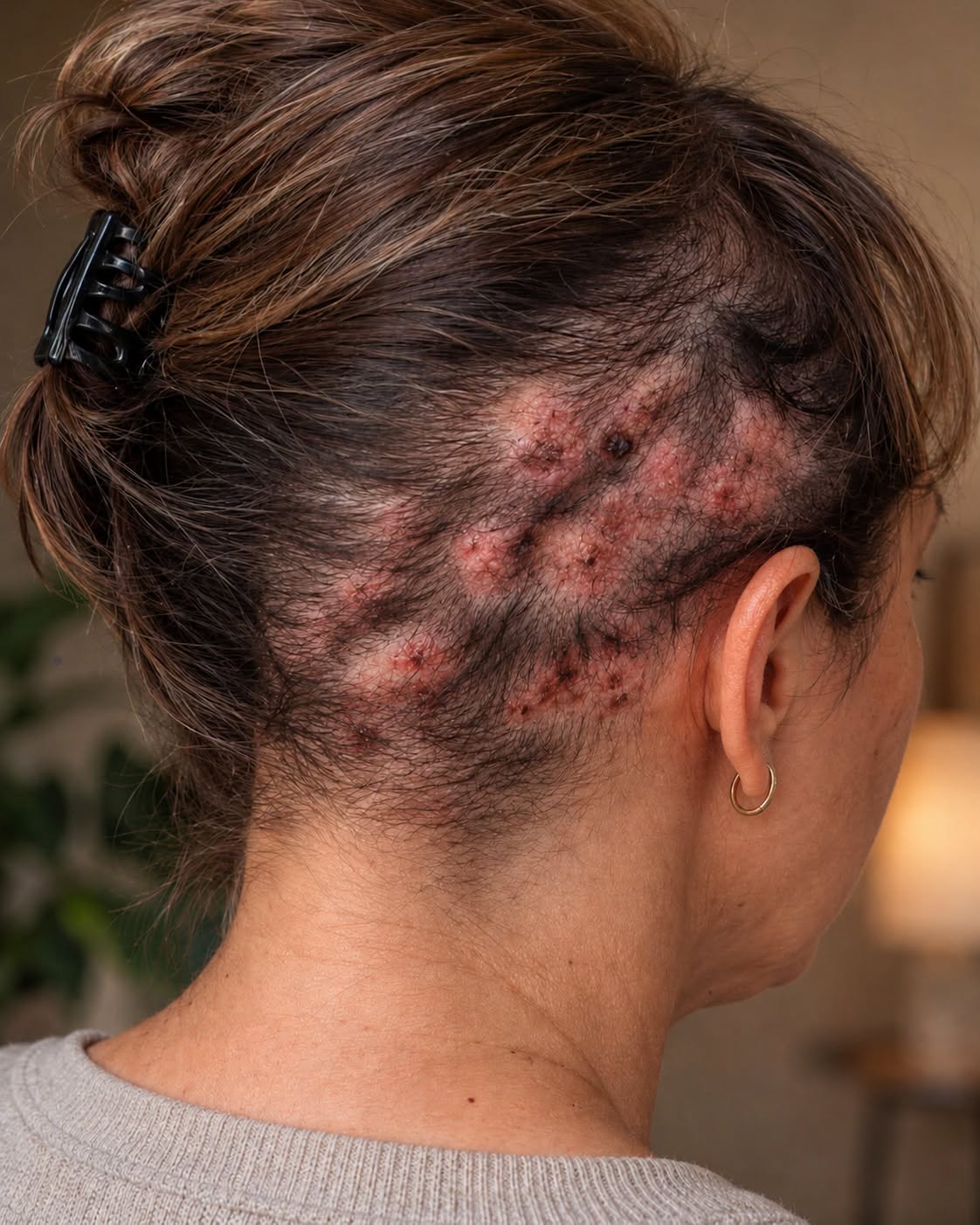
Dark, thickened patches of skin can sometimes be dismissed as dirt or staining, especially when they appear around the neck, underarms, or groin.
But when those areas remain dark despite washing and feel thicker or more velvety than the surrounding skin, they may be a condition known as **acanthosis nigricans**.
These changes aren’t necessarily caused by poor hygiene.
In many cases, they’re a visible sign that something else may be happening inside the body.
One of the most common associations is **insulin resistance**.
Insulin helps move glucose from the bloodstream into cells, where it can be used for energy.
When the body becomes less responsive to insulin, it may compensate by producing increasingly larger amounts.
Higher insulin levels can stimulate skin cells and contribute to the characteristic dark, thickened patches.
This is one reason acanthosis nigricans can sometimes appear in people who are at increased risk of developing **Type 2 diabetes**.
It can affect both adults and children.
Being overweight or having obesity can increase the likelihood of insulin resistance, but body weight isn’t the only possible factor.
Genetics, hormonal conditions, and certain medications can also contribute.
Much more rarely, rapidly developing or unusually extensive acanthosis nigricans can be associated with an underlying cancer.
The skin changes themselves are usually not dangerous.
They often cause little or no pain, although some people experience itching, irritation, or odor.
What matters most is determining **why the changes developed**.
A doctor may examine the skin and order blood tests to check glucose levels and other indicators of metabolic health.
Medical evaluation becomes particularly important when the patches appear suddenly, spread rapidly, or develop without an obvious explanation.
Symptoms such as unusual thirst, frequent urination, persistent fatigue, or unexplained weight changes should also be discussed with a healthcare professional.
Treatment isn’t simply about trying to scrub or bleach the darker skin.
The priority is addressing the underlying cause.
When insulin resistance is involved, appropriate nutrition, regular physical activity, weight management when medically appropriate, and routine health monitoring may help.
As the underlying problem improves, the skin changes may gradually become less noticeable.
Doctors can also recommend treatments specifically for the affected skin when needed.
Having dark skin around the neck or underarms **doesn’t automatically mean someone has diabetes**, and appearance alone cannot diagnose insulin resistance.
But persistent dark, thick, velvety patches shouldn’t simply be ignored.
Sometimes what appears to be a cosmetic change can be the body’s early signal that it’s worth checking what is happening beneath the surface.