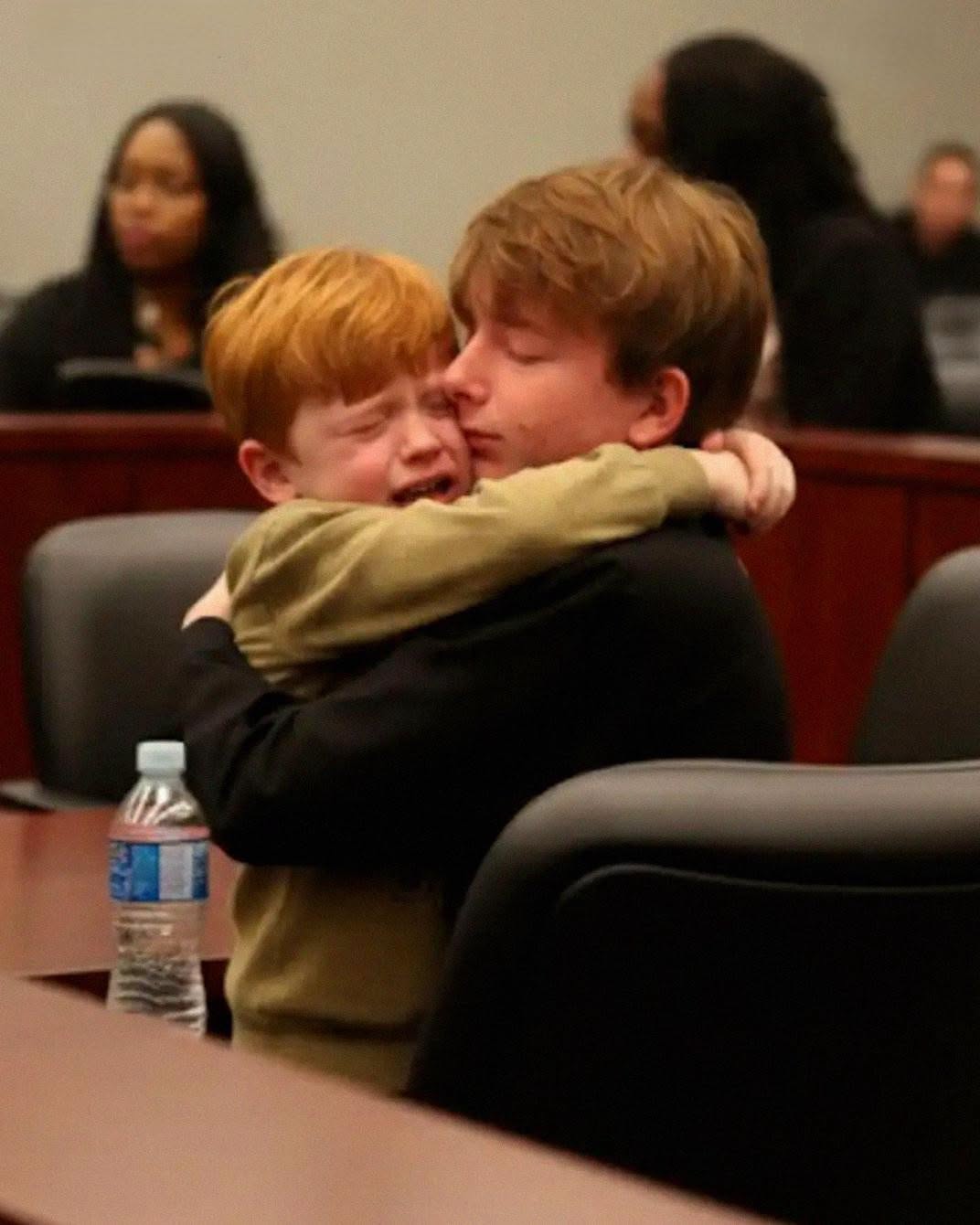
The transition from childhood to adulthood wasn’t gradual for me.
It happened on my eighteenth birthday, standing in a cemetery while both of my parents were buried.
Beside me was my six-year-old brother, Max.
He was too young to understand why our mother wasn’t coming home. He kept looking toward the cemetery entrance as though her car might suddenly appear.
I knelt beside him and made one promise.
“I won’t let anyone take you away from me.”
A week later, that promise was tested.
Aunt Diane and Uncle Gary invited us to their immaculate suburban home.
Diane poured me cocoa and explained gently that I was “still a child.”
“You don’t have a job. You don’t have a degree. Max needs stability.”
Gary nodded.
“A real home.”
Something felt wrong.
These people had missed Max’s birthdays and rarely visited before our parents died.
Yet suddenly they desperately wanted custody.
The following morning, they filed.
I immediately withdrew from college.
I took two jobs—delivering groceries during the day and cleaning offices at night.
We sold what we couldn’t maintain and moved into a tiny studio apartment.
Max called it “warm and tiny.”
I called it survival.
Then Diane began making accusations.
She claimed I left Max alone.
That I screamed at him.
Eventually, she even suggested I physically hurt him.
A social worker began visiting our apartment.
Thankfully, our neighbor, Ms. Harper, had watched everything.
When the custody dispute reached court, she testified.
“That boy is raising his brother with more patience than many grown parents I’ve known.”
Her testimony mattered.
Diane didn’t receive custody.
Instead, she was granted supervised visitation.
But every Wednesday, Max returned from those visits quieter.
One evening, he climbed into my car crying.
“Aunt Diane says I have to call her Mommy.”
My hands tightened around the steering wheel.
“What?”
“She said I couldn’t have dessert unless I called her Mommy.”
That was when I stopped simply defending myself.
I started investigating why she wanted him so badly.
A few weeks later, I arrived early to collect Max.
As I approached Diane’s house, I heard her speaking loudly through the kitchen window.
She was on speakerphone with Gary.
“The trust doesn’t release unless we have legal custody,” Gary said.
I froze.
Trust?
Diane lowered her voice.
“Once Max is legally ours, we control it until he’s eighteen.”
Suddenly, everything made sense.
This wasn’t about rescuing Max from an irresponsible teenage brother.
It was about money.
I quietly recorded the conversation on my phone.
Then I contacted the attorney handling my parents’ estate.
He confirmed what nobody had bothered explaining clearly after the funeral.
My parents had created a trust for Max.
A substantial one.
And whoever became his legal guardian could potentially have influence over how certain funds were used for his care.
I gave the recording to my lawyer.
At the next hearing, Diane arrived looking confident.
She repeated the same story.
I was too young.
Too poor.
Too unstable.
Then my attorney played the recording.
Gary’s voice filled the courtroom.
“Once Max is legally ours, we control it…”
Diane’s face changed instantly.
The judge listened without interrupting.
Then Ms. Harper testified again.
So did Max’s teacher.
The social worker’s final report described our apartment as small but safe, clean, and loving.
When the judge finally spoke, I could barely breathe.
Diane’s petition was denied.
Her visitation rights were also reconsidered.
Then the judge looked directly at me.
“Being eighteen doesn’t automatically make someone incapable of being a family.”
I looked toward Max.
He smiled.
Years have passed since that courtroom.
I eventually returned to college.
It took longer than I’d planned, but I finished.
Max is older now and finally understands what happened after our parents died.
Sometimes he apologizes because he believes I sacrificed my youth for him.
I always tell him the same thing.
“You didn’t take anything from me.”
Because that terrified little boy holding my hand beside two graves wasn’t a burden.
He was my brother.
And on the worst day of our lives, I made him a promise.
Everything that came afterward was simply me keeping it.