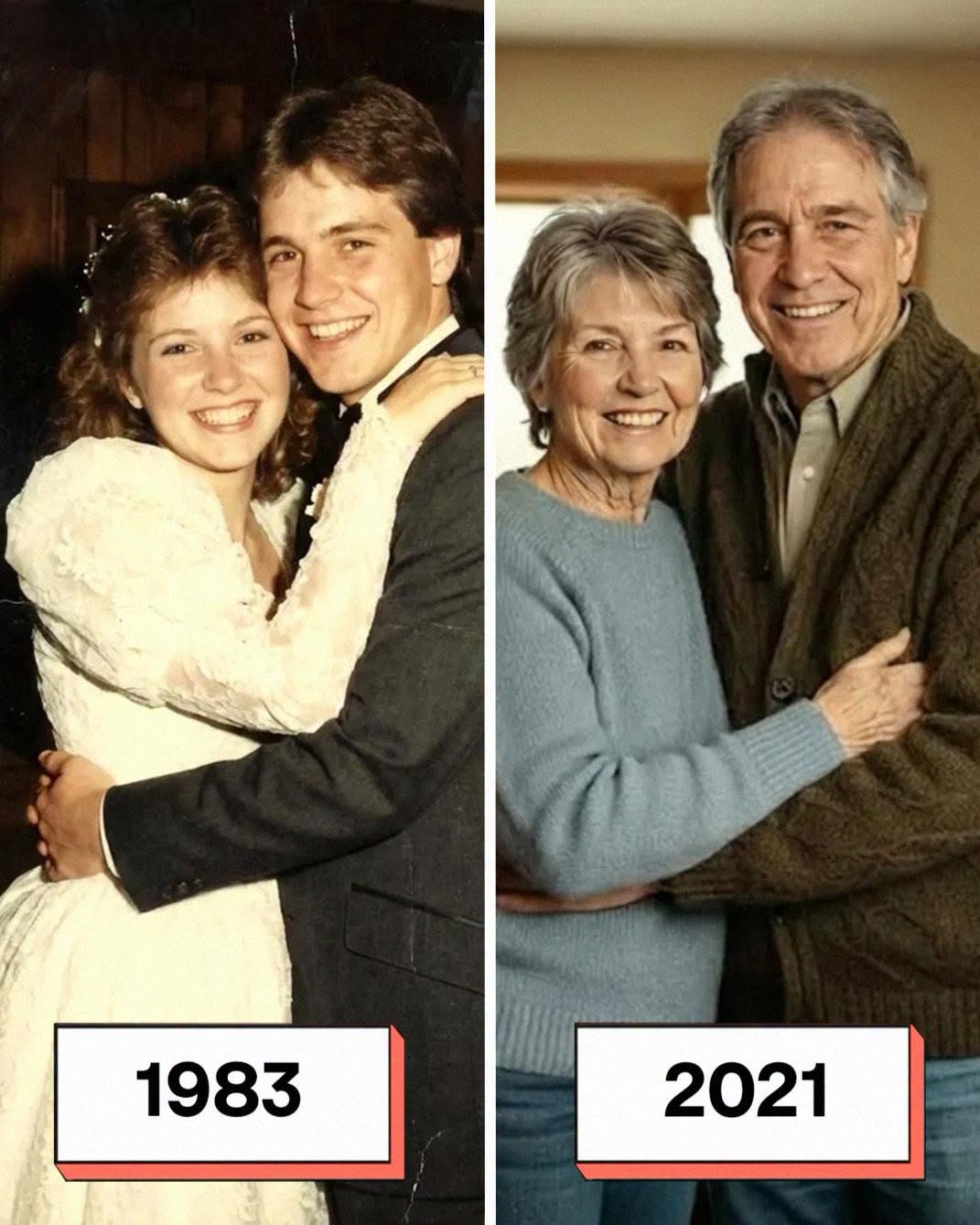
For thirty-eight years, Julia believed her marriage to Richard was built on something almost indestructible. They weren’t perfect, but they had survived everything ordinary life placed in their path—children, bills, arguments, illnesses, Sunday pancakes, leaking faucets, and countless evenings spent together without needing to say much at all.
Then, five years ago, Richard destroyed everything with one sentence.
“I’ve been having an affair.”
He offered no name.
No explanation.
Barely even an apology.
Julia waited for him to fight for their marriage, but he didn’t. Richard simply allowed her anger to push her toward the door.
So she left.
For five years, Julia carried the humiliation of believing the man she’d loved for most of her adult life had chosen someone else.
Then Richard died.
Julia attended his funeral for their children, Gina and Alex. She remained near the back of the church while they sat closer to their father’s casket.
During the second hymn, Julia noticed a woman sitting alone nearby.
She wore a simple gray dress and stared toward Richard’s casket with an intimacy that immediately made Julia’s stomach tighten.
This must be her.
The other woman.
After the service, Julia approached.
“Were you with Richard?”
The stranger looked confused.
“My name is Charlotte,” she said quietly. “I was Richard’s hospice nurse.”
Julia froze.
Hospice?
Charlotte explained that five years earlier Richard had been diagnosed with stage four pancreatic cancer.
Julia felt the room shift beneath her.
“He never had an affair,” Charlotte said.
Julia stared at her.
Richard had refused treatment. But he had also refused something else: allowing Julia to spend his final years caring for him.
He knew she wouldn’t leave if she knew he was sick.
So he created the one reason he believed would make her walk away.
He made her believe he’d betrayed her.
Charlotte reached into her purse and handed Julia an old hospital document.
Across the page were the words:
“DO NOT CONTACT JULIA UNDER ANY CIRCUMSTANCES.”
Richard’s signature was underneath.
Then Charlotte handed her an envelope.
“He wanted you to have this after he was gone.”
Julia drove home without remembering much of the journey.
She sat on the porch bench where she and Richard had once spent summer evenings together and finally opened the letter.
His handwriting immediately brought tears to her eyes.
There had never been another woman.
Richard wrote that he knew Julia would have stayed beside him until the end.
She would have driven him to appointments.
Fed him soup.
Held his hand through the pain.
Watched the man she’d loved slowly disappear.
And Richard couldn’t bear the thought.
“I needed you to live, my love,” he wrote. “I needed you to hate me more than you loved me, just long enough to walk away.”
Then came the final sentence.
“I loved you until the end.”
Julia cried harder than she had during their divorce.
But beneath the love was anger.
Richard had sacrificed his reputation to protect her.
But he had also stolen something from her.
Her choice.
He had decided that she wasn’t strong enough to know the truth.
He had forced her to spend five years believing thirty-eight years of marriage had ended because she wasn’t enough.
The following morning, Julia showed the letter to Gina and Alex.
Her children cried.
They saw their father’s decision as an extraordinary act of love.
Julia saw something more complicated.
“He loved me,” she told them. “But he should have trusted me enough to let me choose.”
A week later, Alex arrived carrying another envelope.
Inside was the deed to the family’s lake cabin.
Richard had never sold it.
He had kept it in Julia’s name.
Attached was a faded yellow sticky note written in his familiar handwriting.
“Keep the porch light on, my love. Do it in case the kids come back… and in case you want to watch the water again. I’ll be there. Just not where you can see.”
That summer, Julia returned to the cabin.
She sat alone on the porch as the sun disappeared across the lake.
For years, she had believed Richard’s final gift to her had been betrayal.
Now she understood it had been love—flawed, controlling, heartbreaking love, but love nonetheless.
She still wasn’t sure she could forgive the lie.
Perhaps she never completely would.
But that evening, before going inside, Julia reached toward the switch beside the door.
And for the first time in five years, she turned the porch light on.