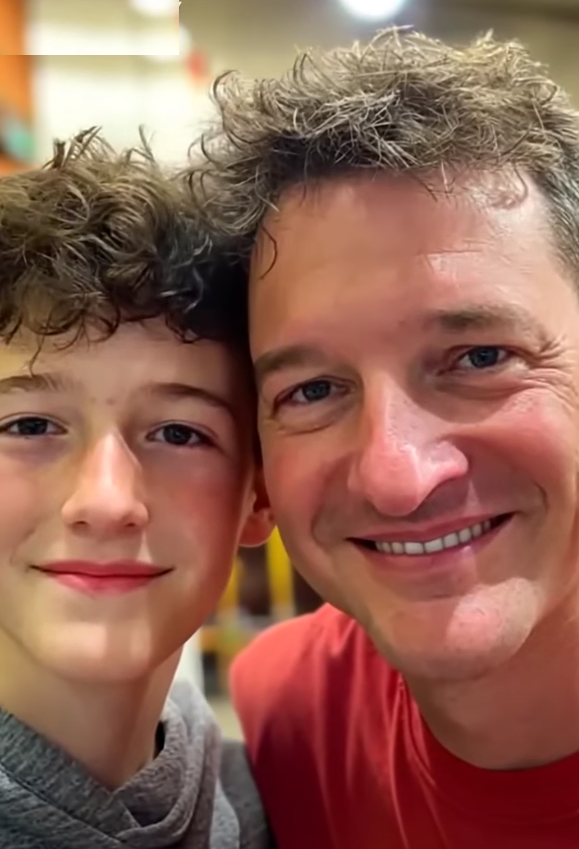
Fifteen years ago, my wife, Lisa, kissed our baby boy, Noah, gently on the forehead, grabbed her purse from the kitchen counter, and walked toward the front door.
“I’ll be back soon,” she said casually. “Just heading out for diapers.”
Those were the last words I heard from her for fifteen years.
I remember the door closing behind her. I remember Noah beginning to cry a few minutes later. I remember walking around the living room with him in my arms, completely unaware that the ordinary life I knew had just ended.
An hour passed.
Then two.
By evening, Lisa still hadn’t returned.
At first, I was irritated more than frightened. I called her phone repeatedly, expecting her to answer with some perfectly reasonable explanation. Maybe the car had broken down. Maybe she’d stopped somewhere else. Maybe her phone battery had died.
But the calls went unanswered.
By midnight, irritation had become panic.
The police launched an investigation. They questioned me, our relatives, friends, coworkers, neighbors—anyone who might know where Lisa had gone or why she would disappear.
Nothing made sense.
Her phone went silent shortly after she left home. Her bank accounts remained untouched. There were no obvious travel arrangements, no goodbye letter, and no message explaining why she had left.
It was as though Lisa had simply stepped outside our front door and vanished.
For months, I woke up expecting a phone call.
Every unfamiliar number made my heart race.
Every knock at the door made me wonder whether someone had finally found her.
But the answers never came.
Eventually, investigators began preparing me for the possibility I refused to consider.
Lisa might never come home.
Some believed she could have deliberately disappeared. Others feared something terrible had happened to her. Without evidence pointing clearly in either direction, all I had were questions.
And Noah.
He was still a baby when his mother disappeared, too young to remember the way she held him or the sound of her voice.
So I became everything I could for him.
Father.
Comforter.
Cook.
Homework helper.
The parent sitting beside his bed when he was sick and the one cheering louder than anyone when he scored his first goal.
There were nights when I barely slept before going to work the next morning. There were birthday parties where I watched other children standing between both parents and wondered whether Noah noticed what was missing.
As he grew older, the questions inevitably came.
“Where is Mom?”
At first, I gave him the simplest answer I could.
“We don’t know.”
When he became old enough to understand more, I told him the truth—or at least the small amount of truth I possessed.
His mother had left home one afternoon and never returned.
I made sure Noah understood that her disappearance wasn’t because of him.
Still, I could see the questions behind his eyes.
The same questions that had followed me for years.
Why?
Eventually, life forced us forward.
I stopped checking every crowd for Lisa’s face. I stopped expecting the phone to ring with news from the police.
I didn’t exactly stop caring.
I simply learned how to live without answers.
Noah became the center of everything.
By fifteen, he had grown into a tall, bright teenager with an unmistakable smile and a sense of humor capable of making even my worst days easier.
Sometimes I looked at him and saw pieces of Lisa.
That used to hurt.
Eventually, it became something I could live with.
Then, last week, everything changed.
I was at the supermarket after work, picking up a few things for dinner. It was an ordinary evening—the kind of completely forgettable trip you make hundreds of times without remembering any particular detail afterward.
I grabbed milk.
Bread.
Something Noah had texted me to buy.
Then I turned into the frozen food aisle.
And stopped dead in my tracks.
At first, my brain refused to understand what my eyes were seeing.
A woman stood several yards away, reaching into one of the freezers.
Her hair was shorter.
There were lines around her eyes that hadn’t been there fifteen years earlier.
She looked older.
Of course she did.
So did I.
But there are some faces time cannot erase from your memory.
My heart seemed to stop.
Lisa.
She was standing in front of me.
Alive.
Not in a hospital.
Not being escorted by police.
Not trapped somewhere waiting to be rescued.
She was standing in a supermarket, casually reaching for a bag of frozen peas.
And she was laughing.
That detail hurt more than I can explain.
For fifteen years, I had imagined every possible explanation for her disappearance. I had imagined accidents, kidnappings, memory loss—anything that could explain why a woman who loved her baby would simply vanish.
But I had never imagined this.
Lisa looked normal.
Comfortable.
Alive.
My hands began trembling.
I wanted to shout her name, but for several seconds nothing came out.
Then somehow I managed it.
“Lisa?”
Her entire body froze.
Slowly, she turned around.
Our eyes met.
For one brief instant, the expression on her face told me everything.
Recognition.
Then fear.
Her confident demeanor disappeared, and I saw panic flash across the face of the woman I had spent fifteen years mourning.
She knew exactly who I was.
I stepped toward her.
“You’re alive.”
Lisa looked around the aisle as though searching for somewhere to escape.
“Please,” she whispered. “Not here.”
Not here?
After fifteen years, those were the words she chose?
“Where have you been?”
My voice came out louder than I intended.
A couple farther down the aisle looked toward us.
Lisa lowered her eyes.
“I can explain.”
I almost laughed.
Fifteen years of raising our son alone.
Fifteen years of police reports.
Fifteen years of birthdays without her.
And she could explain?
“Then explain.”
She swallowed hard.
“What happened to you?” I asked. “Did someone hurt you? Were you afraid to come home?”
Lisa didn’t answer.
And that silence gave me the first terrifying clue that the explanation wasn’t going to be the one I had spent years hoping for.
Finally, she looked directly at me.
“Nobody took me.”
The supermarket seemed to disappear around us.
“What?”
“I left.”
Two words.
That was all it took to rewrite fifteen years of my life.
I stared at her.
“You left Noah?”
Her face changed when I said his name.
“He’s fifteen now,” I continued. “Do you understand that? He’s fifteen years old.”
Tears filled her eyes.
“I know.”
That answer hit me harder than anything else.
“You know?”
Lisa looked away.
She admitted that she had kept track from a distance. She had searched online occasionally. She knew where we lived for at least part of those years.
She knew Noah was growing up.
She simply hadn’t contacted us.
“Why?”
Her explanation came slowly.
She told me she had been overwhelmed after Noah’s birth. She felt trapped inside a life she believed she wasn’t capable of living. Instead of asking for help, she panicked.
What began as a few hours away became a night.
Then another day.
Then fear took over.
The longer she stayed away, she said, the harder returning seemed.
Eventually, she convinced herself that Noah would be better without a mother who had abandoned him.
I listened, but understanding her words didn’t make them easier to accept.
“You could have called.”
“I know.”
“You could have written.”
“I know.”
“You could have told us you were alive.”
“I know.”
My anger finally broke through.
“We thought you were dead.”
Lisa began crying.
“I know.”
For fifteen years, I had imagined finding her.
In some versions, I hugged her.
In others, I demanded answers.
But never once had I imagined standing beside frozen vegetables listening to my wife tell me she had voluntarily remained hidden while our son grew up believing his mother might be dead.
Then Lisa asked the question I had been dreading from the moment I recognized her.
“Does Noah know you’re here?”
I stared at her.
“No.”
She hesitated.
“Can I see him?”
That was when everything inside me became strangely calm.
For fifteen years, Lisa’s disappearance had controlled our lives.
Her absence shaped Noah’s childhood.
Her silence shaped my grief.
But she wasn’t going to control what happened next.
“That isn’t my decision,” I told her.
Lisa looked confused.
“He’s not a baby anymore. You don’t get to disappear for fifteen years and walk back into his life because you’re finally ready.”
She began to speak, but I stopped her.
“If Noah wants answers, you owe him every one of them. If he wants to meet you, that’s his choice. And if he doesn’t want anything to do with you, you’re going to respect that too.”
Lisa wiped tears from her face and nodded.
Before leaving, she gave me her phone number.
I stared at that tiny piece of paper all the way home.
Noah was sitting at the kitchen table when I walked inside.
He looked up immediately.
“You okay, Dad?”
For a second, I saw the baby I had carried around our living room fifteen years earlier while waiting for his mother to return with diapers.
Then I saw the young man sitting in front of me.
I realized the truth no longer belonged only to me.
I sat down across from him.
“There’s something I need to tell you about your mom.”
His smile disappeared.
And for the second time in fifteen years, Lisa’s disappearance changed our lives.
Except this time, she hadn’t vanished.
She had come back.
Now the hardest part wasn’t finding her anymore.
It was deciding whether the door she had closed fifteen years ago could—or should—ever be opened again.