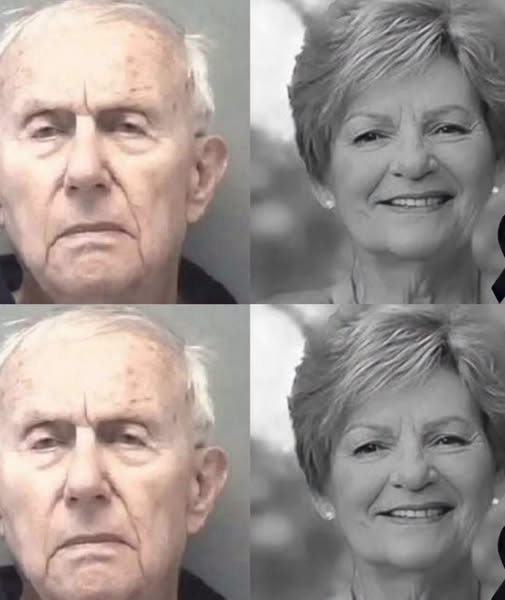
He was ninety-three years old, a man whose life had been measured not merely in years but in decades of shared breakfasts, familiar routines, anniversaries, illnesses, recoveries, and quiet evenings beside the same woman. To neighbors, their marriage represented something increasingly rare—a relationship that had endured nearly everything time could place in its path. They were the elderly couple people noticed sitting together on the porch, exchanging gentle smiles and moving through life with the comfortable familiarity of two people who no longer needed words to understand each other. Yet behind the closed doors of their home, a devastating struggle was unfolding that few people around them fully understood.
For years, their lives had followed a predictable rhythm. Mornings began slowly, usually with coffee and familiar conversation. Depending on the weather, they might sit outside watching neighbors pass or remain indoors surrounded by photographs documenting an entire lifetime together. Their home contained reminders of younger versions of themselves—wedding pictures, family celebrations, vacations, birthdays, and countless ordinary moments that eventually became precious simply because they belonged to a shared past.
Neighbors described them as inseparable.
Where one went, the other was rarely far behind.
Their devotion seemed almost effortless from the outside, but long marriages are rarely built through effortless love. They had survived disagreements, financial worries, health problems, and the inevitable losses that accompany growing older. They had watched friends disappear from their lives one after another. They had adjusted to bodies that no longer moved as easily and a world that seemed to change faster every year.
Through everything, they remained together.
Then his wife’s health began deteriorating.
At first, the changes were manageable.
There were additional doctor’s appointments.
New medications appeared beside the kitchen sink.
Daily routines became increasingly complicated.
Tasks she had once completed without thinking suddenly required assistance.
Gradually, however, the illness began taking more than independence.
It brought pain.
The kind of persistent suffering that can transform ordinary days into exhausting battles.
Her husband became more than a spouse.
He became her caregiver.
At ninety-three, he was already dealing with the physical limitations of advanced age himself, yet much of his remaining energy became devoted to making her comfortable. He helped with meals, medications, appointments, and countless personal tasks that outsiders rarely witnessed.
The familiar home they had shared for decades slowly changed.
Medical supplies appeared beside family photographs.
Prescription bottles crowded countertops.
Appointments replaced social visits.
Sleep became unpredictable.
Their world grew smaller until much of it existed between the bedroom, kitchen, doctor’s office, and hospital.
Neighbors continued seeing the same elderly husband occasionally stepping outside, but they couldn’t see the emotional weight he carried back through the door.
They couldn’t hear every difficult conversation.
They couldn’t witness every sleepless night.
And they couldn’t fully understand what it meant for him to watch the person he loved suffer while feeling increasingly powerless to help her.
According to investigators, his wife repeatedly spoke about wanting her suffering to end.
Those words apparently became increasingly difficult for him to hear.
For someone who had spent a lifetime believing his responsibility was to protect her, being unable to remove her pain created an impossible emotional conflict.
He wanted to help.
He wanted medicine to work.
He wanted doctors to provide an answer.
More than anything, perhaps, he wanted their old life back.
But time does not negotiate.
Neither does serious illness.
The man who had spent decades solving ordinary problems for his family eventually encountered something devotion alone could not repair.
And behind those closed doors, desperation reportedly began replacing hope.
Exactly what happened during the final chapter of their life together would become the focus of investigators, legal authorities, and an entire community struggling to understand how a marriage remembered for tenderness could become connected with tragedy.
What authorities had to determine was not simply what occurred.
They also had to examine intent.
That distinction matters enormously.
Compassion and desperation can explain someone’s emotional state, but they do not automatically determine whether an action was lawful. Questions surrounding end-of-life decisions are governed by specific laws and medical procedures that vary by jurisdiction. What someone personally views as an act of mercy can still carry serious criminal consequences when another person’s life is intentionally ended outside those legal frameworks.
For investigators, therefore, decades of marriage could provide context.
They could not provide an automatic legal answer.
Evidence had to be examined.
Statements had to be evaluated.
Medical circumstances needed to be understood.
The timeline of events had to be reconstructed carefully.
And authorities had to separate assumptions about this couple’s loving reputation from the facts of what actually occurred inside their home.
For neighbors, however, the situation was far less clinical.
Many struggled to reconcile two images.
There was the elderly husband they had known for years—the quiet man devoted to his wife.
Then there was the devastating event investigators were now examining.
People who had previously waved as the couple sat together outside suddenly found themselves staring toward the same house with entirely different emotions.
How could something so tragic emerge from a relationship that had seemed so loving?
But perhaps that question overlooked something important.
Love does not protect people from desperation.
Sometimes it makes helplessness even harder to endure.
Watching a stranger suffer can be painful.
Watching someone you have loved for most of your life suffer while being unable to stop it can create an entirely different psychological burden.
Caregiving itself can also become extraordinarily demanding, especially for elderly spouses.
There are physical responsibilities.
Financial pressures.
Interrupted sleep.
Constant anxiety.
Fear of making mistakes.
Fear of losing the person.
And beneath everything lies anticipatory grief—the strange experience of mourning someone who is still physically present while recognizing that the life you once shared is gradually disappearing.
None of these realities excuse unlawful harm.
But understanding them is essential if communities want to recognize how caregiver crises develop before desperation reaches dangerous levels.
Behind many apparently ordinary front doors are people attempting to manage circumstances that would overwhelm almost anyone.
They may be exhausted.
Isolated.
Afraid.
And sometimes reluctant to ask for assistance because they believe caring for their spouse is a responsibility they must carry alone.
That is why the tragedy raised questions extending far beyond one marriage.
What support exists for elderly caregivers?
Do families understand palliative and hospice options?
Are overwhelmed spouses receiving enough emotional assistance?
Do doctors recognize when the caregiver is approaching a breaking point as well as the patient?
And perhaps most importantly, do people know whom to call when suffering becomes unbearable?
These questions don’t produce easy answers.
Neither does the question now haunting the neighborhood:
Can love ever justify crossing a legal boundary when someone is suffering?
Emotionally, people may respond very differently.
Some may see desperation and compassion.
Others may emphasize that protecting vulnerable people requires clear boundaries that cannot disappear simply because someone’s intentions are sympathetic.
The law must examine actions and