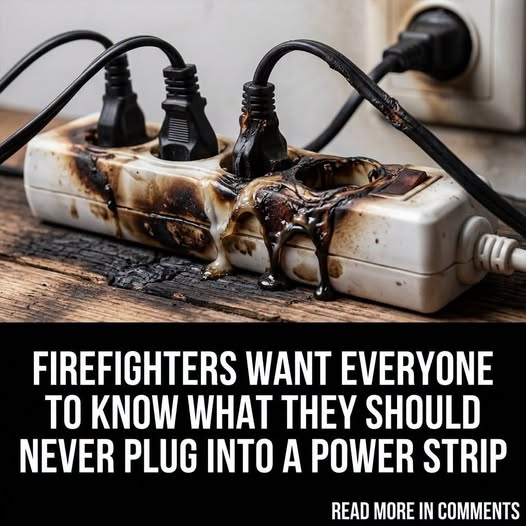
Power strips sit quietly on our floors, tucked behind televisions, hidden beneath desks, or buried under entertainment centers, but the wrong plug can transform one into a ticking time bomb. One overloaded circuit, one high-powered appliance connected where it doesn’t belong, and what looks like an ordinary plastic strip could become the starting point of a devastating house fire. Every year, thousands of electrical fires are linked to overloaded outlets, damaged cords, and improper use of power strips. The most alarming part? Many people have no idea they’re using them unsafely every single day.
Power strips have become one of the most common household conveniences. In a world filled with smartphones, laptops, gaming consoles, smart speakers, televisions, and countless electronic devices, a single wall outlet often isn’t enough. Power strips offer an easy solution by allowing several low-power electronics to share one outlet safely. However, many people mistakenly assume that if a device physically fits into the strip, it’s safe to use there. Unfortunately, electricity doesn’t work that way.
Every power strip has limits. Hidden inside that compact housing are wires and components designed to carry only a certain amount of electrical current. When several high-demand appliances operate at the same time, those limits can be exceeded surprisingly quickly. Excess current creates heat, and excessive heat is one of the leading causes of electrical fires. What begins as an invisible overload may gradually damage insulation, melt plastic, or ignite nearby combustible materials before anyone notices a problem.
Most homes rely on power strips without a second thought, yet many of the devices we casually plug into them were never designed to share that small plastic bar. Major appliances such as refrigerators, freezers, washing machines, clothes dryers, air conditioners, and microwave ovens draw large amounts of electricity whenever they start or run. These appliances are intended to operate on dedicated wall outlets and, in many homes, dedicated electrical circuits specifically designed to handle their power demands safely.
When powerful appliances are connected through a standard power strip, the strip can become dangerously overloaded. Even if nothing appears wrong at first, repeated heating and cooling gradually weakens internal components. Over time, loose electrical connections can develop, creating resistance that generates even more heat. In severe cases, sparks may occur inside the strip without any obvious warning until smoke or flames appear.
Space heaters deserve particular attention because they are among the leading causes of residential electrical fires during colder months. A portable heater may seem convenient to plug into a nearby strip, but doing so dramatically increases fire risk. These devices consume large amounts of electricity continuously, especially when operating on higher heat settings. Manufacturers and fire safety experts consistently recommend plugging space heaters directly into a wall outlet—never into an extension cord or power strip.
The same caution applies to electric grills, air fryers, toaster ovens, coffee makers, portable air conditioners, induction cooktops, and other kitchen appliances that generate significant heat. Many of these devices experience sudden power surges when heating elements activate, placing additional stress on electrical connections. While a strip may appear to function normally, repeated high-current use gradually increases the likelihood of overheating.
Power tools present similar concerns. Circular saws, air compressors, shop vacuums, table saws, and other heavy-duty equipment often require far more electricity than ordinary household electronics. Using them on undersized power strips can reduce performance while simultaneously creating unsafe electrical conditions. Whenever possible, these tools should be connected directly to properly rated wall outlets.
One of the most dangerous mistakes homeowners make is “daisy-chaining” power strips together. This occurs when one strip is plugged into another in an attempt to create additional outlets. Although it may seem like a clever solution for crowded workspaces or entertainment centers, each additional strip increases electrical resistance while encouraging people to connect even more devices than the circuit was designed to support. Fire investigators frequently identify daisy-chained power strips as contributing factors in residential electrical fires.
Risk also increases when power strips become hidden beneath rugs, furniture, blankets, or piles of clothing. Electrical equipment naturally produces some heat during operation, and that heat must dissipate into the surrounding air. Covering a strip traps warmth, accelerating temperature buildup and increasing the likelihood of component failure. Keeping strips visible and well-ventilated allows excess heat to escape safely.
Moisture creates another serious hazard. Power strips should never be used in wet areas unless specifically designed for those environments. Bathrooms, laundry rooms, garages, outdoor patios, and kitchens all present additional risks due to water exposure. Even small amounts of moisture can damage electrical components or create conditions that increase the chance of electrical shock.
Many people overlook the importance of regularly inspecting their power strips. Cracked housings, loose outlets, burn marks, frayed cords, discoloration, or a noticeable burning smell all indicate that a strip should be replaced immediately. Continuing to use damaged electrical equipment significantly increases the risk of fire or electrical failure. Replacing a worn power strip costs very little compared to the damage an electrical fire can cause.
Risk multiplies when sensitive or critical equipment depends entirely on ordinary power strips. Aquariums, for example, often rely on heaters, pumps, filters, lighting systems, and oxygen equipment running continuously. A single failed strip could stop all of those systems at once, threatening the health of fish and other aquatic life within hours. Owners frequently underestimate how dependent these systems become on uninterrupted electrical power.
Medical equipment deserves even greater caution. Oxygen concentrators, CPAP machines, home dialysis equipment, medication refrigerators, mobility devices, and other life-supporting equipment should always follow manufacturer recommendations regarding electrical connections. In many cases, these devices should be connected directly to properly grounded wall outlets or approved backup power systems rather than ordinary household power strips. An unexpected electrical failure could interrupt critical care when it matters most.
The safest use of a power strip is surprisingly simple. Low-power electronics such as table lamps, phone chargers, laptop computers, desktop computers, monitors, printers, Wi-Fi routers, televisions, speakers, streaming devices, and similar equipment generally operate well within the capacity of quality power strips when used according to manufacturer instructions. These devices typically consume relatively modest amounts of electricity and are exactly the types of products power strips were designed to support.
Choosing the right power strip also matters. High-quality models equipped with overload protection, circuit breakers, surge protection, and certification from recognized safety organizations provide additional layers of protection compared to inexpensive alternatives. While no strip can eliminate every risk, properly designed safety features can help prevent dangerous overheating when electrical loads become excessive.
Electrical safety often comes down to respecting the limits of equipment that most people rarely think about. A power strip isn’t a substitute for additional household wiring, nor is it designed to power every appliance in the home simultaneously. Understanding what belongs on a strip—and what belongs directly in the wall—can dramatically reduce the risk of electrical fires, damaged electronics, and costly repairs.
The safest rule remains easy to remember: low-power electronics like lamps, computers, phone chargers, and entertainment devices are generally appropriate for power strips. Anything that produces significant heat, uses a powerful motor, cools, heats, cooks, washes, or supports critical medical needs belongs directly in a properly installed wall outlet. That simple habit takes only a few seconds, but it could protect your home, your family, and everything you’ve worked so hard to build from an avoidable electrical disaster.